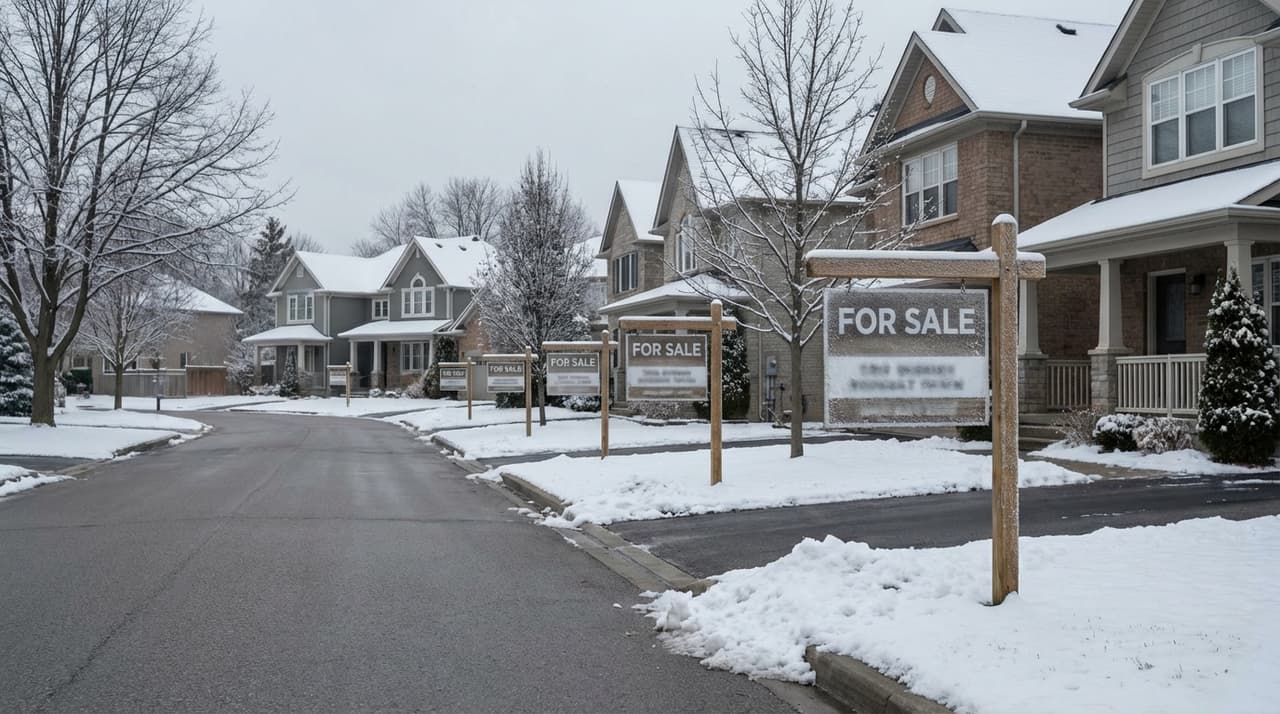
- New home listings fell 1.7% year-over-year in the four weeks ending December 7, the largest decline in more than two years.
- Pending home sales dropped 4.1% year-over-year, with homes taking 51 days on average to sell.
- Median sale prices rose about 2% despite sluggish demand, driven by tight inventory.
U.S. housing market activity is slowing markedly as new home listings just recorded their sharpest year-over-year drop in over two years, according to data from Redfin. In the four weeks ending December 7, new listings fell 1.7% compared to the same period last year, while pending sales declined 4.1%. Homes are now taking 51 days on average to go under contract, reflecting a market that's losing momentum.
Yet median sale prices remain resilient, up approximately 2% year-over-year, as persistently tight inventory continues to prop up values even as transaction volume softens. "What we're seeing is a classic standoff," said one industry analyst who requested anonymity to speak candidly about market dynamics. "Sellers are holding back because they see weak buyer demand, while buyers are cautious due to high costs and economic uncertainty."
Efforts to stimulate more listing activity have hit a snag, with would-be sellers increasingly choosing to delay putting their homes on the market amid the seasonal slowdown and broader affordability concerns. The combination of elevated borrowing costs and overall high housing costs is suppressing buyer demand, making monthly payments less affordable for many prospective purchasers.
Economic uncertainty, including recession risk and job security concerns, appears to be encouraging both buyers and sellers to delay decisions, according to people familiar with market trends. This hesitancy comes despite what would normally be considered favorable conditions for sellers given the ongoing price appreciation.
Redfin, which operates as a technology-enabled residential real estate brokerage, has been tracking these trends closely since its acquisition by Rocket Companies in July 2025. The company's data suggests that many potential sellers feel "locked in" by existing low-rate mortgages and hesitate to list, which contributes significantly to the listings decline.
Those who do list may wait longer to find a buyer—the 51-day average represents a noticeable slowdown—but still benefit from modest price appreciation in most markets. This creates a peculiar dynamic where transaction volume is falling while prices continue their upward trajectory, albeit at a more moderate pace than during the pandemic-era surge.
The market backdrop remains heavily influenced by monetary policy and the interest-rate path forward, with no immediate relief expected from recent government efforts to address housing affordability and supply constraints. Industry professionals note that while longer days on market may give some buyers slightly more negotiating leverage, tight supply continues to limit any possibility of deep discounts.
Looking ahead, seasonal factors plus existing caution from both buyers and sellers suggest continued low listing and transaction volume in the coming months, with modest price growth likely to persist as long as inventory remains constrained. If mortgage rates ease in 2026, some pent-up demand may re-emerge, but it may also be met by only gradual increases in supply.
Redfin representatives declined to comment specifically on the latest data when reached, but the company has previously highlighted inventory constraints and affordability pressures as central themes of the current housing landscape in its industry commentary.
Correction: An earlier version of this article misstated the percentage decline in pending home sales. The correct figure is 4.1% year-over-year.