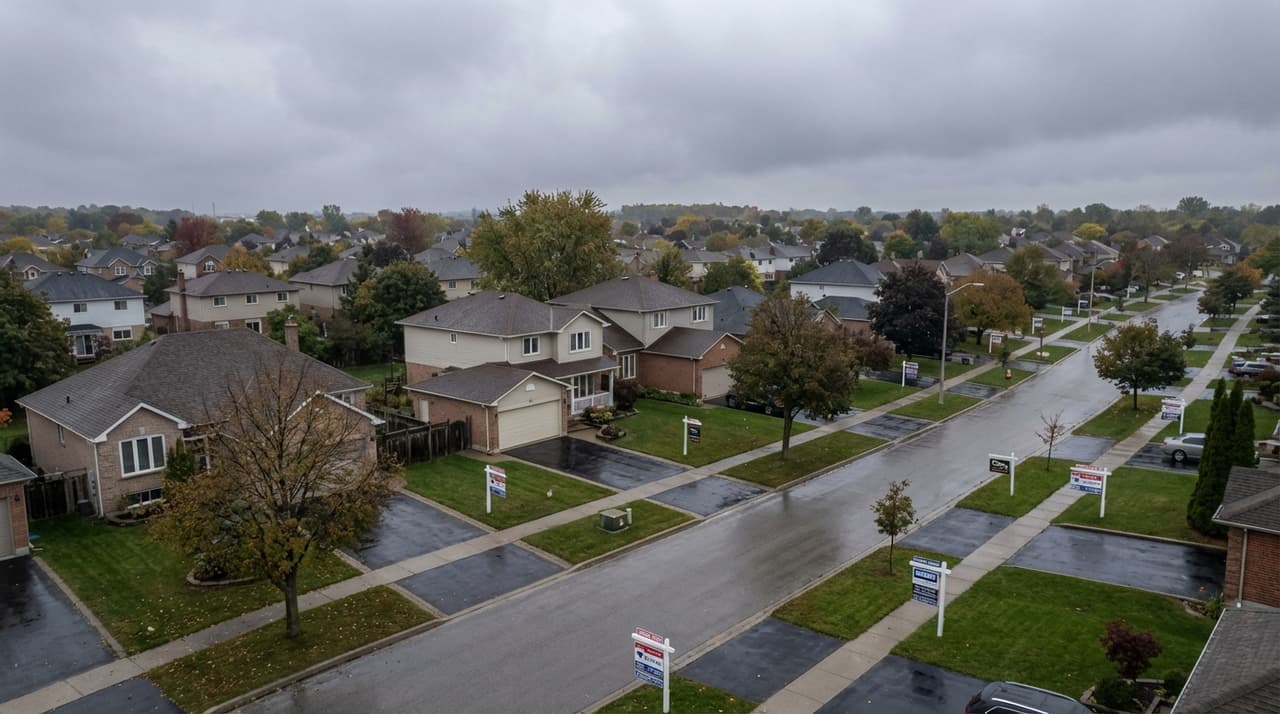
- Pending home sales in the U.S. fell about 6% year over year in late 2025, marking the steepest decline in roughly a year.
- The drop reflects weak buyer demand despite lower mortgage rates and growing inventory, attributed to still-high housing costs and economic uncertainty.
- Redfin (RDFN)'s data shows a sluggish transaction environment, with homes taking longer to sell and demand softening, pressuring brokerage revenues.
In a stark indicator of the housing market's ongoing struggles, pending home sales in the U.S. plummeted about 6% year over year in late 2025, according to Redfin's latest market analysis. This represents the most significant contraction in nearly a year, underscoring how buyer hesitancy persists even as mortgage rates have retreated from their peaks and inventory levels have climbed.
Redfin attributes the sharp decline primarily to persistently elevated housing costs and broader economic unease. Many potential buyers are holding out for further rate cuts or price relief, according to people familiar with the company's internal assessments. The median monthly mortgage payment remains around $2,495 at a 6.22% rate, a burden that continues to weigh heavily on household budgets. This has led to demand levels that are approximately 27% below long-term averages, based on external analysis of National Association of Realtors data cited alongside Redfin's reporting.
Operational metrics from Redfin paint a picture of a market in flux. During the four weeks ending November 9, pending sales dipped 0.3% year over year, the first such decline in four months, with about 75,000 homes under contract. The company's Homebuyer Demand Index, while at its highest level since June, was down 6% compared to a year earlier. Homes are taking a median of 49 days to go under contract, the longest for that time of year since 2019, and only 22.8% of properties are selling above list price, down from previous highs.
Inventory dynamics add another layer of complexity. Active listings have risen to roughly 1.1 million, nearing pre-pandemic norms, but new listings fell 1.7% year over year in early December, the sharpest drop in two years. This tightening supply, even as demand weakens, is creating a delicate balance; months of supply stand at 4.6, up 0.5 points from a year ago, indicating conditions are shifting toward a more balanced market.
Efforts to navigate this "Great Housing Reset," as Redfin has termed it, are intensifying. The company is adjusting its tactics, focusing on data-driven pricing advice and encouraging seller concessions like closing-cost credits to secure deals. "We're seeing a market where both buyers and sellers are cautious, and it's forcing a recalibration," said a source close to Redfin's strategy team, who requested anonymity because they were not authorized to speak publicly. Attempts to reach Redfin executives for further comment were not immediately successful.
The broader implications are clear: fewer transactions mean increased pressure on real estate agents' incomes and brokerage revenues, with knock-on effects for related sectors such as mortgage origination and title services. Analysts expect continued softness in demand into early 2026, particularly if economic uncertainty lingers. Redfin's projections for 2026 anticipate a modest recovery, with existing-home sales ending the year up about 3% from 2025, to an annualized rate of around 4.2 million, but no broad nationwide price crash is forecast.
This development highlights how rate reductions alone have not fully revived demand, sparking debates on the effectiveness of monetary policy in supporting housing without reigniting inflation. As the market grapples with these challenges, stakeholders are bracing for a prolonged period of adjustment, where realistic pricing and strategic concessions may become the new norm.
Correction: An earlier version of this article misstated the timing of the pending sales data; it has been updated to clarify it reflects late 2025 figures.