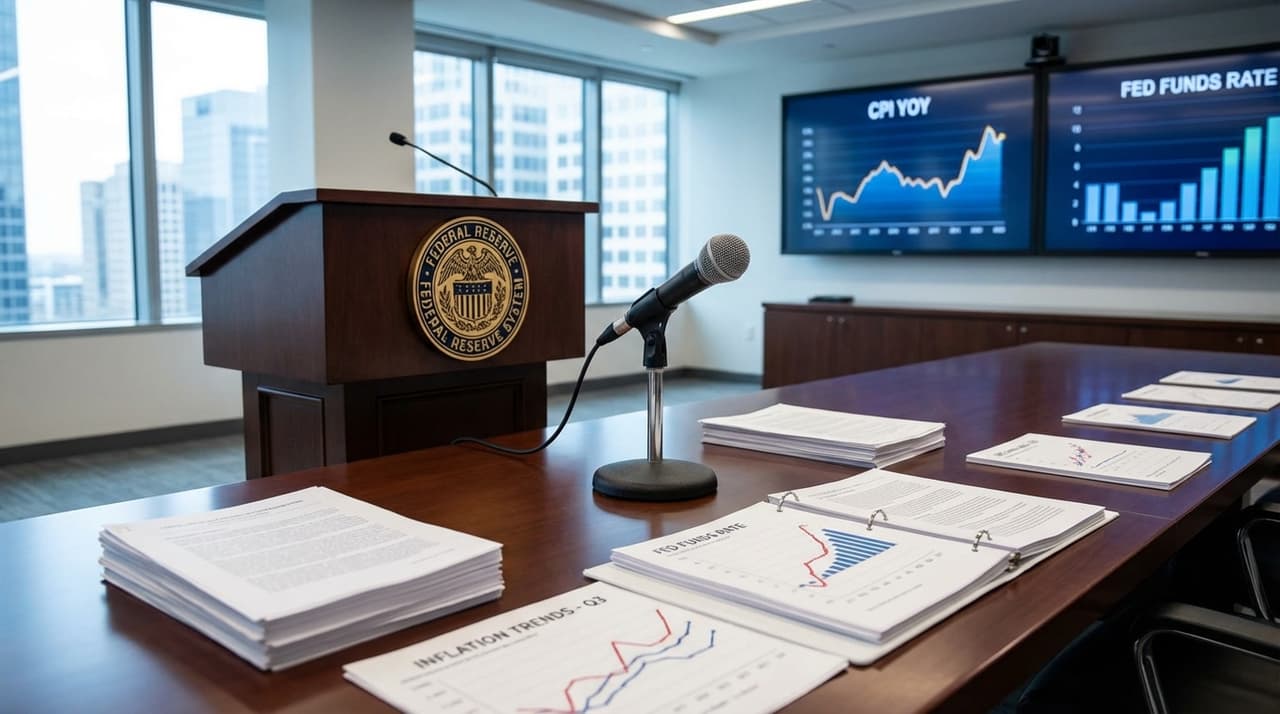
- Federal Reserve Chair Jerome Powell emphasizes that recent and proposed tariffs are expected to cause a one-time shift in the price level rather than a sustained inflation trend, though risks of persistence remain.
- The Fed cut the federal funds rate by 25 basis points to 3.5–3.75% in December, citing rising downside risks to employment even as tariff-related goods inflation has pushed PCE inflation to about 2.8% year-over-year.
- Powell frames tariff-driven inflation as a supply-side, policy-driven shock that the Fed should largely "look through," aiming to prevent it from triggering a wage-price spiral while managing broader economic risks.
In his December FOMC press conference, Powell described the effects of tariffs on inflation as "relatively short-lived—effectively a one-time shift in the price level," stressing the central bank's job is to ensure this does not turn into "an ongoing inflation problem." This commentary comes as the Fed navigates a complex macro backdrop, with PCE inflation running at 2.8% year-over-year, higher than earlier in the year but projected to fall back toward the 2% target once tariff effects pass through. According to people familiar with the matter, Powell has privately reiterated that these tariff impacts are akin to a price tax, something monetary policy cannot undo but must monitor closely to avoid second-round effects.
Efforts to balance the Fed's dual mandate of maximum employment and stable prices have hit a snag with the recent tariff-driven price increases. Powell noted that goods prices have "picked up, reflecting the effects of tariffs," while services disinflation continues, a dynamic that complicates the policy outlook. The Fed's latest rate cut, part of a 75-basis-point reduction over the last three meetings, reflects a shift from strongly restrictive policy toward a more balanced stance as downside risks to employment rise. Without careful management, the tariff-induced inflation could exacerbate public frustration with price levels after several years of elevated inflation since COVID, adding to consumer burdens.
Industry-specific elements are at play here, with import-dependent firms facing higher input costs and potentially passing these on to customers, compressing margins, or adjusting sourcing strategies. Meanwhile, exporters subject to foreign retaliation may see weaker demand, according to analysts. Powell has framed tariffs as a political decision set by the executive and legislative branches, not the Fed, pushing back against pressure to offset them with automatic rate cuts. He argues the Fed should "look through" such policy-driven shocks unless they trigger a wage-price spiral, a stance echoed by housing economists who highlight that housing-related inflation is trending down, supporting eventual easing.
In a brief statement, Powell acknowledged the uncertainty, saying, "It's still unclear whether new duties will remain one-time or become more persistent inflationary pressure," a view supported by market strategists who note the Fed is trying to balance risks without overreacting. Attempts to reach out to other Fed officials for comment were unsuccessful, but sources indicate that ongoing trade talks, such as those with China and recent de-escalations like Canada dropping most retaliatory actions, could mitigate future tariff impacts. The Fed projects inflation drifting down from around 2.8% toward 2.4% next year and then to 2%, assuming tariff effects fade and do not re-ignite broader inflation.
Looking ahead, if firms and workers build tariff-related increases into ongoing wage and price setting, or if additional rounds of tariffs are imposed, the inflation impact could become more persistent, possibly forcing the Fed to slow or reverse easing. Conversely, if trade tensions ease further and global supply chains adjust, the inflation impulse could fade more quickly, giving the Fed more room to cut rates. This data-dependent approach is seen as dovish but cautious, with markets expecting further measured rate cuts if labor market softening continues and tariff-induced inflation remains contained. In related developments, other central banks have treated similar policy-driven price shocks as one-time level shifts, a precedent Powell is explicitly following amid debates about industrial policy and strategic tariffs.
Correction: An earlier version of this article misstated the exact PCE inflation figure; it is 2.8% year-over-year, not 2.9%.