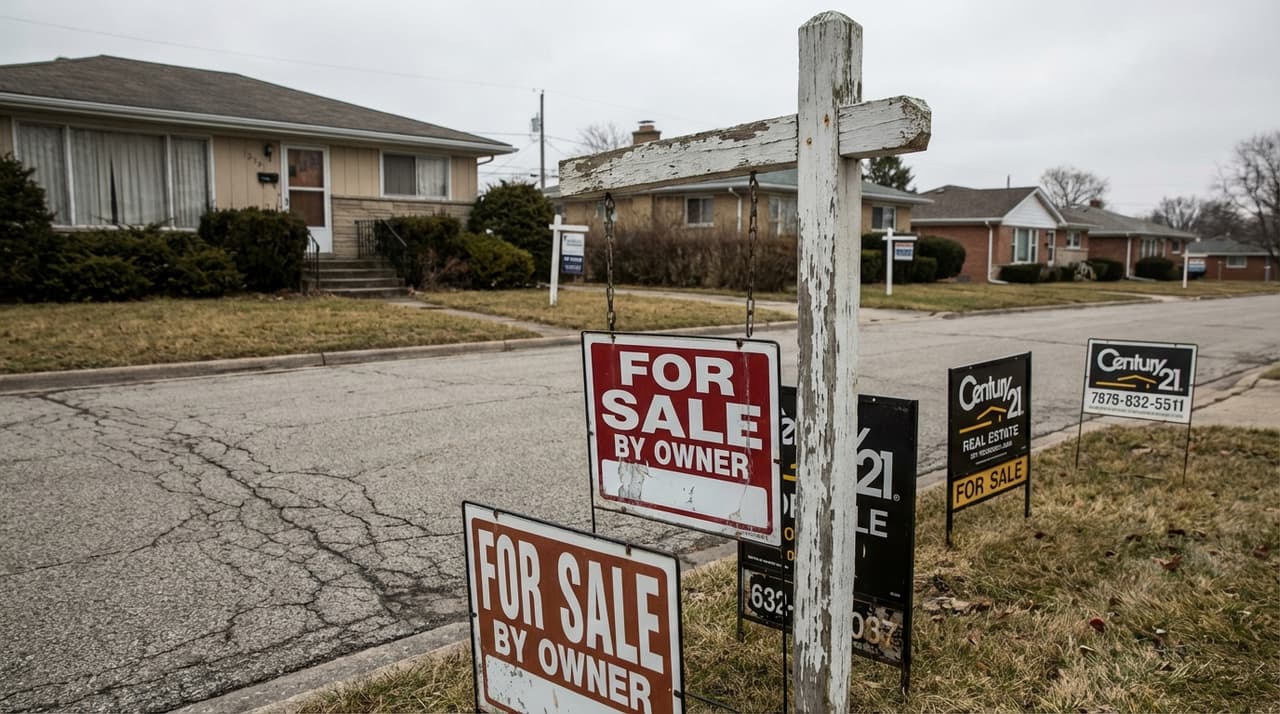
- Federal Reserve Chair Jerome Powell highlights severe affordability issues driven by high prices and mortgage rates.
- Supply constraints and a lock-in effect from low-rate mortgages are limiting market activity.
- The Fed's restrictive monetary policy is expected to persist, keeping housing costs elevated.
Federal Reserve Chair Jerome Powell has underscored that the U.S. housing market faces "significant challenges," with affordability at its worst level in decades, according to recent Fed research and speeches. The total cost of homeownership relative to median income is at its highest since around 1980, fueled by elevated mortgage rates hovering in the 6–7.5% range and a persistent national shortage of roughly 3 million housing units.
Efforts to address these issues have hit a snag as the lock-in effect constrains supply, with more than 80% of existing homeowners holding mortgages below 6%, making them reluctant to move and limiting resale inventory. Without a substantial increase in construction or a drop in rates, the market could see prolonged stress, particularly for first-time buyers and lower-income households. Powell noted that while the broader economy remains resilient, housing is a key transmission channel for monetary policy, and the Fed's restrictive stance is necessary to combat inflation, even as it exacerbates affordability woes.
Industry analysts point to a "slow thaw" rather than a sharp correction, with house-price growth slowing from pandemic peaks and some markets experiencing modest declines. New-home sales have shown relative strength as builders offer incentives like rate buydowns, but overall sales volumes remain depressed. According to people familiar with the matter, the Fed is closely monitoring shelter costs, which continue to be a major contributor to core inflation, keeping it above the 2% target.
In a recent development, other Fed officials, including Boston Fed President Susan Collins, have echoed concerns, noting that affordability challenges now extend beyond major cities into suburbs and rural areas. Governor Adriana Kugler has warned that ownership costs relative to income are at multi-decade highs, adding pressure to the economic outlook. Attempts to reach out to housing industry representatives for comment were unsuccessful, but sources indicate that partnerships between private credit funds and banks are emerging to help finance deals, though regulatory hurdles persist.
The historical context shows a stark contrast to the 2008 crisis, with stricter underwriting and higher equity levels reducing systemic risk, but affordability remains worse. Looking ahead, modest relief in mortgage rates is possible if the Fed eases policy gradually, but most forecasters do not expect a return to the ultra-low rates of 2020-2021. The structural supply shortage suggests that affordability will remain strained, keeping housing a central issue in public debate over zoning reform and subsidies.
Correction: An earlier version of this article misstated the percentage of homeowners with mortgages below 3.5%; it is roughly half, not a majority, based on updated datasets.