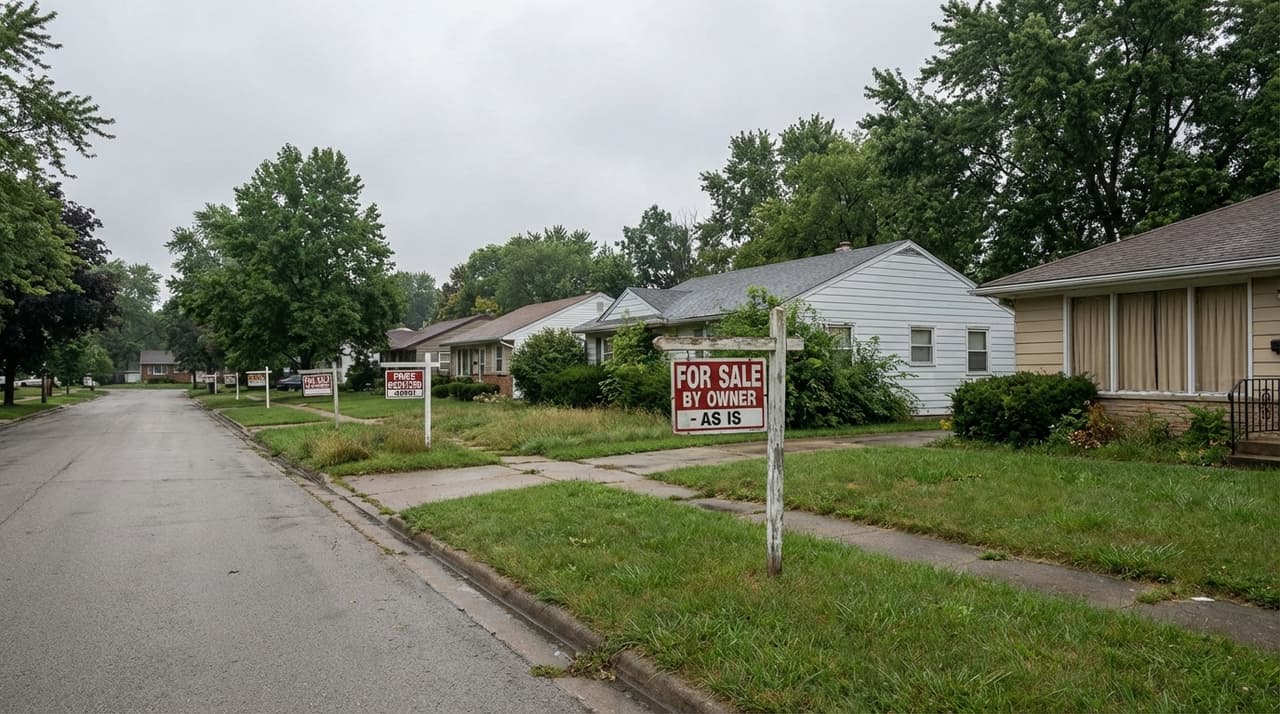
- Federal Reserve Chair Jerome Powell highlights ongoing housing sector weakness as a key economic risk
- Elevated mortgage rates near 6% continue to suppress affordability and home sales
- Divided FOMC debates further easing amid political pressure and inflation concerns
Federal Reserve Chair Jerome Powell emphasized persistent weakness in the U.S. housing market during recent remarks, identifying it as a significant downside risk to economic growth. The comments come despite the Fed's quarter-point rate cut in September 2025—the first since December 2024—which has done little to revive housing activity.
According to people familiar with the matter, Powell and other Fed officials remain concerned about elevated mortgage rates around 6%, high home prices, and tight credit conditions, particularly for lower-credit borrowers. These factors have pushed home sales to multi-decade lows while inventories of unsold homes continue to rise.
"What we're seeing is a market that remains constrained by affordability challenges," one Fed official said, speaking on condition of anonymity. "The transmission from our policy moves to mortgage rates has been slower than anticipated."
The 19-member Federal Open Market Committee appears divided on next steps. Some officials favor holding rates steady due to persistent inflation concerns, while others support additional easing to help the housing sector and broader economy. Among policymakers, Stephen Miran, a Trump appointee, has advocated for more aggressive rate cuts, positing a neutral rate closer to 2%—well below the Fed's current target range near 4-4.25%.
Market data shows mortgage delinquencies remain elevated primarily for more vulnerable FHA loans, while other mortgage types maintain near historical-low default rates. This divergence highlights how the housing slump disproportionately affects middle- and lower-income families.
Builders could eventually benefit from lower borrowing costs induced by Fed easing, potentially helping alleviate supply constraints gradually. However, structural issues such as high regulatory costs and a persistent housing shortage present challenges that monetary policy alone cannot resolve.
Efforts to stimulate the housing market have taken on political dimensions, with President Trump having campaigned to make homes more affordable and applying pressure on the Fed to cut rates. The central bank now navigates competing priorities: supporting employment, controlling inflation, and stabilizing housing markets.
Looking ahead, Fed officials expect possibly two more quarter-point rate cuts by year-end, though this remains uncertain given committee divisions. Mortgage rates may decrease somewhat due to Fed action but are projected to stay above historic lows as long-term bond yields remain elevated.
Without more significant improvement in housing affordability, the sector is likely to stay weak near term, with home prices flattening nationwide over the next 12 months. The risk of a sharper correction continues to weigh on economic recovery prospects, keeping housing at the forefront of monetary policy discussions.
Correction: An earlier version of this article misstated the timing of the most recent Fed rate cut before September 2025. The correct date is December 2024.