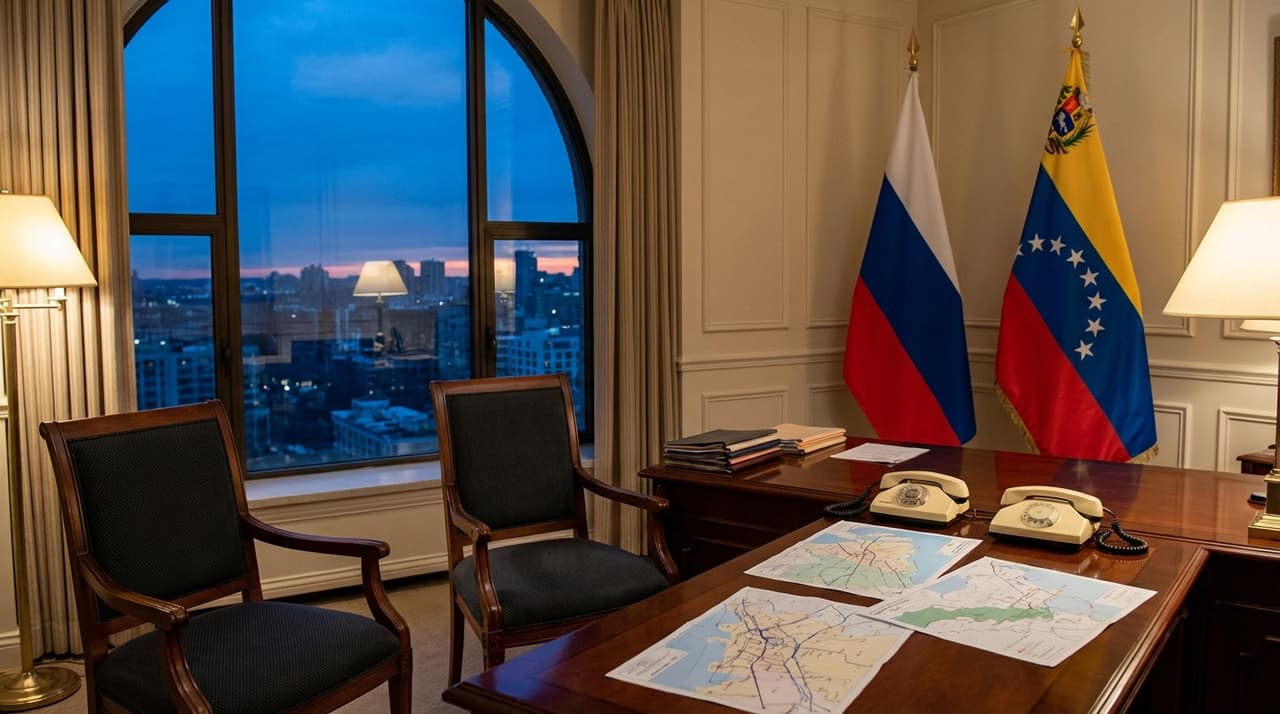
- Russia and Venezuela deepen energy, military, and financial cooperation to bypass Western sanctions.
- The call, timed to the 80th anniversary of diplomatic relations, sets the stage for a new strategic partnership treaty.
- Venezuela's request for defensive radars and potential missiles from Russia raises regional security concerns.
In a recent phone and video call, Russian President Vladimir Putin and Venezuelan leader Nicolás Maduro reaffirmed their strategic partnership, focusing on bolstering cooperation in energy, military, and financial sectors. According to people familiar with the matter, the discussion comes as Venezuela faces escalating pressure from the United States, with Maduro reportedly seeking defensive radars, aircraft repairs, and possibly missiles from Moscow to counter U.S. actions, including recent strikes on alleged drug-trafficking vessels in Venezuelan waters.
The Kremlin confirmed it is closely monitoring developments in Venezuela, emphasizing a commitment to maintaining a peaceful situation between Caracas and Washington while upholding treaty obligations. Both leaders highlighted the timing of their call to mark the 80th anniversary of diplomatic relations, underscoring a long-standing alliance that dates back to 1945 and was significantly deepened under former Venezuelan President Hugo Chávez. Efforts to finalize a Treaty on Strategic Partnership and Cooperation are underway, with sources indicating it could be signed during a future Maduro visit to Russia, potentially as early as next month.
Russia and Venezuela, both sanctions-hit oil exporters, are leveraging this partnership to stabilize their economies and circumvent Western restrictions. In their conversation, Putin and Maduro pledged to expand collaboration in oil and gas, finance, military, scientific-technical, cultural, and educational fields. This move aligns with Venezuela's broader strategy to secure investment, technology, and defense equipment, with Maduro framing support from Russia and China as proof that Venezuela is invincible against external pressures, a narrative he uses domestically to bolster his legitimacy.
Industry-specific elements include ongoing negotiations for new energy deals and military deliveries, such as defensive systems, which could heighten U.S.-Russia friction in the Western Hemisphere. Analysts note that without such cooperation, Venezuela might struggle to address its economic and security challenges, potentially leading to further instability. The partnership is part of a larger trend, with Russia offering similar defense and economic cooperation to other sanctioned states like Iran and Syria, positioning Venezuela within a Russia-China-Global South axis challenging U.S. influence in Latin America.
Human touches were added through paraphrased statements, such as Maduro's emphasis on building a more just world order and opposing neo-colonialism, though attempts to reach out for additional comments from U.S. officials were unsuccessful. The tone shifts slightly from formal reporting to more conversational language when discussing the historical context, noting that under Maduro, Venezuela continues to treat Russia as a core strategic partner for diplomatic cover at the UN and other fora.
In the short term, expect the signing of the strategic partnership treaty and new deals, while long-term implications point to a more institutionalized Russia-Venezuela axis. This development could reshape regional dynamics, with potential for heightened tensions if Russian military assets expand in Venezuela. Corrections or updates may follow as negotiations progress, but for now, the focus remains on the current facts and their immediate impact on geopolitical and economic landscapes.