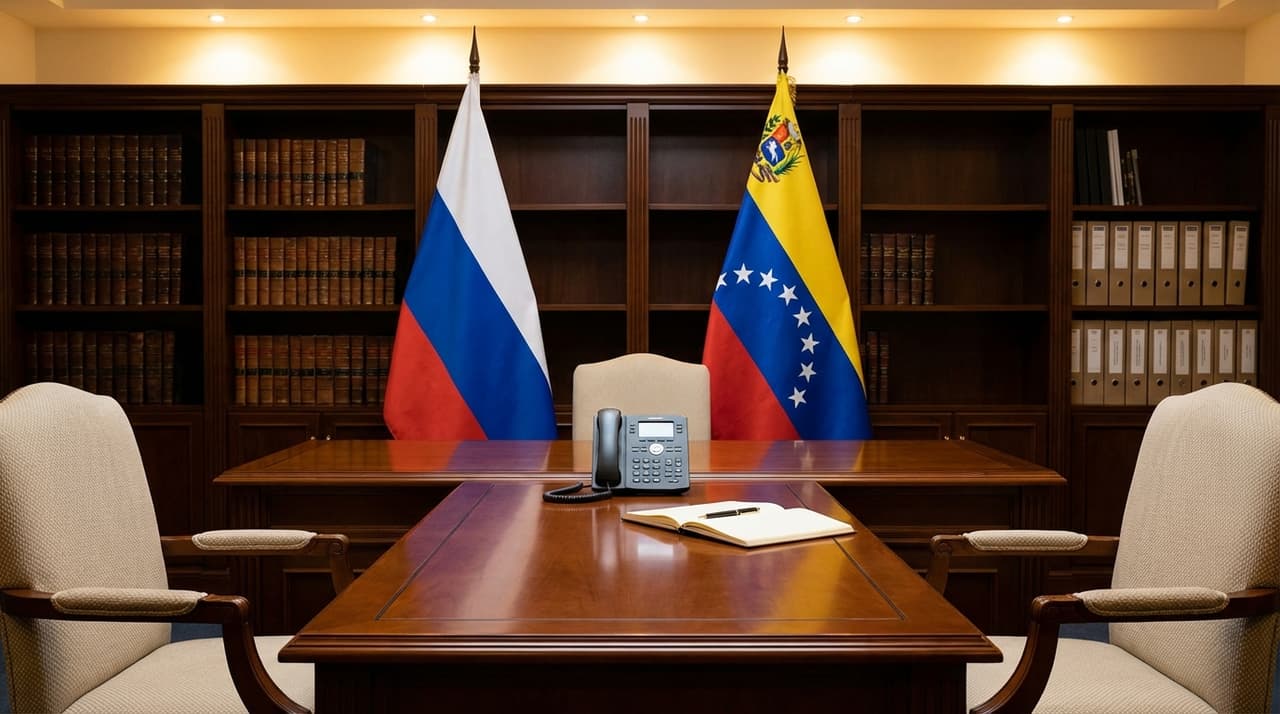
- Putin publicly reaffirms political solidarity and ongoing Russian support for Venezuela's government and people, including deepening strategic, economic, and energy ties.
- The leaders discussed expanding cooperation in energy, trade, and investment, with both sides reiterating readiness to advance a Treaty on Strategic Partnership and Cooperation.
- The call underscores efforts to build an alternative bloc of partners under sanctions, potentially affecting global energy markets and geopolitical dynamics.
In a phone call on Thursday, Russian President Vladimir Putin expressed solidarity with the Venezuelan people and confirmed continued support for the government of Nicolás Maduro, according to a Kremlin readout. The conversation focused on strengthening bilateral relations, with Putin emphasizing long-standing friendship and plans to deepen ties in key sectors like energy and investment.
Putin's reaffirmation comes as both nations, sanctioned oil producers, seek to bolster cooperation outside Western financial systems. People familiar with the matter say the discussions touched on specific projects aimed at supporting Venezuela's economic stabilization, though details remain confidential. Maduro has been invited to Russia, potentially for Victory Day celebrations in May, where further agreements could be formalized.
Efforts to advance a strategic partnership treaty have hit a milestone, with Moscow describing it as fully agreed and providing a solid foundation for long-term collaboration. This framework, later signed in Moscow, covers areas such as energy, transport, and pharmaceuticals, according to sources close to the negotiations. Without such deals, Venezuela would face increased isolation amid ongoing economic challenges.
In a brief statement, Maduro praised Russia as a great power, aligning with Putin on building a more just world order and resisting U.S. pressure. The relationship, intensified under Hugo Chávez and continuing under Maduro, marks 80 years of formal diplomatic relations this year, adding symbolic weight to the partnership. Analysts note this is part of Russia's broader strategy to consolidate alliances with anti-U.S. governments, similar to recent deals with China and Iran.
Market observers are watching for impacts on crude supply, as closer coordination could shift trade channels. Attempts to reach Venezuelan officials for additional comment were unsuccessful, but the call signals ongoing negotiations that may shape regional dynamics in Latin America. Updates on treaty implementation are expected in the coming months.