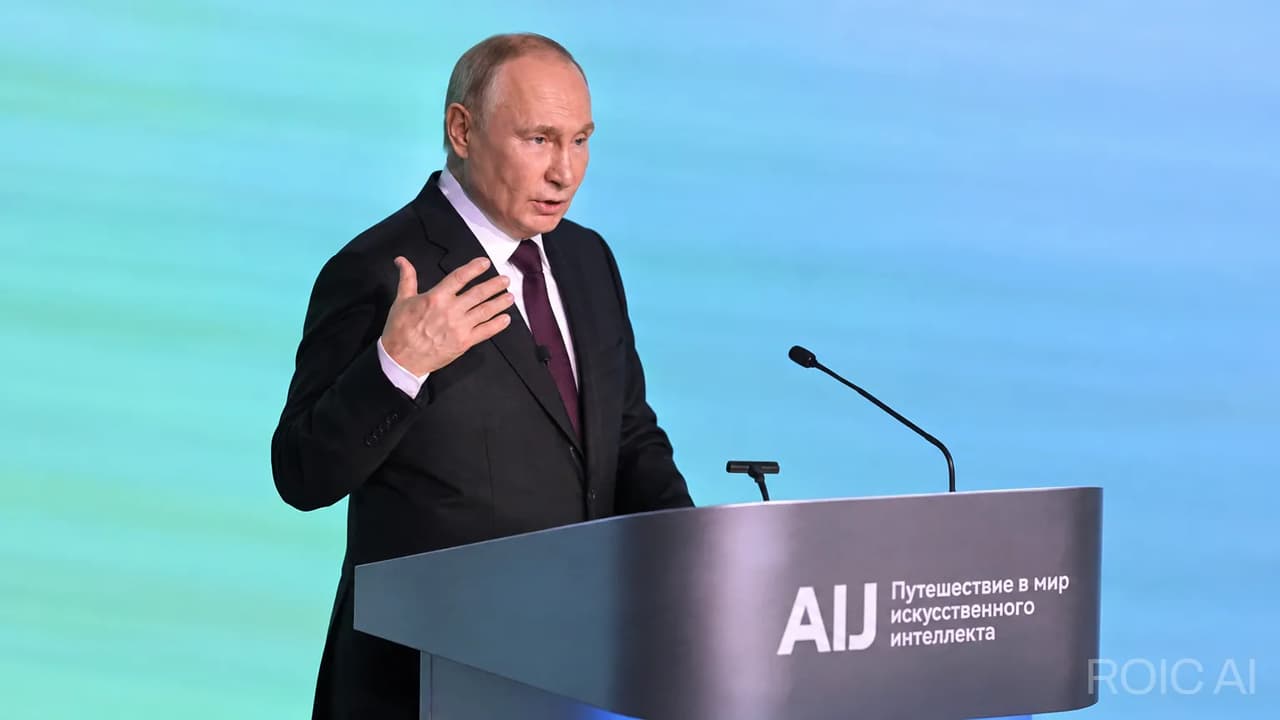
Putin pledges to press ahead with naval modernization despite recent Ukrainian strikes on Russian vessels.
Ukraine has hit five Russian military-linked ships in 12 days, including the corvette Merkury in Libya.
Russia's shipbuilding faces sanctions, logistics woes, and rising costs as it tries to rebuild its fleet.
Russian President Vladimir Putin said on Friday that Russia intends to continue modernizing its navy, according to Interfax. The pledge comes just days after Ukrainian naval drones struck the corvette Merkury in Benghazi, Libya, marking one of the most distant attacks on Russian naval assets since the war began.
Ukrainian forces have struck five Russian military-linked vessels in 12 days, ranging from the Gulf of Finland to the Mediterranean. Last Sunday, seven Ukrainian naval drones hit both the Merkury and the sanctioned cargo ship MV Angara. The Merkury, commissioned in 2023, was reportedly worth about $200 million. A day earlier, Ukraine hit the cargo ship Sparta II in the Gulf of Finland.
Shipbuilding Challenges
Putin's modernization drive has been hampered by chronic logistics problems and Western sanctions that have slowed both new construction and maintenance. Even corvettes and patrol boats can take seven to eight years to build, according to industry analysts. In April 2025, Putin announced a Rbs 8.4 trillion (about $100.9 billion) plan to build new ships over the next decade, but few details have emerged since.
"The surface fleet has serious war-generation issues," a NATO official said, speaking on condition of anonymity. "We see no Russian naval buildup in the Mediterranean." Turkey's closure of the straits under the Montreux Convention has also prevented Russian warships from returning to the Black Sea.
Drone Warfare Lessons
Ukraine's strikes are part of a broader campaign that has destroyed or damaged about 30% of the Black Sea Fleet's combat strength, according to the Ukrainian Ministry of Defense. The fleet has shrunk from 74 vessels to about 50 operational hulls. The cruiser Moskva sank in April 2022, and the Black Sea Fleet has since relocated from Sevastopol to Novorossiysk.
Analysts say Russia now faces a difficult trade-off: how much to spend protecting ships and supply routes while fighting a land war. "Ukraine can't destroy the whole fleet, but it can make Russian shipping slower and more expensive," said an independent defense analyst who asked not to be named.
Moscow has responded by providing more military escorts to its shadow fleet, and state-owned shipyards Sevmash and the United Shipbuilding Corporation plan to use AI in ship design and construction. The Severnaya Verf yard has added slipway capacity for Project 22350 frigates, with the Admiral Amelko due in 2027, though analysts say it could slip to 2028.
A Fleet Divided
The Russian Navy is increasingly splitting in two: the surface fleet remains vulnerable and struggling to adapt, while the submarine force is still considered among the most dangerous parts of Russia's arsenal. Putin said in April 2025 that modernization of the maritime strategic nuclear forces was complete, with four Borei-class and four Yasen-class submarines commissioned.
Ukraine's strikes also signal to Western allies that Kyiv can project power far beyond its borders. The Kremlin has not commented on the specific losses, and requests for comment from the Russian Defense Ministry were not immediately answered.
As Putin vows to press on, the coming months will test whether Russia can protect its ports and ships from drone attacks, or whether the navy's modernization will remain a costly aspiration.