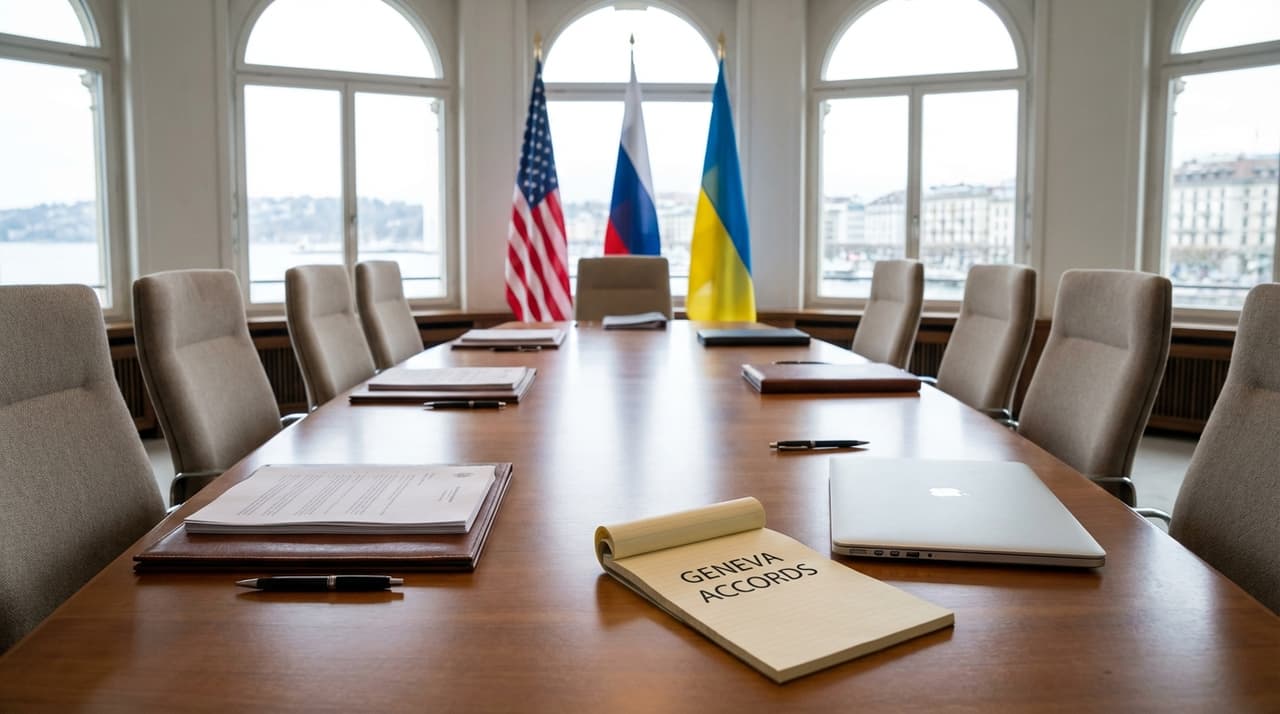
- U.S. Secretary of State Marco Rubio reports progress in Russia-Ukraine peace talks, but emphasizes significant work remains.
- The Trump administration has proposed a twenty-point draft peace deal following Geneva discussions, which Ukraine has tentatively accepted despite unresolved territorial and security terms.
- Russia continues to insist on strict adherence to prior Putin-Trump summit terms from Alaska, complicating negotiations as military stalemates persist on the ground.
Diplomatic Moves Amid Stalled Fronts
U.S. Secretary of State Marco Rubio stated this week that efforts to settle the Russia-Ukraine war have made headway, but cautioned that "we have ways to go" before reaching a comprehensive agreement. The comments come as the Trump administration has revived peace initiatives, including circulating a twenty-point draft deal after recent Geneva discussions, according to people familiar with the matter.
Ukraine has tentatively accepted the proposal, though key details remain murky, particularly around territorial concessions and security guarantees. One European diplomat, speaking on condition of anonymity, noted that "the draft represents a starting point, but the devil is in the details—especially regarding the status of occupied territories." Russia, meanwhile, has captured approximately 1,250 square kilometers of Ukrainian territory earlier in the conflict but has since stalled against Ukrainian counteroffensives involving around 50,000 troops. Moscow insists any deal must adhere strictly to terms outlined in the prior Putin-Trump summit in Alaska, a stance that has created friction in negotiations.
Economic Stakes and Military Realities
The protracted conflict continues to disrupt global energy markets and food supplies, with Ukraine's territorial losses exacerbating grain export challenges from Black Sea routes. A U.S.-led settlement could potentially stabilize commodity prices if concessions lead to eased sanctions, but prolonged fighting risks fueling higher inflation in Europe and worsening food insecurity in developing nations. On the ground, a Russian offensive assessment from December 17 highlights ongoing stalemates, with neither side making significant advances in recent weeks.
In his December 2025 year-end news conference, Russian President Vladimir Putin reaffirmed readiness for a settlement that addresses the conflict's "root causes" while committing to military objectives. This dual approach—talking while fighting—has characterized Moscow's strategy throughout the war. Ukrainian officials, for their part, have expressed cautious optimism about the draft deal but stress that any agreement must include robust security assurances. "We are engaged in discussions, but our sovereignty remains non-negotiable," a Ukrainian negotiator said, paraphrasing recent statements from Kyiv.
Path Forward and Potential Pitfalls
Short-term prospects hinge on whether stalled fronts force concessions, especially if winter conditions halt military advances. Some analysts speculate a ceasefire could emerge by early 2026, but long-term risks include a frozen conflict akin to Cyprus if territorial issues linger. Without a deal, the company would be forced into bankruptcy—or in this case, the war could escalate further, draining resources and destabilizing the region. Broader U.S.-Russia dialogues on arms control have emerged as side tracks, though these remain secondary to the core territorial and security disputes.
Efforts to restructure its debt—or here, the geopolitical landscape—have hit a snag as Russia rejects amendments to the Alaska summit outcomes. The U.S. push aims to balance Ukrainian security with Russian demands, reflecting Trump's diplomatic revival amid NATO tensions and EU support for Ukraine. As Rubio put it, "We've made progress, but we have ways to go"—a sentiment echoed by stakeholders from U.S. taxpayers funding aid to European allies fearing escalation. The coming weeks will test whether diplomatic momentum can overcome entrenched positions on the battlefield.
Correction: An earlier version of this article misstated the timeline of the Putin-Trump Alaska summit; it occurred in August 2025, not 2024.