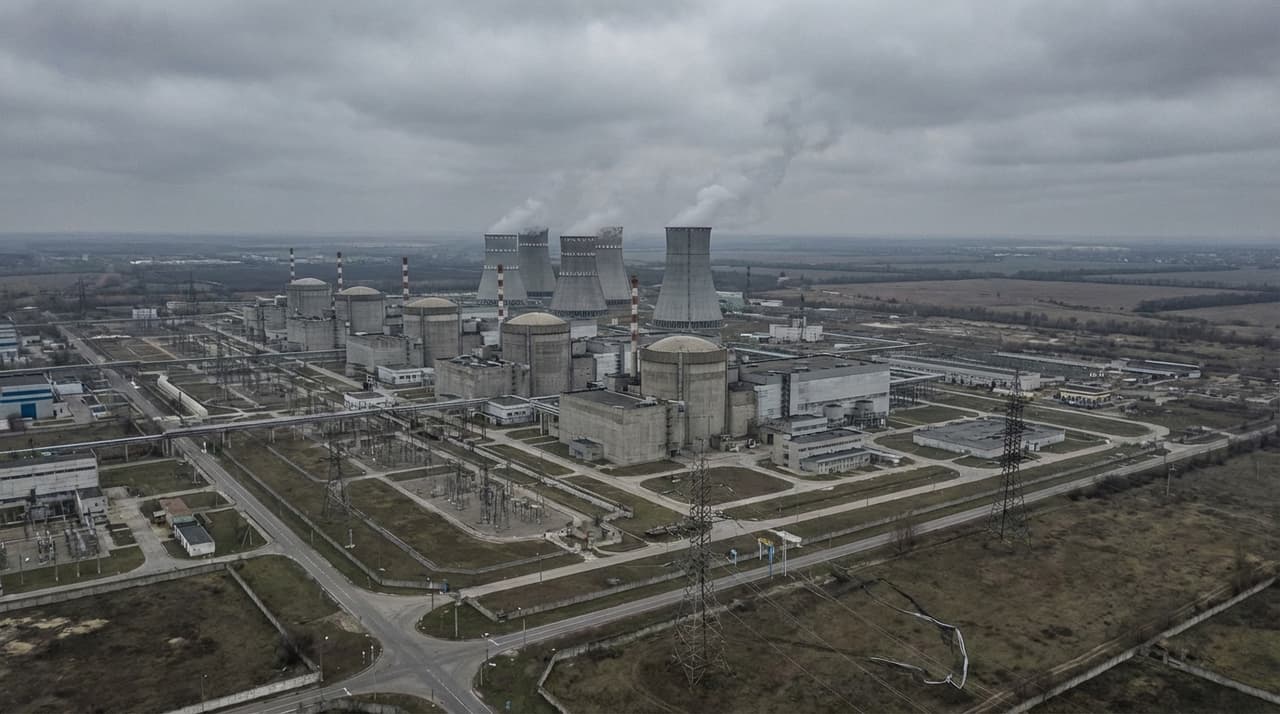
- Russia's licensing of reactor operations at the Zaporizhzhia Nuclear Power Plant signals a push for operational control, despite all reactors remaining in cold shutdown.
- A temporary IAEA-brokered ceasefire aims to stabilize the site, but power disruptions and mutual accusations of strikes persist, heightening nuclear safety risks.
- The plant's 6 GW capacity loss exacerbates Ukraine's energy deficit, with analysts estimating 5-7 years for replacement, while global uranium markets face volatility from the crisis.
Russia is intensifying efforts to assert authority over the Zaporizhzhia Nuclear Power Plant (ZNPP), with recent developments centering on operational licensing and fragile ceasefire agreements. In December 2025, Russia's Federal Service for Environmental, Technological and Nuclear Supervision granted a license for reactor No. 1, enabling potential restarts under Russian management by state nuclear firm Rosatom, according to regulatory documents. However, all six reactors at the facility, seized by Russian forces in March 2022, remain in cold shutdown, with safety concerns looming large amid ongoing hostilities.
A temporary ceasefire brokered by the International Atomic Energy Agency (IAEA) has been announced at the plant site, but it's a tenuous arrangement. Both Ukraine and Russia have accused each other of strikes in the area, and power supply remains erratic—the sole 750 kV line was cut on September 26, 2025, with backup systems intermittent, sources familiar with the matter say. Without stable electricity, the plant relies on diesel generators, which have been activated over 11 times in the past four years, raising fears of a nuclear incident that could affect millions across Ukraine, Russia, and Europe.
ZNPP director Yuriy Chernichuk stated in April 2025 that compliance with Russian regulations and potential restarts, starting with two units, could occur by 2028, contingent on ending hostilities and restoring cooling water lost after the 2023 Kakhovka Dam destruction. But Ukraine views any restarts as safety violations, and international calls for demilitarization persist, with an IAEA resolution in September 2022 demanding Russian withdrawal, passed by a 26-2 vote opposed by Russia and China.
Economically, the plant's 6 GW capacity—equivalent to four reactors—exacerbates Ukraine's 4 GW generation deficit. Analyst Oleksandr Kharchenko estimates it could take 5-7 years for Ukraine to replace this capacity through new builds, while Russia seeks the plant to offset energy shortages in its southern regions. The crisis has injected volatility into global uranium and energy markets, with IAEA monitoring ongoing disruptions. In response, Ukraine has authorized an extension of the Khmelnytskyi NPP Unit 2 to 2035 as alternative capacity.
Human elements add urgency: Ukrainian staff operate under duress with disrupted regulator contact, and over 50,000 nearby residents face risks from potential radiation or power loss. Efforts to reach Rosatom for comment on the licensing move were unsuccessful, but Chernichuk's statements highlight the complex interplay of regulation and conflict. The situation remains fluid, with experts warning of safety degradation without proper oversight, and future outcomes hinge on water restoration and the cessation of hostilities—a prospect that seems distant as the war drags on.