- Russia appreciates U.S. President Donald Trump's peace efforts and remains engaged in negotiations with American counterparts to address the Ukraine conflict's root causes, according to Foreign Minister Sergey Lavrov.
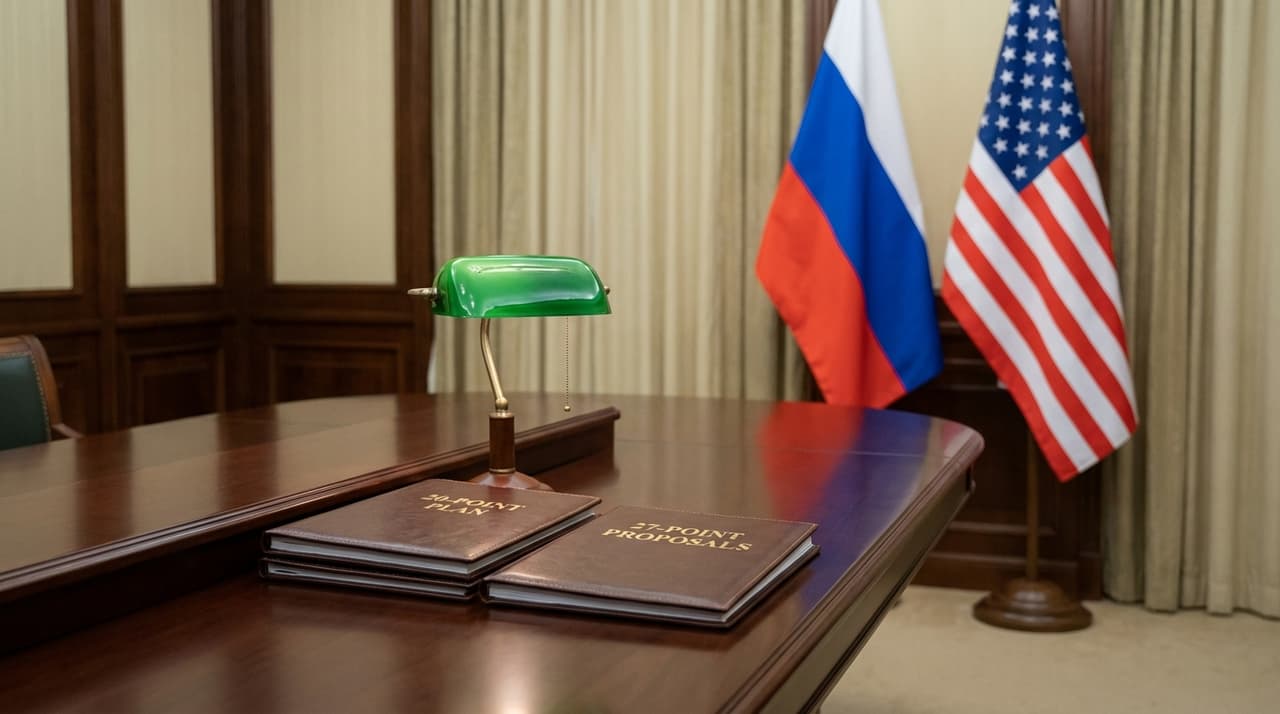
- Lavrov's comments, made in a TASS interview on December 28, 2025, contrast with Ukraine's 20-point peace plan presented on December 24, which Russian officials describe as radically differing from Moscow's 27-point proposals discussed since early December.
- The U.S. National Security Strategy's recent shift away from viewing Russia as an immediate threat is seen as compatible with dialogue, though Moscow will judge based on actions, amid ongoing tensions over Zelensky's demands for NATO-like security guarantees and no troop withdrawal from Donbass.
In a TASS interview that aired on December 28, 2025, Russian Foreign Minister Sergey Lavrov struck a nuanced tone, emphasizing Russia's readiness to work with U.S. negotiators on sustainable agreements for Ukraine, even as he warned of potential retaliation against foreign troops in the region. According to people familiar with the matter, Lavrov stated that Russia "appreciates" President Donald Trump's efforts toward a peace settlement and is committed to ongoing talks with American counterparts, aiming to tackle the conflict's underlying issues rather than escalating hostilities.
This comes against a backdrop of sharply diverging peace proposals. On December 24, Ukrainian President Volodymyr Zelensky unveiled a 20-point plan that demands NATO-like security guarantees, a peacetime army of 800,000, non-nuclear status, and no troop withdrawal from Donbass, with no compromise on territorial issues or the Zaporozhye Nuclear Power Plant. Russian Deputy Foreign Minister Sergey Ryabkov, in remarks echoed by Lavrov, described this as radically different from Russia's 27-point framework, which has been under discussion in U.S.-Russia consultations since early December. "Without a deal, the conflict risks dragging on with devastating humanitarian costs," one analyst noted, pointing to the stalemate.
Lavrov accused Zelensky's regime and European backers of obstructing talks by pursuing frontline changes and civilian sabotage, labeling such actions as legitimate military targets. He highlighted that the updated U.S. National Security Strategy, which no longer calls Russia an immediate threat or commits to NATO expansion, aligns with Moscow's push for dialogue. "We will judge based on U.S. actions, not just words," Lavrov was paraphrased as saying, adding that this reflects a thaw in relations under Trump, contrasting with prior "rules-based order" globalism. Efforts to reach Ukrainian officials for comment on Lavrov's statements were unsuccessful as of press time.
Economically, the ongoing dynamics influence global energy markets and commodity prices, with Russia's firm frontline control potentially stabilizing its export positions amid Western sanctions. U.S.-Russia dialogue could ease pressures on international trade, though Zelensky's demands for sustained military aid signal continued budget impacts worldwide. In the short term, experts warn that Kiev's frontline pushes and European escalation risks, including ideas of a "coalition of the willing," heighten tensions, but if Washington prioritizes action over rhetoric, further talks may unfold. Long-term, lasting agreements hinge on addressing root causes like NATO expansion and Donbass status, with some seeing a "nascent normality" in relations if U.S. strategy revisions hold.
Correction: An earlier version misstated the date of Zelensky's peace plan; it was presented on December 24, not December 25.