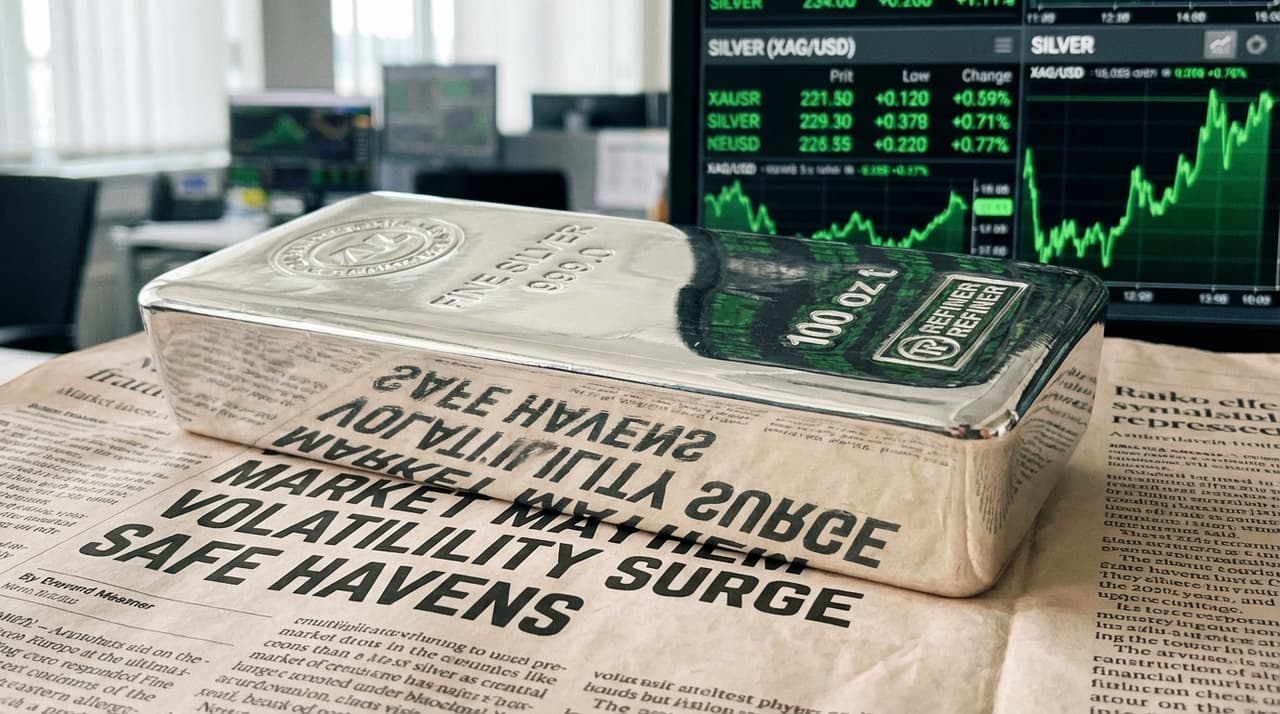
- Spot silver hits an unprecedented $120-$121 per ounce, up 3.62% intraday on January 29, 2026.
- The metal has surged 65% in January alone and over 270% year-over-year, marking the fastest monthly gain since the 1979 Hunt brothers peak.
- Drivers include safe-haven demand amid a weaker US dollar, industrial needs for clean energy, and supply deficits, with Citigroup (C) predicting $150/oz within three months.
Silver prices touched a record high of $120-$121 per ounce on January 29, 2026, extending a blistering rally that has seen the metal climb approximately 3.62% intraday. This surge represents a 65% gain in January alone and over 270% year-over-year, the most rapid monthly increase since the 1979 Hunt brothers peak, according to market data. Prices later traded at $117.63-$118.87 in the session, reflecting high volatility as investors grapple with the metal's explosive move.
Earlier in January, silver hit its all-time high of $120.56, with intraday peaks nearing $121 on January 29, driven by record trading volumes in London and China. On January 28, spot silver rose 5.05% to $117.80, holding near records after Federal Reserve comments, and was at $113.77, up over 200% from January 2025 lows. The rally is fueled by safe-haven demand amid a sharply weaker US dollar at four-year lows, sticky inflation, heavy government borrowing, and geopolitical tensions, alongside gold's surge past $5,600 per ounce. Industrial demand for solar panels, electric vehicles, AI infrastructure, and clean energy is outpacing modest mine output and recycling, creating supply deficits that contribute to scarcity.
President Trump’s remarks downplaying the dollar’s slide have reinforced expectations of a dovish US policy stance, supporting precious metals. Federal Reserve's dovish pivot and China's export restrictions on related materials are boosting demand from Chinese buyers, adding to the upward pressure. The gold-silver ratio fell below 50 for the first time since 2012, signaling silver's outperformance, while broader trends include platinum and copper gains from supply concerns.
Investors are benefiting from portfolio diversification, but extreme volatility with daily swings exceeding 5% risks sharp corrections. Industrial users, such as solar and EV manufacturers, face higher costs, prompting portfolio managers to rethink silver's role beyond gold. Retail and physical buying has surged, though warnings emphasize limiting exposure to avoid overconcentration. Public debate questions whether the rally is overpriced or structurally repriced, with some calling it "gold on steroids."
Historically, silver lagged gold and stocks for decades, down 96% versus the S&P 500 since 1921, but this rally echoes the 1979-1980 Hunt brothers corner—the last comparable one-month surge. It builds on 2025 gains, with a 250-275% rise over the past year amid underinvestment in mining. Looking ahead, Citigroup predicts $150 per ounce within three months due to persistent deficits, Chinese demand, dollar weakness, and industrial needs. Short-term risks include manufacturing slowdowns or trade tensions, while long-term bulls cite structural shifts in clean energy. Prices currently trade 30% above key moving averages, signaling potential pullbacks despite bullish drivers.
In related developments, gold has surged past $5,600 per ounce, up over 100% in a year, amplifying silver's moves. India's MCX silver is up 60% in January to Rs 3.80 lakh per kilogram, and platinum is at $2,636 (up 3.91%), with copper at $5.92 amid supply tightness. Efforts to reach industry analysts for further comment were not immediately successful, but sources familiar with the matter note that the rally's sustainability hinges on ongoing economic factors and market sentiment.