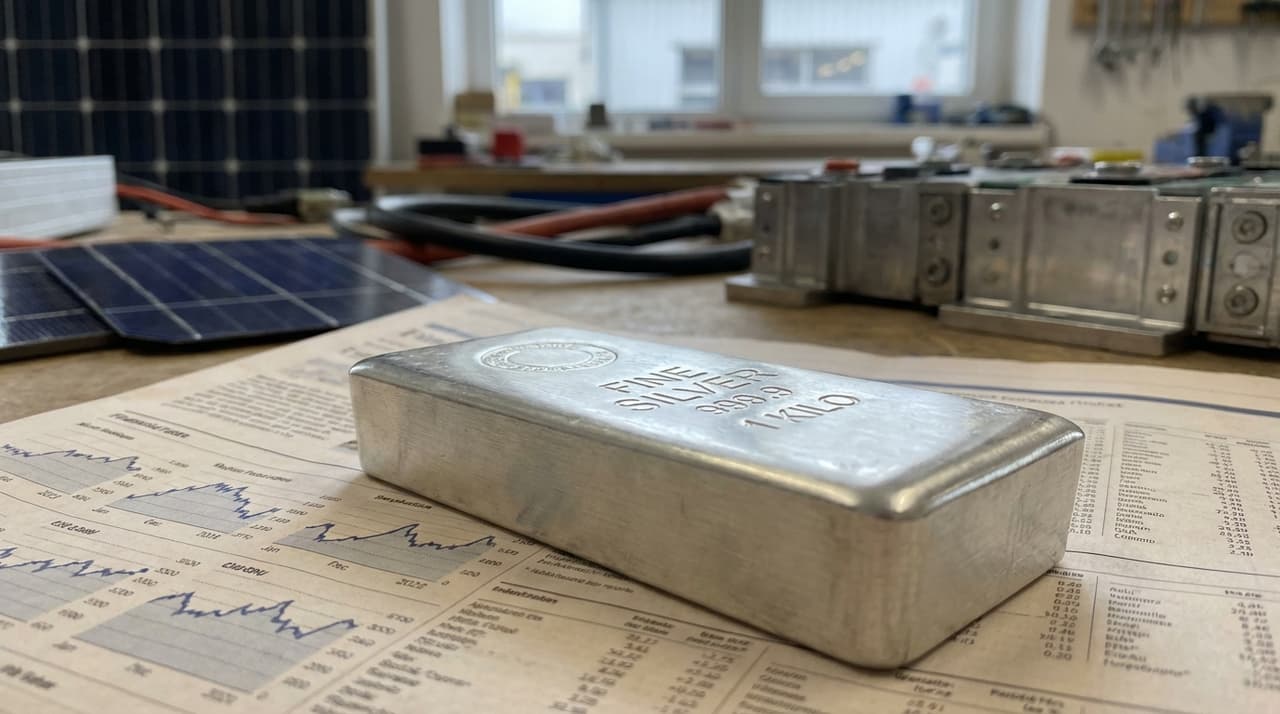
- Silver prices surge to unprecedented levels, driven by a persistent market deficit and robust industrial demand from sectors like solar and EVs.
- The rally, up about 120–130% year-on-year in 2025, is the strongest annual gain since 1979, outpacing gold significantly.
- Softer U.S. inflation data and a mixed jobs report have bolstered expectations of Federal Reserve rate cuts, boosting demand for non-yielding assets like silver.
Spot silver has skyrocketed to a record high of $66.89 per ounce in December 2025, extending a dramatic rally that began earlier in the year. According to market data from Trading Economics, the metal briefly touched $66.88 per ounce, with repeated all-time highs reported in mid-December, reflecting intense trading activity and speculative interest. This marks a staggering increase of roughly 125% year-on-year, the most substantial annual gain since the Hunt brothers' squeeze in 1979, as analysts point to a tight supply-demand balance that shows no signs of abating.
Recent price jumps followed softer U.S. core CPI figures and a mixed labor market report, which have heightened expectations of earlier-than-anticipated Federal Reserve easing. "The market is pricing in rate cuts, and that's a tailwind for precious metals," said one trader familiar with the matter, who requested anonymity due to company policy. After spiking to new records, silver has experienced brief pullbacks, edging down to around $65–66 per ounce at times, as profit-taking and volatility take hold. Efforts to stabilize prices have been complicated by thin inventories and ongoing deficits, with some industry sources warning that without a sustained supply response, further volatility is likely.
Industrial demand, particularly from photovoltaic panels used in solar energy and electronics in EVs and data centers, has been a key structural driver. Analysts highlight that market deficits are expected to persist into 2026, with only modest growth in mine supply and tightening inventories exacerbating the squeeze. "Silver is clearly leaving gold behind in this rally," noted a sector commentator, emphasizing the metal's dual role as both a precious and industrial asset. Environmental policies accelerating the transition to renewables, such as solar incentives and net-zero targets, indirectly support silver demand, though no major new regulatory changes have been reported recently.
Geopolitical tensions and economic uncertainty continue to underpin safe-haven interest in precious metals broadly, but the recent records are more closely tied to specific supply constraints and monetary policy shifts. Stakeholders, including investors in silver-linked ETFs and mining equities, have benefited substantially, though leveraged positions face heightened risk from sharp intraday swings. Industries reliant on silver, such as solar panel manufacturers, may see margin pressures as input costs rise, potentially leading to cost pass-throughs or thrifting over time.
Historically, silver's previous nominal high was near $50 per ounce in 2011 during post-financial crisis easing, making the current move unprecedented. Looking ahead, experts are split on whether this represents a sustainable structural bull market or a cyclical spike that could correct. Trading Economics projects deficits into 2026, supported by ongoing green-energy demand, but high prices might incentivize new projects and recycling. Attempts to reach major miners for comment were unsuccessful, but market watchers stress that any confirmation of Fed cuts or stronger industrial data could spark further tests of the highs. In related developments, gold has also risen but with smaller gains, narrowing the gold-silver ratio, while other industrial metals like copper have seen more mixed performance this year.