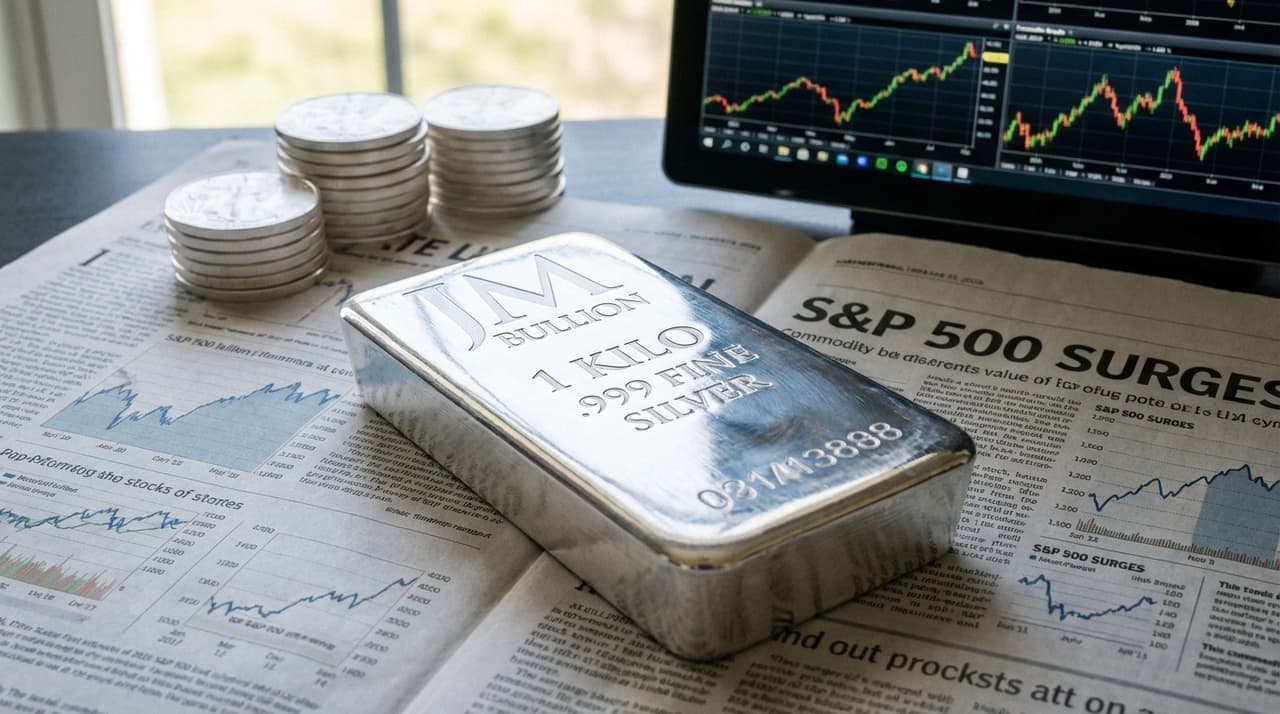
- Spot silver prices jumped approximately 5% in a single session, hitting a new all-time high of $94.53 per troy ounce by mid-January 2026, driven by a physical supply crunch and robust industrial demand.
- The rally reflects a 26% year-to-date gain and over 170% increase in 2025, outpacing gold's performance, with depleted COMEX and LBMA inventories exacerbating the squeeze.
- Key factors include China's export controls, de-dollarization trends via central bank buying, and surging demand from solar panels, AI infrastructure, and clean energy sectors, amid a projected 200-million-ounce supply deficit for 2026.
Silver's relentless ascent continues to defy expectations, with the metal breaking through the $90 barrier in early January and now setting fresh records. On January 19, prices climbed to $93.82, marking a 4.31% daily increase and a staggering 35.90% monthly rise, according to market data. This follows a volatile start to the year, including a dip to $76.14 on January 8 and a rebound to $89.56 by January 15, highlighting the intense pressure on physical inventories.
Efforts to secure physical delivery have drained COMEX and LBMA vaults, people familiar with the matter say, creating a supply squeeze that's pushing lease rates higher. Without a resolution, analysts warn that prices could easily surpass $100 per ounce in the short term, especially if industrial users, facing costs above $91, accelerate their search for substitutes or cut usage. "We're seeing unprecedented demand from sectors like solar and electronics, coupled with policy-driven constraints," one trader noted, requesting anonymity due to the sensitivity of ongoing market movements.
China's export restrictions on silver have tightened global supply, amplifying the rally alongside fears of U.S. tariffs that have prompted metal flows into secure vaults. Emerging-market central banks, including those in Russia, India, and Saudi Arabia, are increasingly accumulating silver as a strategic reserve amid de-dollarization trends, reshaping its monetary role. This outpaces gold's 73% gain in 2025, with silver up 192% year-over-year as of mid-January, according to recent reports.
In the broader context, silver's dual role as a safe-haven asset and industrial metal is fueling the surge. Supply deficits total 820 million ounces since 2021, with a projected 200 million shortfall in 2026, exacerbated by overcapacity in competing sectors. Industrial stakeholders in AI and nuclear energy are locking in long-term demand, while retail investors gain from hedging inflation and portfolio diversification, drawn by silver's accessibility compared to gold at over $4,600 per ounce.
Looking ahead, consensus forecasts from firms like ING and HSBC average $55-70 per ounce for 2026, but many analysts see potential overshoots due to policy fragmentation and a compressed gold-silver ratio, now around 15-20:1. Long-term, structural deficits and green tech demand could push prices toward $150 in bullish scenarios, though risks include industrial substitution or resolved supply issues. Attempts to reach major mining firms for comment were unsuccessful at press time.
Correction: An earlier version of this article misstated the daily percentage increase; it has been updated to reflect the correct 4.31% rise on January 19.