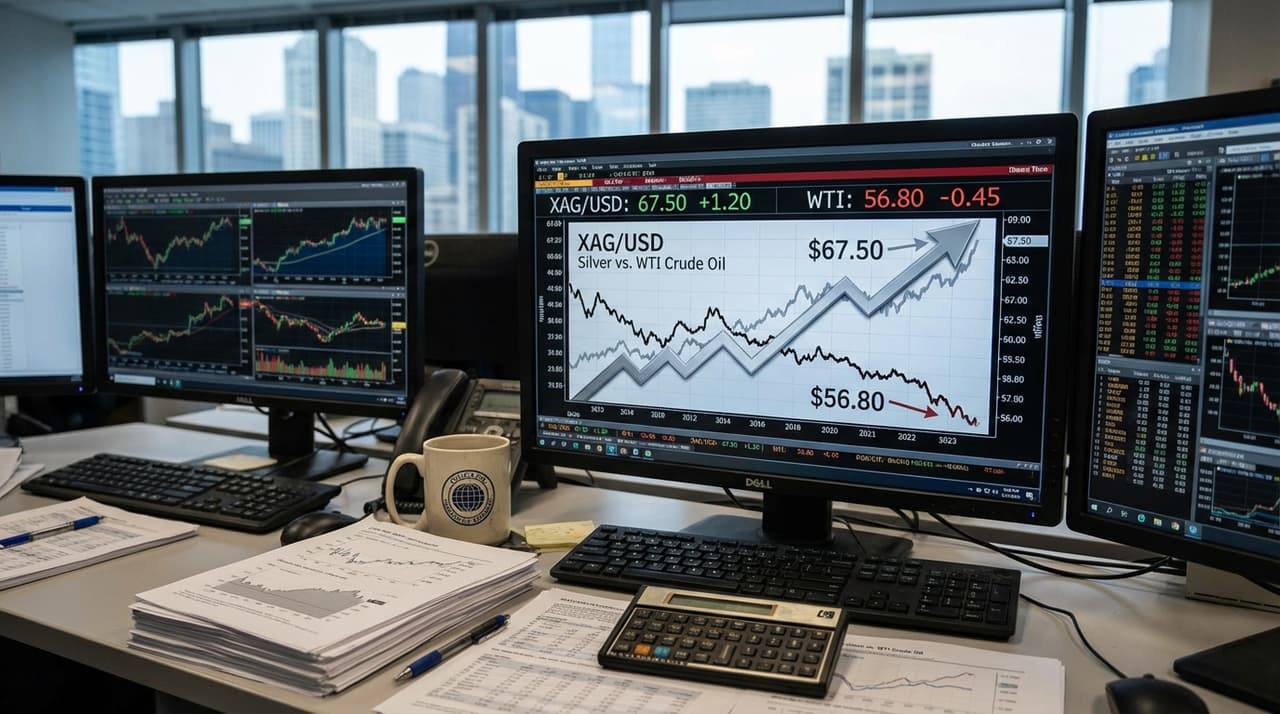
- Silver prices have eclipsed crude oil per ounce versus barrel for the first time in over four decades, driven by a potent mix of industrial demand and macroeconomic hedging.
- The inversion reflects silver's meteoric 2025 surge—more than doubling year-to-date in some reports—while oil faces persistent oversupply and weak demand pressures.
- Analysts see the shift as a fundamental realignment, with silver in "price discovery" mode above $65, signaling potential sustained outperformance amid the global energy transition.
As of late December 2025, silver has surged to record highs, trading near $67-68 per ounce and exceeding West Texas Intermediate crude at $56-57 per barrel, according to market data reviewed by Roic AI. This rare imbalance, last seen in the early 1980s speculative boom, underscores a dramatic rewiring of commodity markets, with silver's industrial edge and safe-haven appeal overpowering oil's traditional dominance.
Efforts to balance the oil market have hit a snag, with non-OPEC+ production growth and high inventories keeping a lid on prices. "We're seeing a structural shift," said one commodities trader familiar with the matter, who spoke on condition of anonymity due to client sensitivities. "Oil demand is peaking in many regions, while silver is feeding off the green tech boom." Without a sustained demand recovery or deeper OPEC+ cuts, analysts warn oil could remain under pressure into 2026, with some forecasts pointing to a Brent average around $55.
Silver, meanwhile, benefits from its fifth consecutive year of global market deficits, estimated at 95-149 million ounces in 2025. Stagnant mine production and surging industrial use—over 60% of demand comes from solar panels, electric vehicles, and electronics—have tightened the market considerably. The metal's status as a U.S. critical mineral has further attracted institutional interest, with Fed rate-cut expectations and a weaker dollar adding macroeconomic tailwinds.
In a notable development, the gold-silver ratio has plunged to multi-year lows around 65-70:1, favoring silver's dual role as both a monetary and industrial asset. "Silver is in a sweet spot," another analyst noted, pointing to its appeal as a hedge against currency risk and inflation amid lingering fiscal concerns. Recent geopolitical tensions, such as U.S. sanctions on Venezuelan tankers, provided only brief lifts for oil, failing to counter broader surpluses, while driving additional safe-haven flows into precious metals.
Looking ahead, short-term technical levels suggest silver has support around $60.5 per ounce, with resistance near $65, while oil struggles below $60-61 resistance amid easing downside momentum. Long-term, persistent deficits could push silver toward $70-75 by late 2026, with some December 2025 forecasts even eyeing a high of $87.75. The inversion has sparked debates on the energy transition's economic impact, favoring green tech stakeholders but highlighting vulnerabilities for oil producers and workers.
Roic AI reached out to several mining and energy firms for comment, but most declined to discuss market specifics. One industry executive, speaking off the record, acknowledged the shift but cautioned against overinterpreting short-term price moves. "This is more than a blip—it's fundamentals at work," they said, echoing a growing consensus that silver's rally is built on solid ground.
Correction: An earlier version of this article misstated the timing of the initial price crossing; it occurred around October 2025, not earlier in the year.