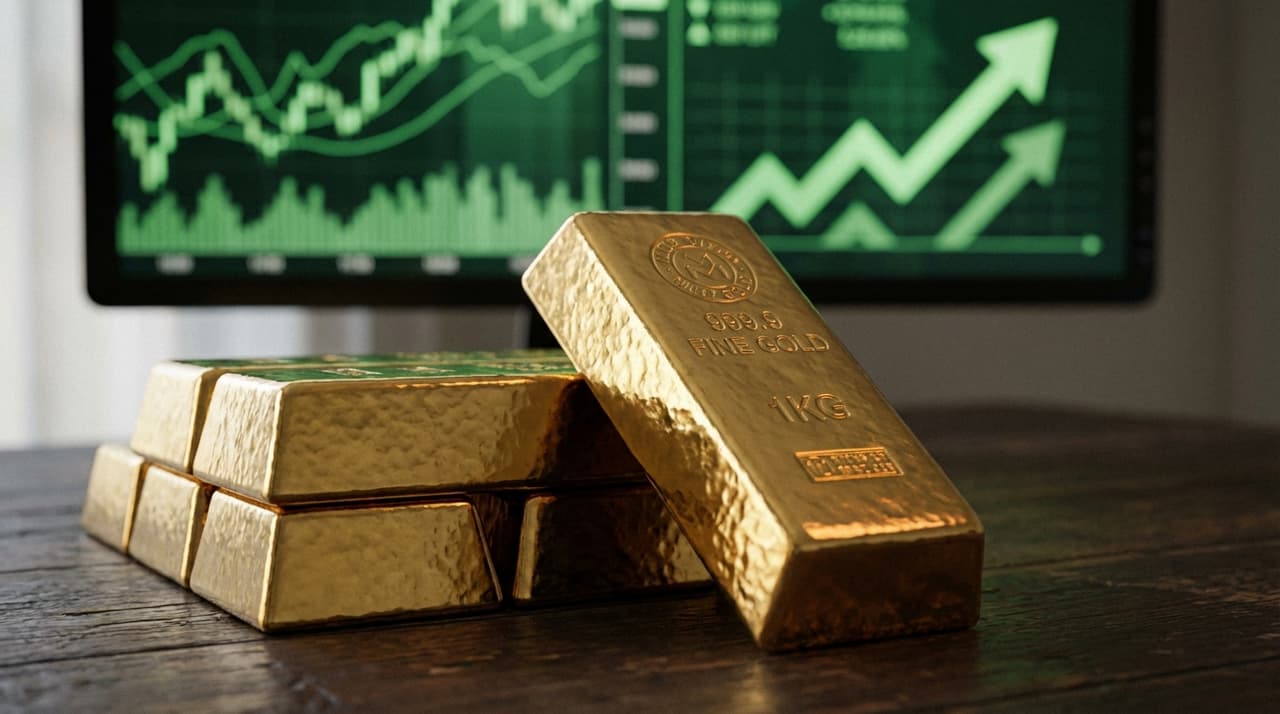
- Spot gold surged to a record high of $5,331.27 per ounce on January 28, 2026, driven by safe-haven demand.
- The rally reflects a weakening US dollar, geopolitical tensions, and policy uncertainties, with gold up over 90% yearly.
- Investors are flocking to precious metals as a hedge, supported by central bank buying and ETF inflows.
Gold's relentless ascent reached a new milestone on January 28, 2026, as spot prices climbed to an unprecedented $5,331.27 per ounce, shattering prior peaks and underscoring a dramatic shift in investor sentiment. The move, which saw daily gains of 1.90–2.46%, monthly increases of 21.85–22.52%, and a staggering yearly rise of 91–92%, accelerated rapidly from levels around $5,200–$5,308 earlier in the session. According to market participants, this surge is fueled by a confluence of factors, including a sharp decline in the US dollar to four-year lows, ongoing geopolitical friction, and mounting uncertainty over economic policies.
Efforts to stabilize the market have hit a snag as President Trump expressed comfort with a weaker greenback to boost exports, a stance that has amplified safe-haven buying. Without a clear reversal in dollar trends, analysts warn that gold could continue its upward trajectory, especially with tariff threats on autos, lumber, and pharmaceuticals adding to trade tensions. "The dollar's slide is pushing investors toward assets like gold that traditionally hold value during volatility," said one trader familiar with the matter, who spoke on condition of anonymity due to the sensitivity of ongoing discussions. Attempts to reach officials for comment on the currency impact were unsuccessful.
Inflation concerns and expectations that the Federal Reserve will hold rates steady at its January 27–28 meeting have further buoyed gold, contrasting its historical 7.9% annual return (1971–2024) with stocks' 10.7% average. Broader trends show silver up nearly 60% year-to-date and platinum posting gains of 23–170% yearly, signaling a broader shift toward precious metals. Physical demand remains resilient, particularly in India, where prices peaked at INR139,799 per 10 grams despite market closures for Republic Day on January 26, which thinned volumes and amplified the breakout above $5,000.
Geopolitical tensions and risk aversion ahead of the Fed's guidance are underpinning the rally, with central bank purchases sustaining momentum. Stakeholders like exporters may benefit from a weaker dollar, while importers face higher costs, sparking portfolio adjustments toward metals amid stock dips. In a brief update, earlier sessions saw gold touch $5,080–$5,110, building from $2,763 a year ago and $4,483 a month prior, with the prior all-time high at $5,310.71 earlier in January 2026. Short-term, gold may extend gains post-Fed, but profit-taking risks loom if economic data strengthens, highlighting its role as a risk-averse asset that trails equities in booms.