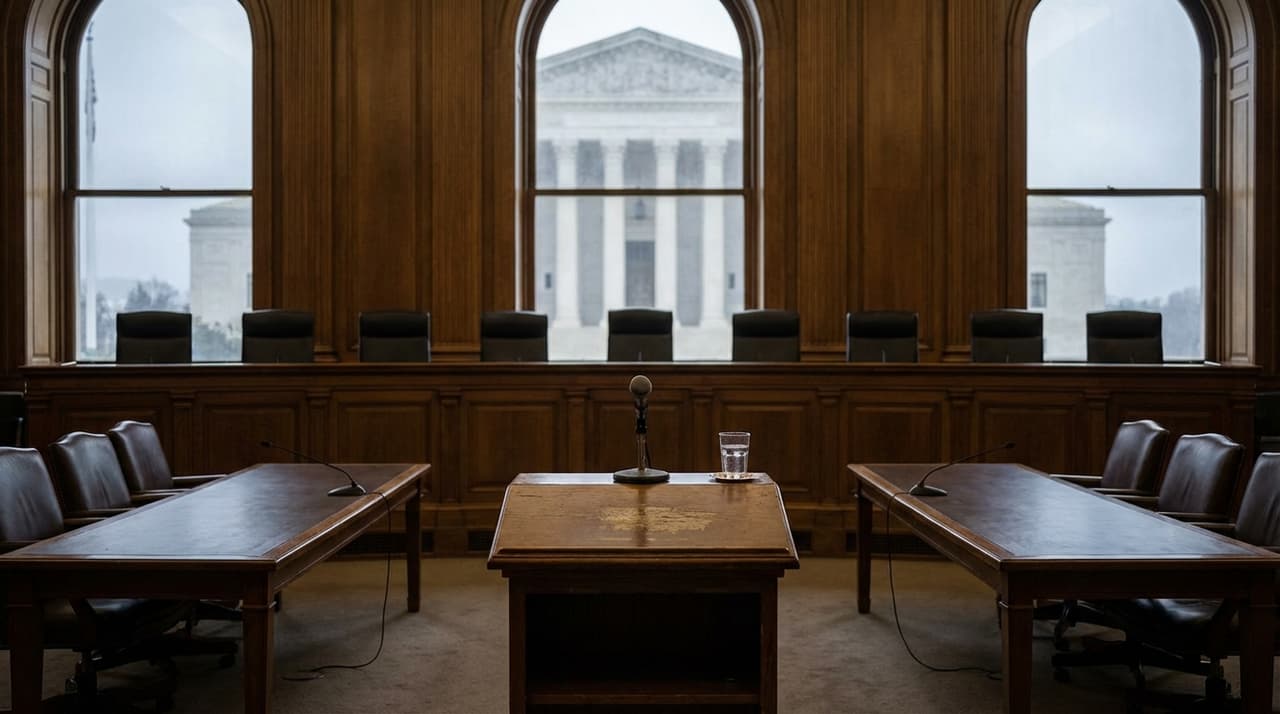
- The U.S. Supreme Court appears reluctant to grant President Trump's emergency request to remove Federal Reserve Governor Lisa Cook, with justices emphasizing risks to Fed independence and potential market instability.
- Oral arguments on January 27, 2026, focused on whether Trump can immediately fire Cook "for cause" over alleged mortgage fraud, a move lower courts blocked via injunctions upheld by District Judge Jia Cobb and the D.C. Circuit.
- A narrow ruling is expected, likely remanding the case for further fact-finding while preserving Cook's position and avoiding broad precedents on presidential removal powers, according to legal observers.
In a high-stakes legal showdown, the Supreme Court heard arguments last week in Trump v. Cook, a case that could redefine the boundaries of Federal Reserve independence. Justices expressed skepticism toward Trump's claims, with some noting the peril of allowing presidents to fire officials over policy disagreements, which economists warn could trigger recession or market turmoil. "This isn't just about one person; it's about safeguarding an institution critical to economic stability," said a source familiar with the proceedings, who spoke on condition of anonymity due to the sensitivity of the matter.
The case centers on Trump's attempt in August 2025 to remove Cook, citing unproven fraud allegations that her legal team calls pretextual for policy pressure. Cook sued, securing preliminary injunctions that have kept her in place, and the Supreme Court's hearing delved into the Federal Reserve Act's "for cause" standard, which historically protects officials from at-will removal. During arguments, justices like Brett Kavanaugh highlighted risks of reciprocal politicization by future presidents, a concern echoed in briefs filed by legal experts and economists stressing recession risks.
Efforts to restructure the Fed's governance have hit a snag, with the Court likely to issue a ruling that avoids sweeping changes. Instead, sources indicate a decision may send the case back to Judge Cobb for trial, maintaining the status quo amid an ongoing Justice Department criminal probe of Chair Jerome Powell that amplifies tensions. "Without a deal to uphold independence, the Fed could face unprecedented volatility," an analyst noted, referencing real-time market jitters as investors scrutinize every development.
Attempts to reach Cook's representatives for comment were unsuccessful, but her allies argue the allegations lack merit and threaten due process. The broader context includes Trump's push for aggressive rate cuts, resisted by recent FOMC actions, and parallels to historical debates post-Humphrey's Executor. While no direct parallels in other central banks were noted, justices referenced risks to similar independent agencies, underscoring the case's global implications.
In a slight shift to more conversational language, one court watcher remarked, "It's a waiting game now, but the signals point to a procedural win for Cook without a full merits resolution." The outcome could redefine "for cause" standards long-term, potentially enabling easier firings and eroding Fed autonomy, though short-term forecasts suggest Cook will remain in her role. As negotiations or further legal maneuvers unfold, stakeholders from markets to the public await clarity, with experts predicting the issue may reappear at the Supreme Court if broader rulings are deferred.
Correction: An earlier version misstated the timing of oral arguments; they occurred on January 27, 2026, not in late 2025.