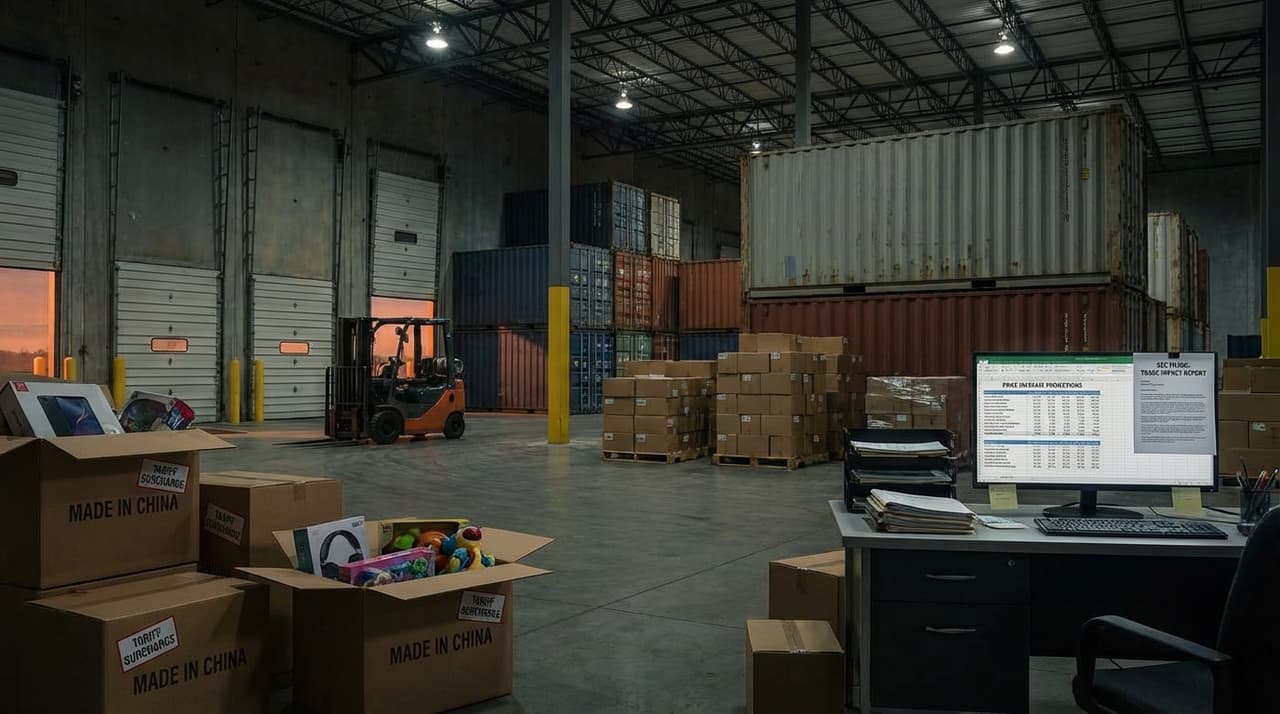
- U.S. consumers and businesses pay nearly all tariff costs through higher prices, with foreign exporters absorbing just 4%.
- Recent analyses and SEC filings show escalating expenses, prompting supply chain shifts and U.S. investment amid policy uncertainty.
- A Supreme Court case could invalidate some duties, while political maneuvers and global retaliation complicate the outlook for 2026.
New research analyzing $4 trillion in trade has confirmed that tariffs imposed under the Trump administration primarily raise costs for American consumers and firms, with foreigners absorbing only 4% of the burden. According to people familiar with the matter, this finding contradicts claims that tariffs are paid by other countries, instead acting like a tax on U.S. consumption that is likely to push inflation higher over time. Recent developments in early 2026 show businesses already raising prices or planning further hikes due to dwindling inventories and policy fluctuations, as highlighted in SEC filings from 2025.
Efforts to mitigate these costs have hit a snag, with companies like Stellantis (STLA) reporting tariff expenses of up to €1.5 billion annually, prompting a $13 billion expansion in U.S. investment. Without a deal to stabilize the situation, the financial burden on American households could grow, economists warn. In manufacturing and transportation equipment sectors, price increases are complicating planning, especially amid AI and data center booms and policy rollbacks such as EV tax credits. Labor impacts are already evident, with layoffs at manufacturers in Philadelphia and Boston, and hiring uncertainty spreading.
"What businesses are really focused on is regulatory stability," said one anonymous economist, echoing concerns from industry insiders. Attempts to reach the Trump administration for comment were unsuccessful, but sources indicate a "highly dynamic" strategy that includes layered increases, such as threats of 50-100% tariffs on NATO allies and signals of up to 200% on pharmaceuticals by mid-2026. Meanwhile, a Supreme Court case on tariffs under the International Emergency Economic Powers Act could invalidate some duties, potentially requiring refunds and forcing reliance on alternatives like Section 232 or 301.
Global trade faces disruption from reciprocal actions, with Canada imposing U.S. import tariffs and Mexico targeting China, adding to recession risks noted by J.P. Morgan (JPM) despite potential deals with Japan, Korea, and India. The USMCA renewal looms, and mixed U.S.-China talks further cloud the outlook. In this environment, American households are bearing the brunt through higher inflation and costs, with businesses reporting pessimism and shifting from investments to cost mitigation. Workers in tariff-hit sectors like autos see job losses, though some U.S. production boosts create opportunities.
This builds on historical context from 2018-2020, where studies showed a 96% U.S. burden, contradicting claims of foreign payment. Looking ahead, short-term price surges and labor disruptions are likely in 2026 if policies persist, offset somewhat by tax cuts from the One Big, Beautiful Bill Act boosting Q1 GDP by around 2.3 points. Long-term, experts predict potential recession and higher inflation unless court rulings or deals intervene, with supply chain resiliency gains offering a silver lining. As one industry analyst put it, "It's a challenging landscape, but adaptation is key."