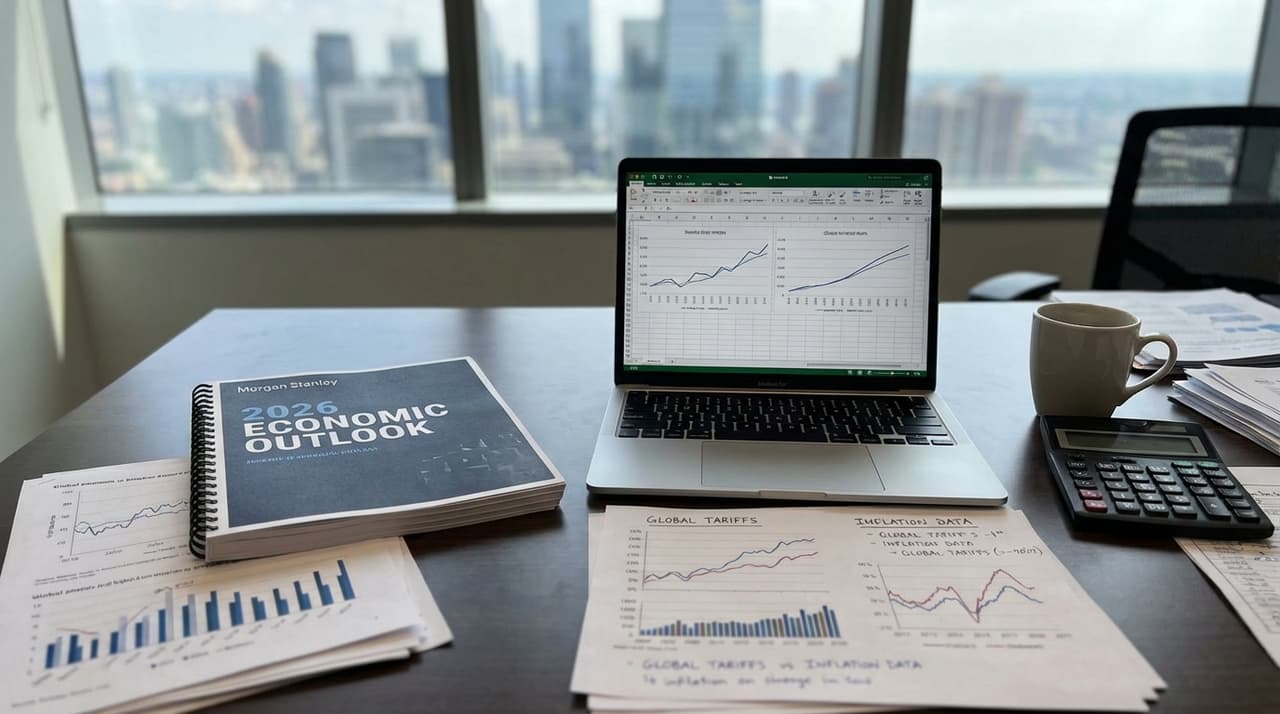
- U.S. companies are signaling plans to raise prices in 2026 to offset higher tariff costs, according to Morgan Stanley (MS).
- Analyst Michael Gapen expects tariffs to keep inflation firm in early 2026, squeezing purchasing power for low- and middle-income households.
- Firms have shifted from absorbing profit losses to passing through costs via price increases, helping restore margins and reduce recession risks.
U.S. businesses are gearing up for another round of price increases in 2026 as they continue to grapple with tariff-driven cost pressures, a recent survey indicates. Morgan Stanley's analysis, led by economist Michael Gapen, suggests that recent tariff hikes have effectively acted as a large tax increase on consumers and corporations, with companies already passing through a significant share of these non-labor costs to restore profitability.
"We're seeing firms increasingly turn to price adjustments rather than layoffs to manage these headwinds," Gapen noted in the firm's 2026 outlook, according to people familiar with the matter. This shift has helped lower near-term recession risks, but it sets the stage for persistent inflation in the coming year. Average U.S. tariff rates are projected to rise to the high-teens to mid-20% range, up from about 2–3% previously, marking the highest levels since the early 1900s.
The near-term environment is characterized as "slow growth and sticky inflation" in 2025, with Morgan Stanley warning of a stagflationary backdrop. Efforts to mitigate these effects have included companies initially cutting hiring and absorbing profit losses, but recent quarters show a pivot toward higher prices. Survey data suggest further increases are planned, which could firm inflation but largely avoid layoffs, leading to a "low-hire, low-fire" labor market with unemployment peaking around 4.7% in Q2 2026.
Low- and middle-income households are expected to bear the brunt, with real purchasing power squeezed in early 2026 as tariff-driven price increases outpace income growth. "Without these adjustments, many firms would face margin compression that could force more drastic measures," one industry source said, though attempts to reach additional corporate representatives for comment were unsuccessful. The tariff regime is part of a broader U.S. policy mix, with officials signaling that reductions could be possible if trading partners refrain from retaliation or offer concessions.
Looking ahead, Morgan Stanley anticipates tariff effects to fade in the second half of 2026, allowing a shift toward moderate growth and disinflation. Real consumption growth is forecast at about 1.6% in 2026 and 1.8% in 2027, supported by AI-related business investment and stronger upper-income spending. However, the risk of retaliatory measures from foreign governments remains a key concern, potentially triggering weaker global trade volumes and a synchronized slowdown.
In related developments, analyses of the 2026 M&A outlook note that previous rounds of tariffs dampened U.S. deal activity, underscoring how trade policy uncertainty can suppress corporate risk-taking. Sectorally, trade-exposed industries like technology, materials, energy, and industrials are seen as most vulnerable, while utilities and domestically oriented firms are less affected. As companies navigate this landscape, the focus will likely remain on price strategies to protect margins amid ongoing regulatory and economic shifts.