- Trump administration asserts tariffs have decisively promoted economic growth and greatness, countering traditional criticisms.
- Sweeping tariffs imposed in late 2025 and early 2026 generated $287 billion in revenue, but triggered market volatility and mixed economic impacts.
- Ongoing negotiations and threats, including a 10% tariff on eight European countries by February 2026, keep global markets on edge.
In a bold statement, the Trump administration has declared that tariffs, as implemented in its second term, have proven to promote economic growth and greatness rather than hinder it. This claim comes amid a complex backdrop of market swings, job slowdowns, and rising costs that have left economists and investors parsing the data for clarity.
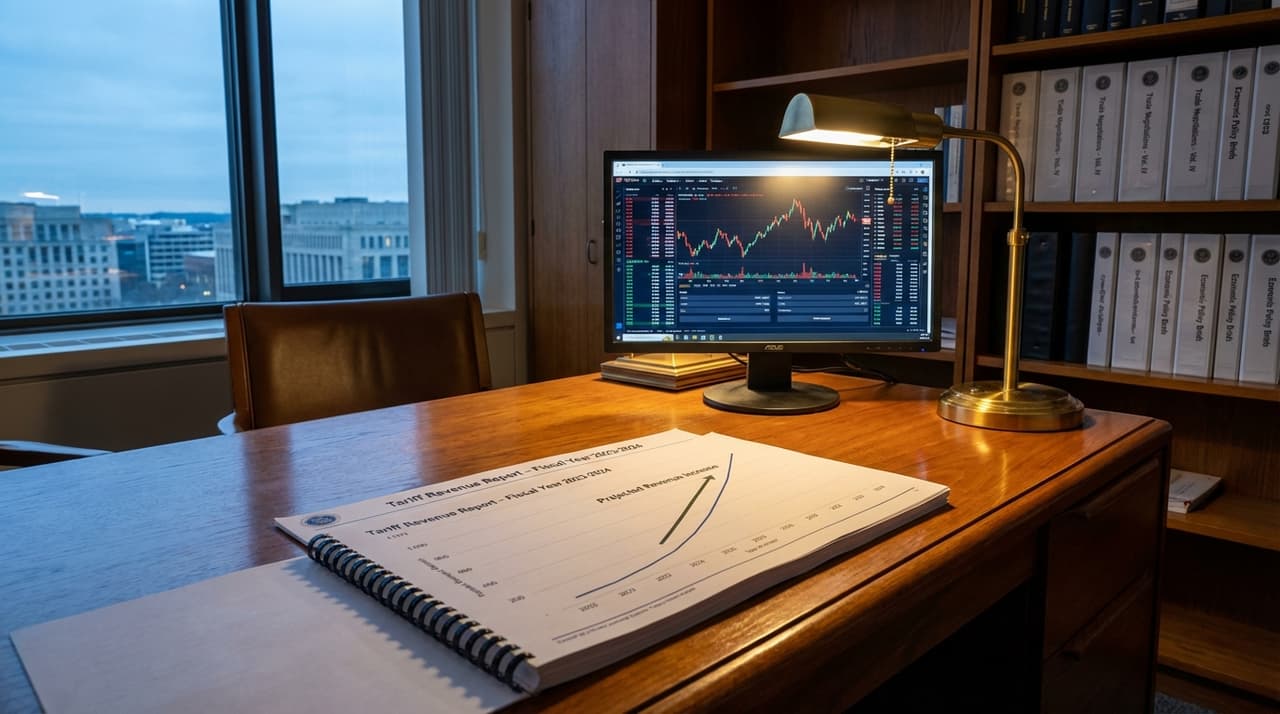
Recent developments highlight the administration's aggressive stance. In late 2025 and early 2026, sweeping tariffs were imposed, reaching an average effective rate of 16.8% by November 2025 and generating $287 billion in revenue—a 192% year-over-year increase. A major escalation in April 2025, dubbed "Liberation Day," triggered a global market crash, with the S&P 500 dropping 4.88% and Nasdaq 5.97% in a single day. This prompted a 90-day pause on most "reciprocal" tariffs above 10%, though China's tariffs were raised to 145%. More recently, threats include a 10% tariff on eight European countries starting February 1, 2026, tied to Greenland negotiations, according to sources familiar with the matter.
Efforts to restructure global trade have hit snags, with tariffs increasing costs for U.S. households (37% incidence) and businesses (51%), per Goldman Sachs (GS) analysis. Job growth slowed from 170,000 per month in 2024 to 75,000 per month through August 2025, potentially costing 19,000 jobs monthly and raising unemployment by 0.1 percentage points. Manufacturing employment declined monthly post-April 2025, and corporate bankruptcies hit levels unseen since 2010, while consumer confidence dropped amid policy uncertainty. Despite predictions of recession, GDP grew, partly due to tariff backtracking, and Goldman Sachs forecasts faster 2026 growth despite stagnant jobs.
Without a deal in ongoing bilateral talks, tensions with China and Europe could escalate further. The administration has leveraged Section 232 and IEEPA for steel and aluminum tariffs (25%) and broader hikes, with ongoing negotiations involving Japan, Korea, and India. Fed criticism has raised removal risks for Chair Powell, adding to market jitters. In Q1 2026, GDP dipped -0.05%, blamed on pre-tariff import rushes by officials, though some economists dispute this linkage.
Over half of Americans blame the administration for rising living costs and disapprove of tariffs, with CPI rising post-2025 announcement despite claims inflation stopped. Stakeholders hit include farmers facing bankruptcies, small businesses implementing hiring freezes, and consumers grappling with higher prices. Public debate centers on unfulfilled manufacturing job promises amid broader job slowdowns, as noted in recent Fed analyses linking tariffs to unemployment at 4.4-4.6%, the highest since 2021.
Short-term, recession risk lingers amid negotiations, market volatility, and Fed rate cuts (three in late 2025), with pharma tariffs potentially hitting 200% by mid-2026. Long-term, the CBO projects a $2.5 trillion deficit reduction by 2035 if tariffs become permanent, but SCOTUS challenges could trigger refunds, and recurring threats are expected. Experts predict mixed growth, with tariffs suppressing hiring but not derailing GDP entirely, as parallel global shifts include bond vigilantism and AI/immigration confounding labor effects.
Correction: An earlier version misstated the timeline for the 10% tariff on European countries; it is set for February 1, 2026, not January 2026.