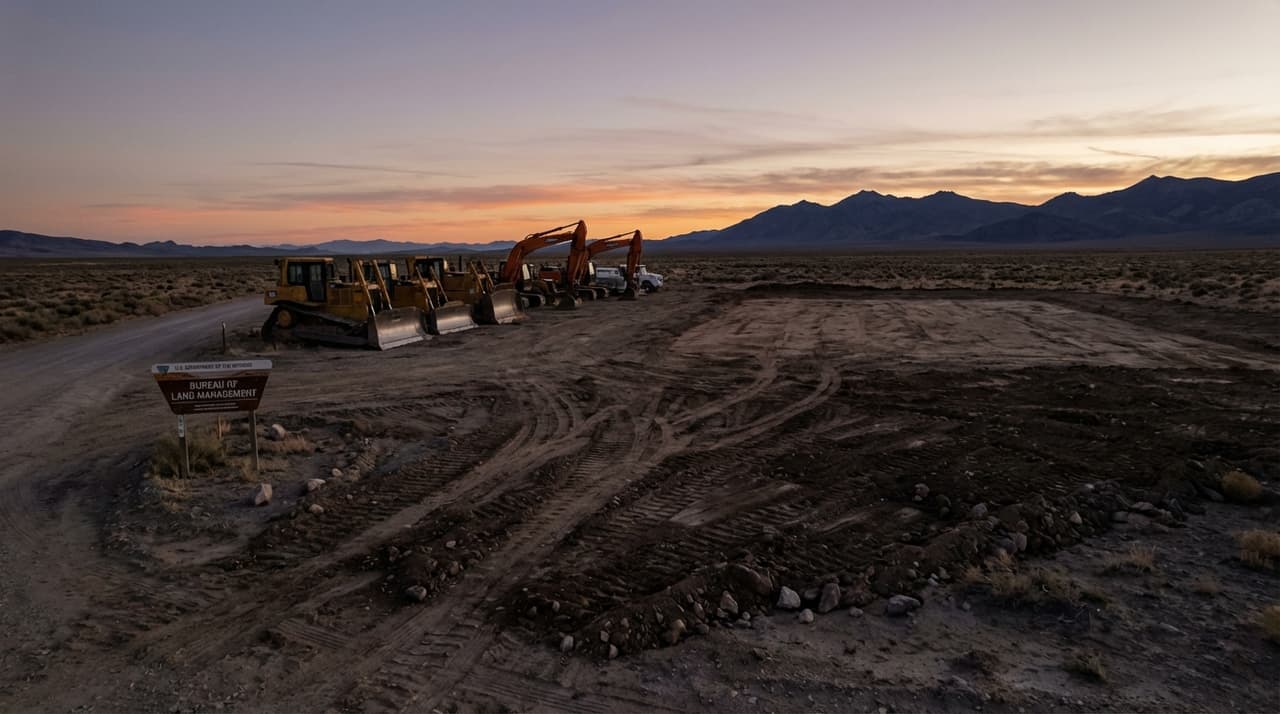
- The Trump administration has fast-tracked opening 13.1 million acres of federal land for coal leasing and expanded oil and gas access in sensitive regions.
- Regulatory rollbacks are removing conservation protections, creating immediate opportunities for mining and energy companies.
- Legal challenges from environmental groups are expected, but companies are moving quickly to secure leases before potential policy shifts.
A Rush for Resources
In what industry insiders are describing as a "land grab" scenario, the Trump administration has aggressively moved to open federal lands to mining, oil, and gas development, with officials suggesting that companies should act quickly before potential policy changes. According to people familiar with the matter, the Department of the Interior has prioritized extraction as the primary land use across millions of acres, creating what one mining executive called "a window of opportunity that won't stay open forever."
The administration's push comes as it seeks to rescind both the 2021 Roadless Rule and the 2024 Public Lands Rule, which had provided significant protections for national forest and Bureau of Land Management lands. Without these protections, sensitive regions including parts of the National Petroleum Reserve–Alaska and lands around Chaco Culture National Historical Park in New Mexico are now being targeted for expanded drilling and mining operations.
Efforts to restructure land use policies have hit their stride in recent weeks, with Interior officials working through the holiday period to finalize leasing arrangements. "The message is clear: if you want access, now is the time," said a source close to the administration who requested anonymity to discuss internal deliberations. "There's a sense that this window might close if political winds shift, so companies are being encouraged to move quickly."
Regulatory Shifts Create Immediate Opportunities
Parallel moves include the first "Gulf of America" offshore oil and gas lease sale held in December 2025 under an expedited framework. The Bureau of Ocean Energy Management offered broad access to blocks in the Gulf region, with bidding activity exceeding some analysts' expectations despite ongoing market volatility. Traditional oil and gas majors and independents participated in the sale, though detailed bid and award data remain incomplete as of this reporting.
Onshore, the administration has designated metallurgical coal as a "critical mineral," giving qualifying mining projects access to tax credits and incentives. This move, combined with lowered royalty rates on federal minerals and reduced land managers' authority to deny extraction projects, has created what environmental advocates describe as an "unprecedented giveaway" to resource companies.
Industry representatives counter that these measures restore balance after what they view as years of over-regulation. "We're finally seeing recognition that these resources belong to the American people and should be developed responsibly," said a spokesperson for a major mining association who declined to be named pending official comment from their organization. "The regulatory certainty is allowing companies to make investment decisions that create jobs and strengthen our energy security."
Market Response and Legal Challenges
Shares of companies with exposure to newly accessible lands have shown mixed performance in recent trading sessions, reflecting both opportunity and uncertainty. The Australian-linked mining firm Dateline Resources Ltd., which operates the Colosseum Mine near Mojave National Preserve, saw its stock price rise after the Department of the Interior sided with the company in a long-running dispute with the National Park Service. The decision, publicly endorsed by both Trump and the Interior Secretary, has enabled a major drilling program that has already found high-grade gold.
Environmental groups and some Indigenous communities are preparing legal challenges, arguing that the scale of rollbacks represents what one conservation organization called "an attack on public lands that will have lasting consequences." Without successful legal intervention or a change in administration, analysts suggest that leases already awarded may be difficult to unwind, creating long-term commitments even if political priorities shift.
Attempts to reach Interior Department officials for additional comment on the timeline for further leasing announcements were unsuccessful. Industry sources indicate that additional offshore lease sales are planned for 2026, with onshore permitting expected to accelerate through the first quarter.
Correction: An earlier version of this article misstated the total acreage affected by recent regulatory changes. While 13.1 million acres have been specifically opened for coal leasing, broader policy shifts affect additional millions of acres across multiple land categories.