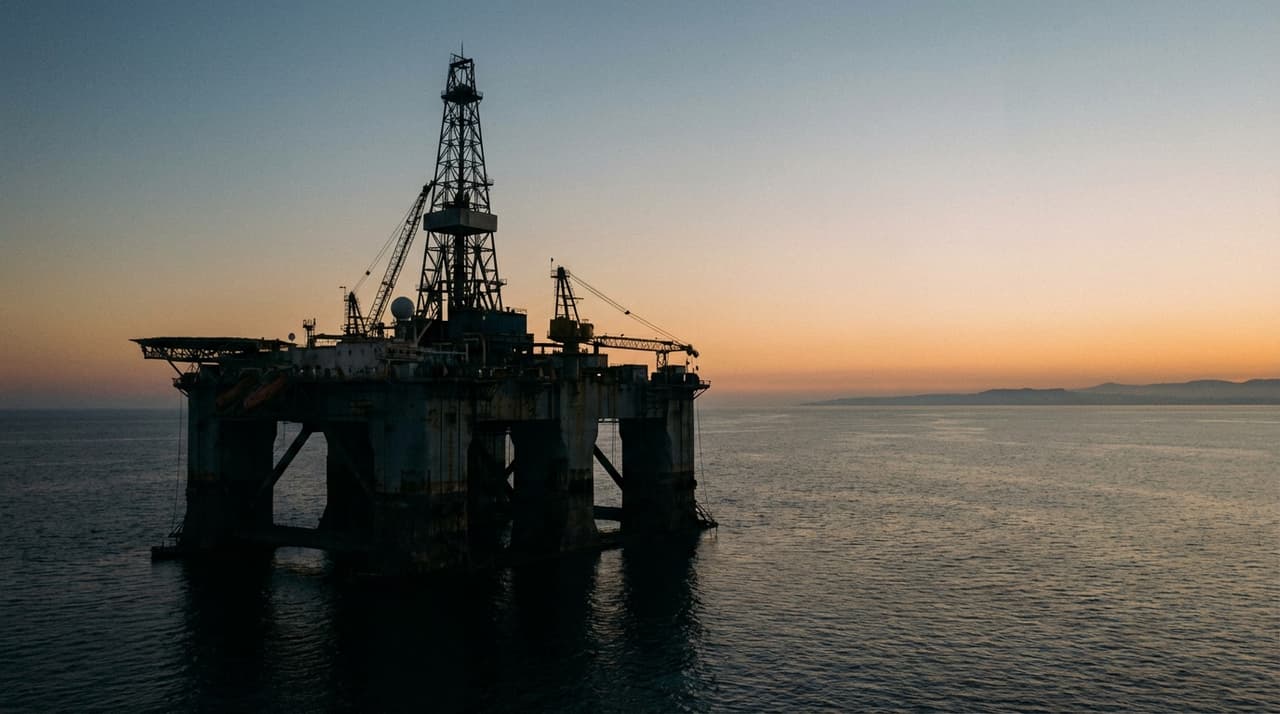
- The Trump administration announces plans to open over 1 billion acres of U.S. offshore waters for oil and gas drilling, reversing Biden-era restrictions.
- A U.S. military raid captures Venezuelan leader Nicolás Maduro, with Trump pledging strong involvement in Venezuela's oil sector, home to the world's largest reserves.
- Low oil prices around $60 per barrel and political opposition challenge the viability of new drilling, despite record U.S. production highs.
Energy Policy Shift and Market Realities
In a bold move to fulfill campaign promises, the Trump administration unveiled a sweeping plan to open vast coastal waters off Florida, California, and Alaska for oil and gas leasing, according to officials familiar with the matter. This reversal of Biden-era restrictions targets environmentally sensitive areas, with Interior Secretary Doug Burgum criticizing prior delays as hindering energy independence. The announcement comes as U.S. crude oil production hit a record 13.9 million barrels per day in 2025, yet low global prices near $60 per barrel—driven by excess supply and trade tensions—are dampening industry enthusiasm for new investments. Efforts to restructure domestic energy policy have hit a snag, with remote Alaskan regions lacking infrastructure and tariffs raising equipment costs, complicating short-term activity.
Venezuela Intervention and Oil Ambitions
Concurrently, a U.S. military operation in Caracas captured Maduro and his wife Cilia Flores, targeting military sites, sources indicate. Trump stated the U.S. will be "very strongly involved" in Venezuela's oil industry, with indictments for narco-terrorism pending in U.S. courts. This intervention follows accusations of election rigging and historical "theft" of U.S. oil assets from 1970s nationalizations, shifting justifications from drug interdiction to resource recovery. Secretary of State Marc Rubio cited anti-U.S. cooperation with terrorists, though initial reports suggest Venezuelan oil operations remain undamaged. Without a deal to stabilize exports, the region risks further instability, impacting migration flows that have brought hundreds of thousands of Venezuelans to the U.S.
Political and Legal Headwinds
The leasing plan faces bipartisan opposition, with California Gov. Gavin Newsom vowing court challenges to protect coastal economies, while Florida's Sen. Rick Scott and Gov. Ron DeSantis push to maintain a 2020 moratorium shielding tourism and military sites. Oil industry groups like the American Petroleum Institute praise the move as unleashing resources, but environmentalists decry risks to ecosystems. In Venezuela, public reactions split along partisan lines, with Trump allies lauding accountability for narco-state operations. Experts note that tariffs and deportations could hinder long-term viability, contradicting prior regime-change denials. As negotiations over legal filings and industry partnerships unfold, the focus remains on current developments rather than extensive historical context.
Correction: An earlier version misstated the timing of U.S. production records; it has been updated to reflect 2025 data.