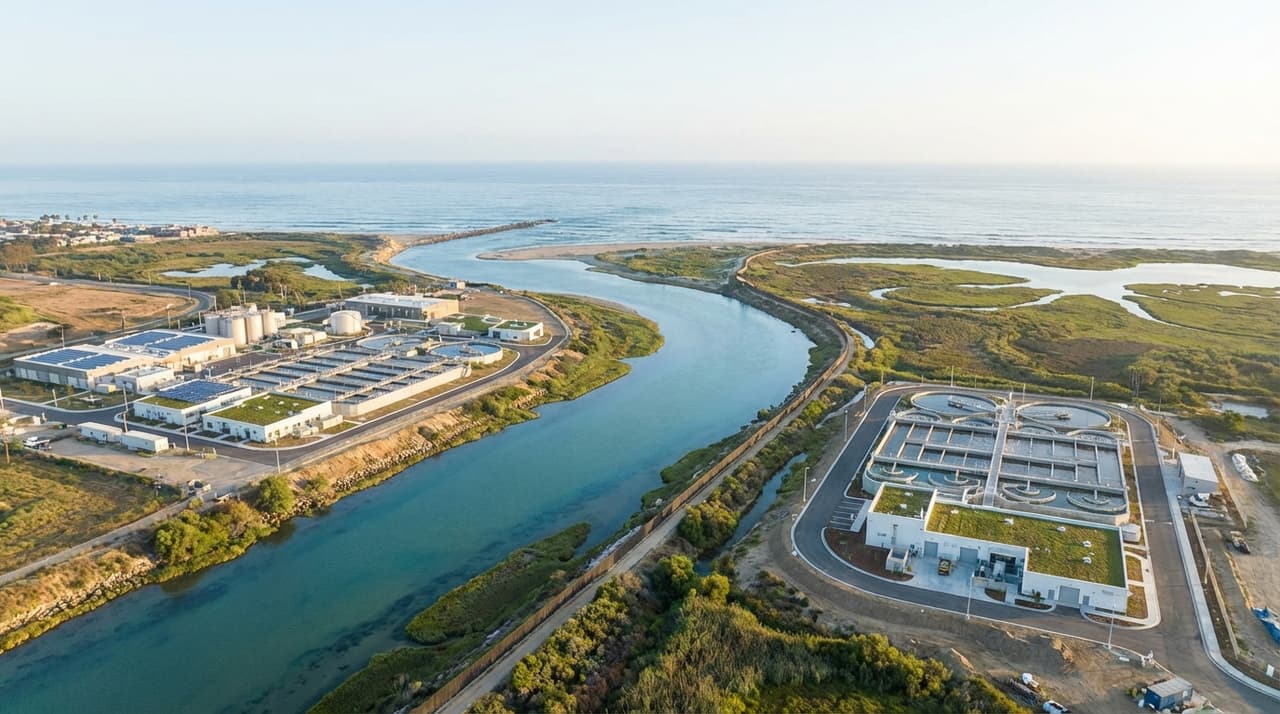
- The Trump administration and Mexico have signed an agreement committing to a "permanent, 100% solution" for the Tijuana River sewage contamination, with accelerated infrastructure timelines.
- Mexico will deploy $93 million and divert 10 million gallons per day of treated effluent by December 31, 2025, while the U.S. expands a treatment plant to 35 million gallons per day by August 28, 2025.
- The crisis has impacted military training and public health, with over 31 billion gallons of raw sewage contaminating the California coast since 2023, raising national security and environmental concerns.
In a move that marks a significant diplomatic and environmental breakthrough, the Trump administration and Mexico have inked a Memorandum of Understanding aimed at resolving the long-standing Tijuana River sewage crisis. EPA Administrator Lee Zeldin and Mexico's Secretary of Environment and Natural Resources Alicia Bárcena finalized the deal in July 2025, with President Trump touting it as a key achievement of his administration's environmental agenda. According to people familiar with the negotiations, the agreement leverages U.S. funding commitments to ensure Mexico meets aggressive deadlines, though some local officials remain skeptical about its ultimate effectiveness.
Mexico's commitments under the deal are substantial, including the deployment of $93 million in previously allocated funds and infrastructure upgrades to divert 10 million gallons per day of treated effluent from the Arturo Herrera and La Morita wastewater treatment plants by the end of 2025. On the U.S. side, efforts are underway to expand the South Bay International Wastewater Treatment Plant from 25 to 35 million gallons per day, with Congress having already earmarked $250 million for such expansions. These steps are critical, as the Tijuana River, which flows 120 miles from Baja California into the Pacific Ocean, has been dumping approximately 5 million gallons of sewage daily, containing contaminants like E. coli, arsenic, and antibiotic-resistant bacteria.
The human and operational toll of this crisis is stark. Military personnel, particularly Navy SEALs and Marine special forces training at Naval Amphibious Base Coronado, have faced serious health issues, leading to recommendations to cancel or relocate up to 75 percent of water exercises due to elevated bacterial levels. Civilian residents in areas like Imperial Beach report skin infections and other illnesses, with beach closures harming the local economy. Environmental groups, such as American Rivers, which lists the Tijuana River as the second most endangered in the U.S., have expressed cautious optimism, calling the agreement "a massive step forward" but noting that treatment plants may not remove all harmful chemicals.
Looking ahead, Mexico has pledged to negotiate a new international water agreement by December 31, 2025, outlining further actions to end the crisis permanently. The Trump EPA claims to have accelerated the cleanup timeline by 12 years, but challenges remain, including Tijuana's growing population potentially outpacing infrastructure improvements. As one industry insider put it, "This deal hinges on both sides meeting their deadlines without delay, or we risk seeing more of the same contamination." Efforts to reach additional comment from Mexican officials were unsuccessful at press time, underscoring the delicate nature of ongoing negotiations.
Correction: An earlier version misstated the amount of sewage diverted; it is 10 million gallons per day, not 10 billion.