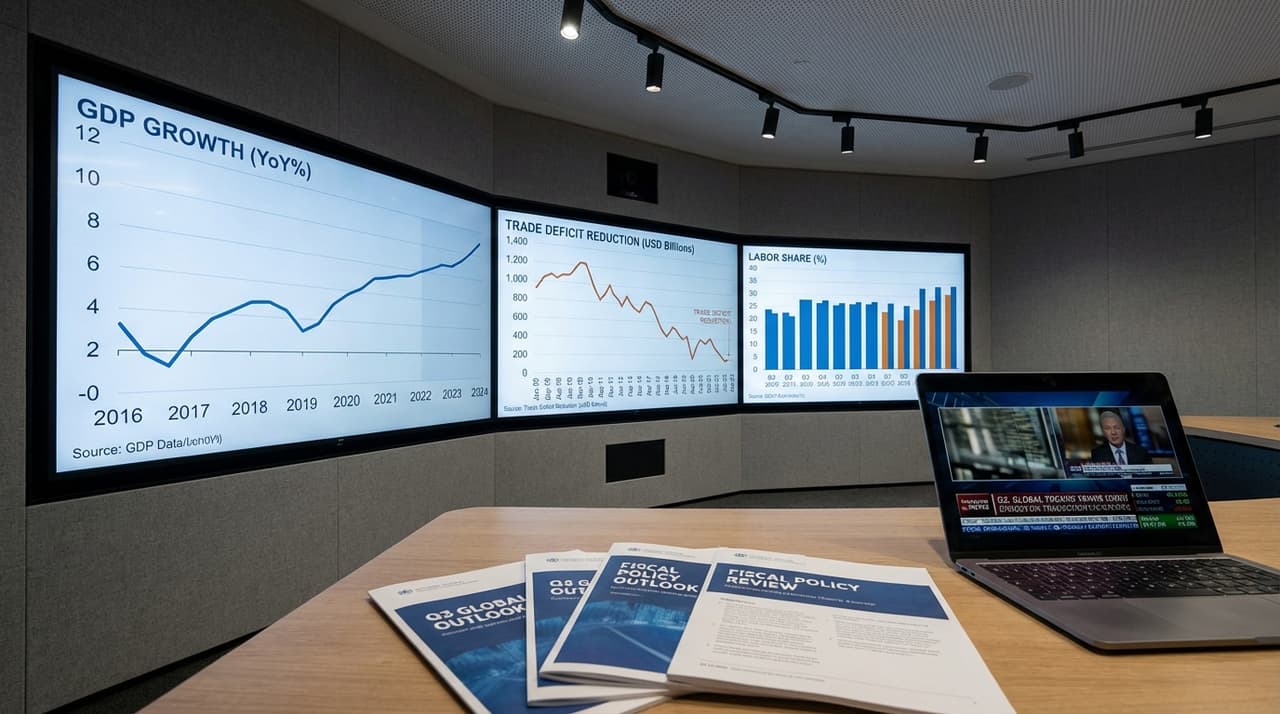
- Administration projects 5.4% Q4 GDP growth and 77% trade deficit reduction without inflation
- Economists forecast more modest 2-2.5% growth for 2026 amid trade tensions and policy uncertainty
- Worker welfare concerns persist as labor share of GDP hits lowest level since 1947
President Trump's recent declaration of an "American Economic Miracle" at Davos in late January 2026 has sparked intense debate between administration optimism and Wall Street caution. The administration claims its policies have delivered extraordinary results after one year in office, including slashing the trade deficit by 77% with no accompanying inflation and reducing core inflation to 1.6%. Commerce Secretary Howard Lutnick has predicted first-quarter growth exceeding 5% and year-end growth reaching 6%—what would be the fastest pace since late 2021's pandemic-driven 7% expansion.
Yet behind the bold pronouncements, economists point to significant headwinds. According to people familiar with market sentiment, Wall Street projections remain more conservative, with Truist forecasting just 2.3% growth for all of 2026 and other estimates ranging from 2% to 2.5%. "Maintaining high growth is a really tough hill to climb," said one analyst who requested anonymity to speak candidly about administration claims. Trade tensions from tariff policies and business uncertainty from shifting administration policies could moderate any expansion.
The administration's narrative centers on reversing what Trump characterizes as Biden-era stagflation through sweeping policy changes. Key initiatives include July 2025 tax cuts described as the largest in American history, featuring exemptions on tips, overtime, and Social Security income. The administration has also implemented 100% expensing and bonus depreciation for new equipment and capital investments to encourage domestic production, alongside energy independence policies reversing Green New Deal approaches.
But a troubling disconnect emerges between macroeconomic claims and worker welfare. Recent data shows the labor share of GDP dropped to 53.8% in Q3 2025—its lowest level since 1947—meaning workers are taking home a smaller portion of economic gains. Lower-income households experienced weaker wage growth in 2025, with inflation eroding savings despite strong post-pandemic GDP growth under Biden. Recent polling indicates Americans prioritize lowering prices over other economic concerns, suggesting even robust growth may not address consumer frustrations about food, rent, and housing costs.
Economists express particular concern about sustainability. "Interest rate cuts and tax refunds risk reigniting inflation rather than unlocking genuine growth," warned one policy analyst familiar with the debate. The administration faces scrutiny over whether claimed metrics reflect sustainable improvements or temporary statistical effects from policy stimulus. Without addressing structural issues like the declining labor share and persistent affordability concerns, the proclaimed miracle may prove fleeting.