- Trump administration touts inflation moderation, job growth, and over $2.7 trillion in AI investments as evidence of building the "greatest economy."
- Public perception lags, with 72% rating the economy fair or poor and 75% believing tariffs raise prices, fueling political headwinds.
- Policy uncertainties loom, including potential Supreme Court rulings on tariffs and a looming Fed leadership change, threatening economic stability.
A Divergence Between Data and Sentiment
Former President Donald Trump's assertion that the U.S. is "quickly building the greatest economy in the history of the world" reflects his administration's aggressive pro-growth agenda for 2025-2026, but the reality on the ground tells a more nuanced story. While officials point to moderated inflation, accelerated job creation, and a surge in AI-driven investments—including a notable $90 billion infusion in Pennsylvania for AI and energy—many Americans remain unconvinced. According to recent polling, 72% rate the economy as only fair or poor, and 53% see it worsening, highlighting a stark disconnect between headline figures and everyday experiences.
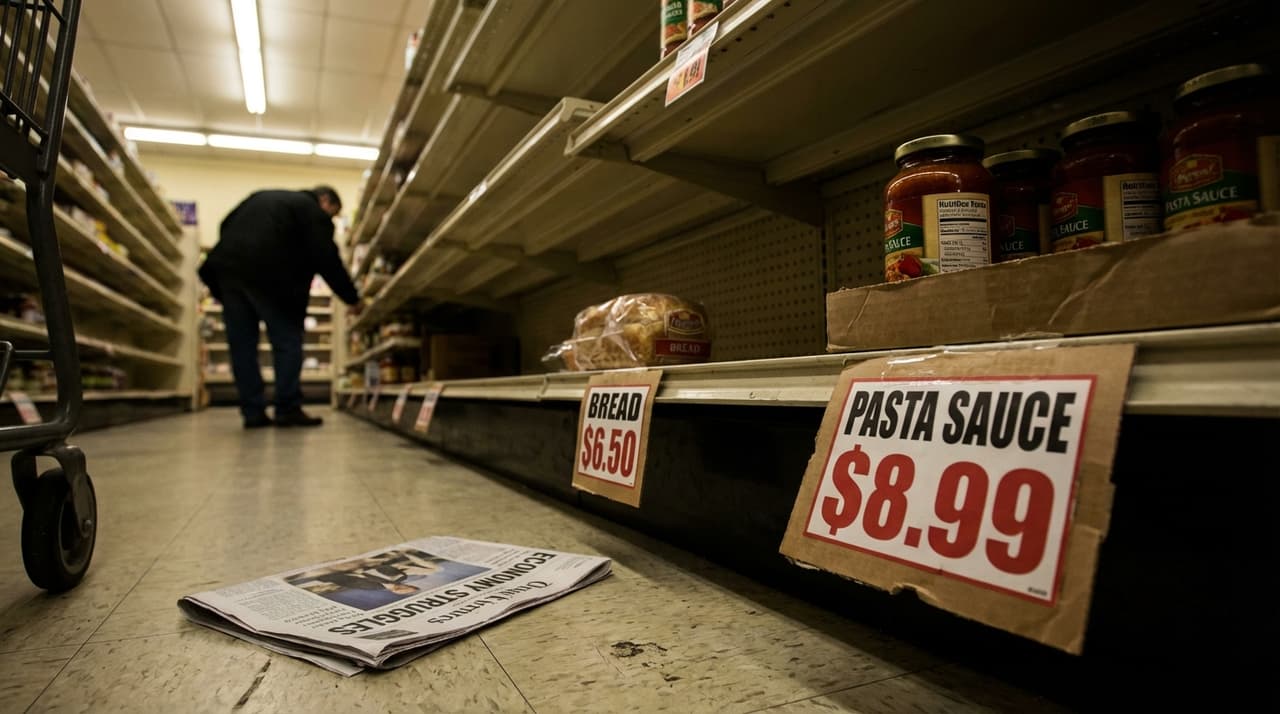
Efforts to restructure economic policy have hit a snag in public opinion, with affordability concerns taking center stage. The quiet abandonment of tariffs on pasta and furniture during the 2025 holiday season, amid heated debates over living costs, underscores the administration's struggle to balance ambitious trade goals with consumer pressures. "People are feeling the pinch, and that's shaping how they view these big-picture claims," said one economic analyst, who spoke on condition of anonymity due to the sensitivity of ongoing policy reviews. Attempts to reach the Trump campaign for comment on the polling data were unsuccessful.
Policy Moves and Market Reactions
In July 2025, the One Big, Beautiful Bill Act was enacted, aiming to boost Q1 2026 GDP by approximately 2.3 percentage points through tax cuts, deductions for tips and Social Security, and manufacturing incentives. However, sustainability questions linger, with some experts warning that the short-term boost might not translate into long-term gains without broader structural support. Corporate capital expenditure incentives have spurred manufacturing activity, but sectors like pharmaceuticals face potential 200% tariffs by mid-2026, adding to trade uncertainties. Bilateral deals with countries like Japan, Korea, and India are in the works, yet U.S.-China tensions persist, complicating the global economic landscape.
Market trends reflect this volatility, with the Consumer Price Index up 2.7% over the past year—on top of a 23% rise since 2020—and groceries seeing a sharp 24.6% increase. These figures feed into public skepticism, with 75% of Americans, including 56% of Republicans, believing that tariffs contribute to higher prices. "Without a deal to ease trade frictions, we could see more price spikes that undermine consumer confidence," noted a financial strategist familiar with tariff negotiations. The Supreme Court is expected to rule soon on Trump's unilateral authority to impose tariffs, a decision that could invalidate some measures and trigger revenue chaos or lead to higher, more stable rates.
Political and Societal Implications
The political context adds another layer of complexity. Tax relief, deregulation, and America-First policies prioritize U.S. workers and manufacturers, aiming to reduce reliance on foreign supply chains. However, midterm elections hinge on affordability issues, with Democrats leading Republicans 40% to 35% on economic management among independents, an 11-point gap that could sway outcomes. Trump's approval ratings have dipped, with 47% blaming him for high prices compared to 22% who fault President Biden, according to recent surveys. This sentiment is compounded by perceptions that policies favor the wealthy, with 65% of respondents holding that view and strong populist calls emerging to reduce the wealth gap.
Looking ahead, the short-term outlook includes potential tax refunds in spring 2026 that might boost consumption, but a looming battle over the Federal Reserve's leadership—with Chair Jerome Powell set to exit in May 2026 and Trump favoring candidates like Kevin Hassett or Kevin Warsh—could spike long-term rates if central bank independence is doubted. In the long term, sustained growth from AI and private investment is possible if policies hold, but recession risks linger without Fed support or amid trade disruptions. Only one-third of Americans expect their family finances to improve, down from 48% previously, signaling deep-seated concerns. As one industry insider put it, "The economy shows resilience, but the human touch—how people feel about their wallets—will ultimately determine the political and economic trajectory."
Correction: An earlier version of this article misstated the timing of the Supreme Court ruling; it is expected soon, but no specific date has been set.