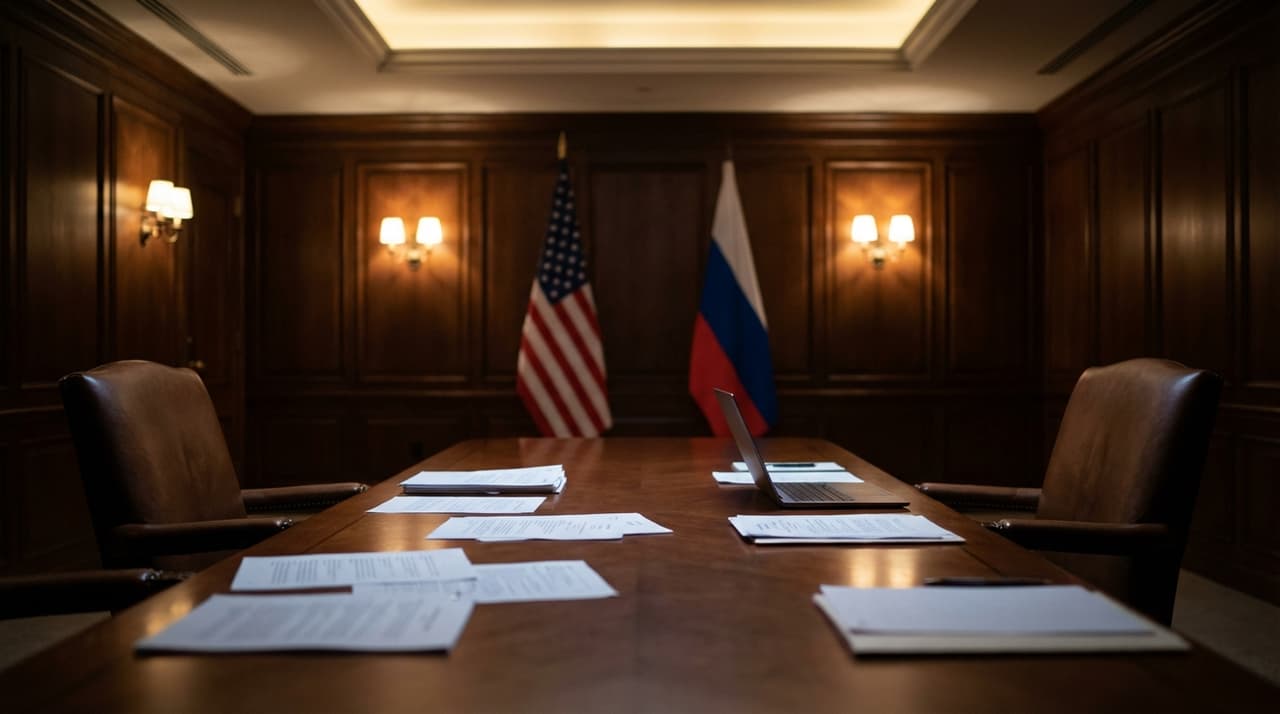
- Donald Trump asserts Russia wants to end the Ukraine war, with U.S. envoys pursuing a breakthrough-free peace proposal.
- The Kremlin welcomes Trump's stance while warning it is "ready" if Europe escalates, amid pressure on Ukraine for territorial concessions.
- Market volatility persists as energy prices hinge on diplomatic outcomes, with Trump threatening sanctions or tariffs to force a settlement.
Donald Trump recently claimed that Russia, and specifically Vladimir Putin, "wants to end" the Ukraine war, framing himself and a U.S.-drafted peace plan as the vehicle to achieve that goal. However, talks remain inconclusive, with no agreed settlement in sight, according to people familiar with the discussions.
At a NATO-related event, Trump said he believes Putin desires an end to the conflict, following hours-long but breakthrough-free talks in Moscow between U.S. envoys Steve Witkoff and Jared Kushner and Russian officials. Simultaneously, the Kremlin issued a stark warning, stating Russia is "ready" if Europe wants war, accusing European governments of undermining a potential deal. This dual messaging—openness to diplomacy paired with military readiness—has left markets on edge, with European gas prices fluctuating amid the uncertainty.
Trump officials are actively pursuing a U.S.-written peace proposal that, according to Kyiv and media reports, would likely require major Ukrainian territorial concessions, which Ukraine strongly resists. Trump has repeatedly argued that Russia will ultimately prevail and that Ukraine will have to cede land, statements the Kremlin publicly welcomed as aligning with its own view. "We see these comments as in line with our position," a Kremlin spokesperson said, though efforts to reach Ukrainian officials for comment on the latest developments were unsuccessful.
The political context adds layers of complexity. Trump's line that he "understands why Russia invaded" and that NATO should not be "associated with Ukraine" echoes long-standing Russian objections to Ukraine's NATO membership, underpinning his critique of the Biden administration for allegedly "breaking" an earlier understanding. During and after his first term, Trump pressed NATO members to spend at least 2% of GDP on defense, and he has a record of threatening to weaken U.S. commitments to the alliance, which colors European skepticism about his Ukraine diplomacy. U.S. congressional Democrats, including Foreign Affairs leaders, have criticized Trump's signals as undermining Ukraine and rewarding aggression, warning that any deal trading territory for peace could erode international norms against forcible border changes.
In Ukraine, leadership has pushed back, with President Volodymyr Zelenskyy described as not accepting or even, in Trump's telling, not reading the U.S. peace plan. Kyiv asserts that Washington is pressuring it into "major territorial concessions," a stance that has fueled public and expert debate in the West over whether Trump's approach would end the fighting faster but entrench Russian gains or weaken deterrence and betray Ukrainian sovereignty. Russia has leveraged Trump's more pessimistic assessments for internal and external messaging, using them to bolster its narrative.
Economically, the war has driven higher energy and food prices globally, and any credible move toward ending it would likely ease pressure on European gas markets and some commodity prices. Conversely, a breakdown or escalation would sustain or worsen volatility. Trump has threatened "massive sanctions" or "massive tariffs" on Russia and potentially Ukraine if they do not move toward a settlement within a set deadline, introducing uncertainty for trade, energy, and financial markets. European states, having shifted to "wartime mode" economic planning with major defense-spending increases since Russia's full-scale invasion in February 2022, face structural shifts that would not reverse quickly even if a ceasefire were reached.
Looking ahead, short-term developments include planned follow-up talks between U.S. envoys and Kyiv after the inconclusive Moscow meetings. Markets and governments will monitor whether Trump follows through on sanctions or tariffs threats or softens them based on responses from Russia and Ukraine. Battlefield dynamics in Ukraine remain critical, as without a military stalemate or clear gains, diplomatic leverage is limited. In the long term, a settlement involving Ukrainian territorial concessions could reduce immediate fighting but risk long-term instability and weakened international norms. If no agreement is reached, experts warn of protracted war with higher escalation risks, especially given Russia's rhetoric. NATO's and the EU's rearmament and energy-diversification paths are likely to persist regardless, locking in structural changes in European security and economic policy.
Recent connected stories highlight the tension: Trump saying he is "extremely frustrated" with the war and "doesn't want any more talk," as U.S. pressure on Kyiv grows, and reports of "pretty strong words" between Trump and leaders of France, Britain, and Germany over Ukraine strategy, underscoring allied divisions. These dynamics parallel other conflicts where outside powers have brokered settlements involving de facto border changes, with similar debates over peace versus principle and long-term security.