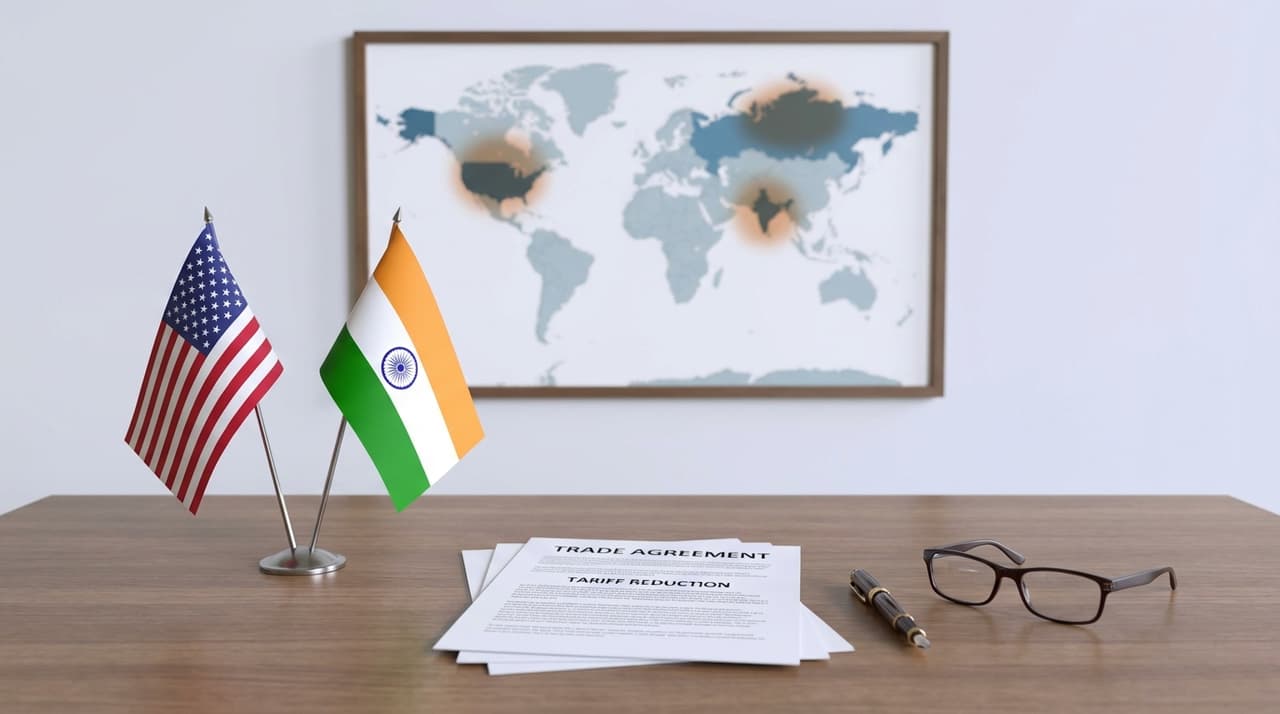
- The U.S. is reducing tariffs on Indian imports from 25% to 18% following India's commitment to stop purchasing Russian oil.
- India has agreed to source crude oil from the United States and potentially Venezuela instead, while purchasing over $500 billion of U.S. goods.
- The deal, announced by President Trump after talks with Prime Minister Modi, aims to cut off Russian revenue sources to help end the war in Ukraine.
A Strategic Trade Shift
In a move that reshapes global energy alliances, the U.S. has agreed to lower reciprocal tariffs on Indian imports from 25% to 18%, according to White House officials familiar with the negotiations. The reduction comes after India committed to stop buying Russian crude oil—a significant shift for the world's third-largest crude oil importer, which had emerged as the largest buyer of discounted Russian seaborne crude after Western sanctions on Moscow over its 2022 invasion of Ukraine.
President Trump announced the trade deal after speaking with Prime Minister Modi, framing the tariff reduction as a means to help end the war in Ukraine by cutting off Russian revenue sources. "We're getting things done," Trump said in a statement, emphasizing his personal friendship with Modi. The agreement represents a negotiated resolution after months of pressure from the Trump administration on India to reduce Russian oil dependency, with Treasury Secretary Scott Bessent previously noting at Davos that the tariff was achieving results—Russian oil purchases by Indian refineries had "collapsed."
Deal Terms and Market Implications
Under the agreement, India has committed to stop buying Russian crude oil and source supplies from the United States and potentially Venezuela instead. This marks a notable pivot for India, which had previously halted Venezuelan imports due to earlier U.S. tariffs on nations purchasing Venezuelan crude. The deal also requires India to reduce its own tariffs and non-tariff barriers on U.S. goods to zero, purchase over $500 billion of U.S. energy, technology, agricultural, coal, and other products, and implement "BUY AMERICAN" policies at higher levels.
Of the original 25% tariff, 25%—representing a 6.25 percentage point reduction—was specifically imposed on Indian crude oil imports from Russia, which the U.S. claimed was indirectly financing Russia's war in Ukraine. India maintained a position of strategic autonomy throughout negotiations while protecting its agriculture and dairy sectors, according to sources close to the discussions. The commitment to purchase Venezuelan oil adds another dimension, though details on timing and volumes remain unclear.
Broader Context and Reactions
The agreement comes days after India and the European Union announced a major trade deal, with the U.S. remaining India's single largest trading partner despite the EU being its largest bloc partner. Efforts to restructure trade relations have hit a snag in recent months, but this breakthrough suggests a recalibration of priorities. Without a deal, tensions could have escalated, potentially forcing India into more difficult economic choices.
Industry analysts note that the shift in sourcing arrangements is significant for global energy markets, given India's massive import needs. "This positions the U.S. as a replacement energy supplier for India while simultaneously achieving Trump's stated foreign policy objective of reducing Russian revenue and military capacity," said one market observer, who requested anonymity due to the sensitivity of the talks. Attempts to reach Indian trade officials for additional comment were unsuccessful at press time.
Looking Ahead
The deal's future implications extend beyond immediate tariff relief. By aligning with U.S. energy supplies, India may gain more stable pricing and supply chains, though it could face challenges in transitioning away from discounted Russian crude. For the U.S., the agreement opens a major export market and strengthens geopolitical leverage. As negotiations wrapped up, officials hinted that further adjustments might be possible if market conditions shift, but for now, the focus is on implementation.
Correction: An earlier version of this article misstated the percentage point reduction in tariffs; it is 7 percentage points, from 25% to 18%.