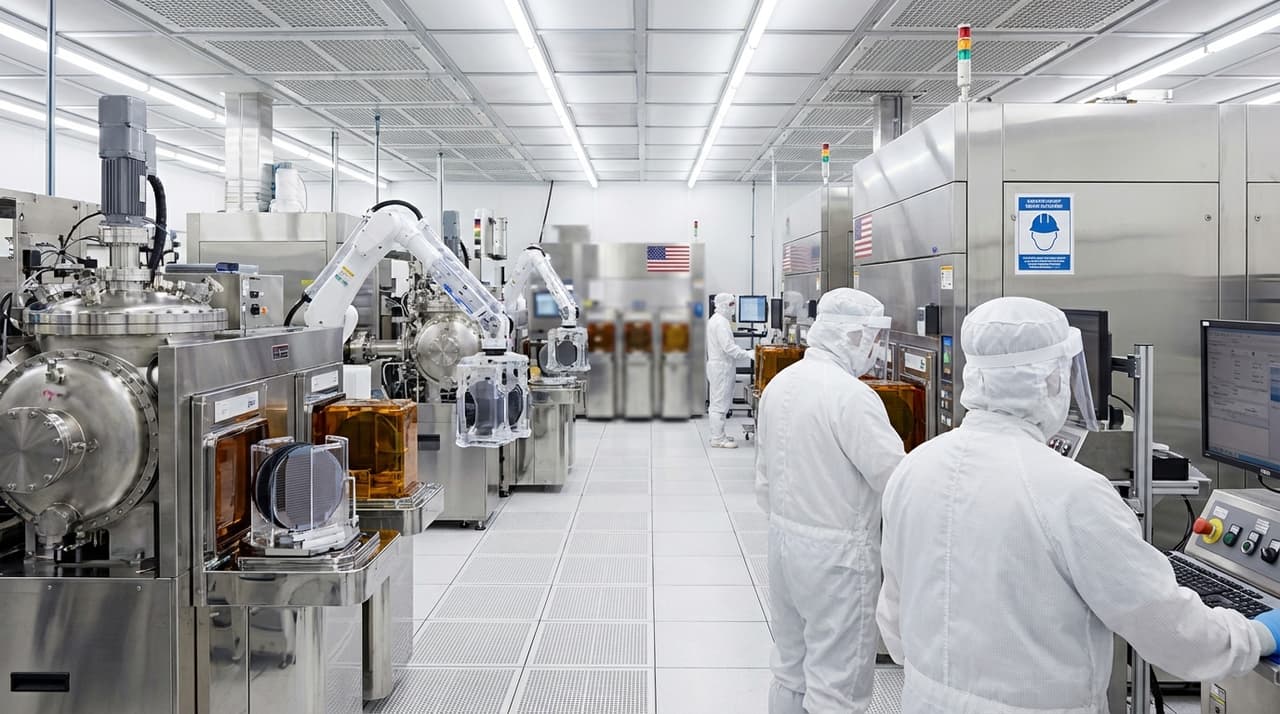
- President Trump invokes Section 232 to impose 25% tariffs on advanced computing chips, including NVIDIA (NVDA) H200 and AMD (AMD) MI325X, effective January 30, 2026.
- The move aims to protect U.S. semiconductor production and reduce foreign reliance, following a Commerce Department investigation deeming imports a national security threat.
- Broader tariffs and a domestic manufacturing incentive program are planned soon, building on prior 2025-2026 tariffs that have sparked market volatility and inflation concerns.
President Donald J. Trump claimed on January 30, 2026, that his tariffs have "strengthened our national security immeasurably," aligning with a White House fact sheet issued that day announcing new Section 232 tariffs on advanced computing chips like NVIDIA H200 and AMD MI325X. The action targets the $600+ billion global semiconductor industry, vital for AI, defense, and consumer tech, where U.S. firms lead in design but lag in manufacturing.
According to people familiar with the matter, the tariffs exempt imports supporting U.S. domestic production, such as those from firms like Intel (INTC) and TSMC (TSM) expanding domestic fabs via CHIPS Act subsidies. This follows a Commerce Department investigation that found insufficient U.S. capacity in semiconductors critical for economic, industrial, and military needs. Efforts to boost domestic manufacturing have hit a snag, with broader tariffs and incentives still in the works.
In recent weeks, market reactions have been volatile. J.P. Morgan (JPM) notes ongoing disruptions from tariff expansions, echoing global market crashes that followed 2025 reciprocal tariffs, where the S&P 500 dropped 4.88% and the Nasdaq fell 5.97%. Without a deal to stabilize supply chains, industry experts warn of further inflation and supply disruptions. The Tax Policy Center projects $2.3 trillion in revenue from FY2026-2035 but estimates an average taxpayer income loss of $2,900 in 2026 due to higher prices.
Trump's "America First" policy leverages Section 232 and the International Emergency Economic Powers Act (IEEPA) for broad national security measures, targeting China reliance as a vulnerability. Recent negotiations include a UK exemption in May 2025 and a China tariff cut in October 2025 for farm and rare earth access, but threats persist against Europe with potential 10-25% tariffs over Greenland. Courts are currently testing the scope of IEEPA, adding legal uncertainty to the mix.
Stakeholders are divided. U.S. manufacturers and workers in chips and steel stand to gain from protectionism, but consumers face higher prices for electronics and autos. Exporters, such as farmers, have benefited from retaliatory deals, but importers and retailers are burdened. Public debate centers on balancing inflation risks with security needs, with bond vigilantism and market crashes sparking criticism of economic disruption.
Looking ahead, short-term negotiations with trade partners could ease strains, but J.P. Morgan flags ongoing inflation risks. Long-term, the administration aims for U.S. self-sufficiency, though this may slow global tech growth and raise $1.7-3.3 trillion in revenue under adjusted scenarios. Experts predict sustained volatility, with possible USTR rate hikes by 2027 and continued court challenges. Attempts to reach out to industry representatives for comment were unsuccessful at press time.
Correction: An earlier version misstated the timeline for broader tariffs; they are planned soon, not immediately.