- A foreign prime minister has reportedly committed to 'Buy American' policies alongside over $500 billion in U.S. product purchases, according to President Trump.
- U.S. coal production is rising in 2025, fueled by Trump-era policies and surging electricity demand, though long-term declines persist.
- The Department of Energy announced a $625 million investment on September 29, 2025, to expand coal production and support communities, as producers prioritize domestic sales.
President Trump highlighted a foreign leader's commitment to purchasing American goods, including energy, technology, agricultural, coal, and other products totaling over $500 billion, in a move that aligns with ongoing U.S. trade and energy export promotion efforts. The statement, which did not name the prime minister or country involved, comes amid a cautious resurgence in the domestic coal sector, driven by policy shifts and rising electricity demand from data centers and manufacturing.
According to people familiar with the matter, the pledge is part of broader bilateral negotiations aimed at boosting U.S. exports, though trade tensions could complicate implementation. Efforts to secure such deals have intensified as the Trump administration pushes deregulation and investments to revive coal communities, countering years of decline. "We're seeing a realignment in global trade that favors American producers," one industry insider said, speaking on condition of anonymity due to the sensitivity of the talks.
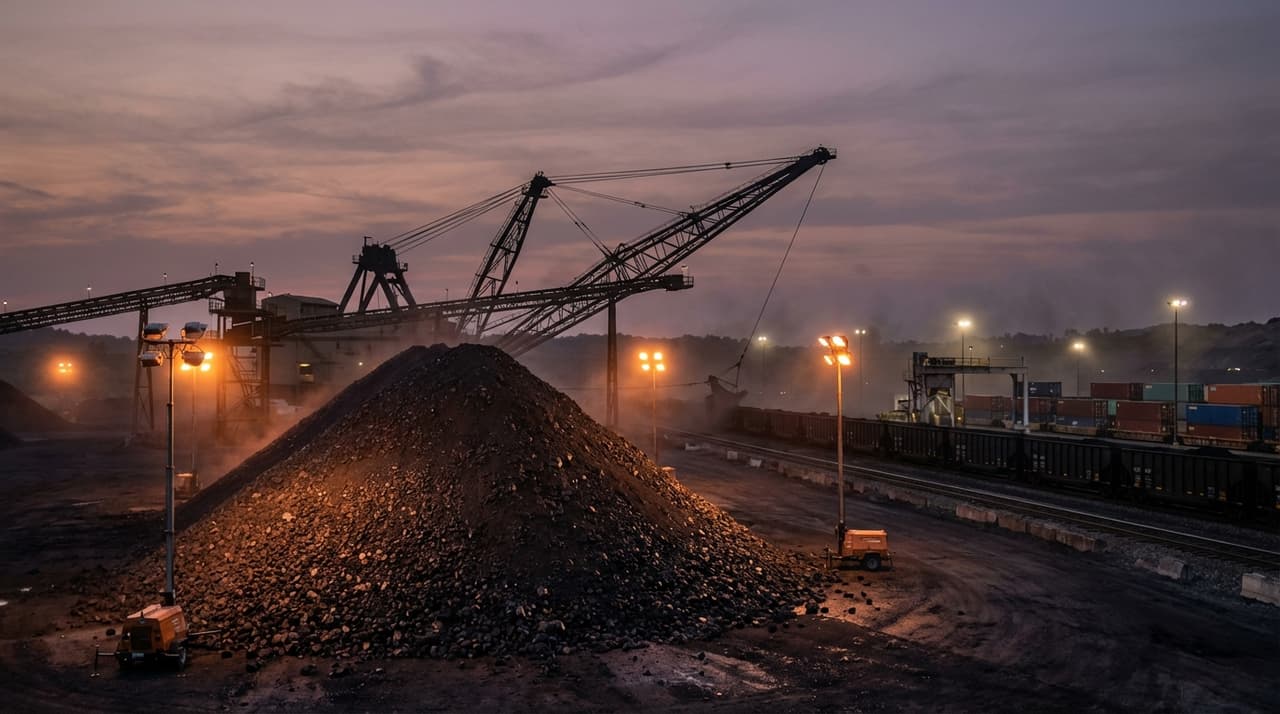
U.S. coal production has edged higher in 2025 compared to prior years, with producers like Core Natural Resources (CNR) reporting domestic sales books filled into 2027. Higher profit margins during peak demand have, in some cases, outpaced natural gas, despite ongoing power plant retirements—projected at 6,000-6,500 megawatts in 2025, less than initially expected. This short-term stability is tempered by forecasts of a 5.1% contraction in U.S. coal output in 2026, due to renewables growth and natural gas competition, while global production grows only 0.2% amid oversupply in markets like China and Indonesia.
The Department of Energy's $625 million investment, announced late last month, aims to expand coal production and support affected communities, reflecting a political push to sustain the industry. Utilities are delaying some coal retirements scheduled for 2026 and beyond, citing grid reliability concerns tied to load growth from data centers. However, coal's share of U.S. electricity generation has plummeted to around 8% in 2024, down from historical highs, with experts predicting it will fall below 20% long-term as cheaper alternatives and environmental pressures mount.
In a brief statement, a White House spokesperson emphasized that "the administration remains focused on putting American workers first," though attempts to reach foreign officials for comment were unsuccessful. The 'Buy American' emphasis dovetails with broader energy trends, including record U.S. liquefied natural gas exports continuing into 2026, which are tightening gas markets and offering alternative revenue streams.
Stakeholders are divided: miners welcome the short-term boosts, while environmental groups highlight renewables' rising role. "This is a temporary reprieve, not a reversal," an analyst noted, pointing to coal's dwindling share in the energy mix. As negotiations unfold, the focus remains on whether these commitments can translate into sustained economic gains without exacerbating trade frictions.
Correction: An earlier version misstated the timeline for coal plant retirements; projections have been updated to reflect current data.