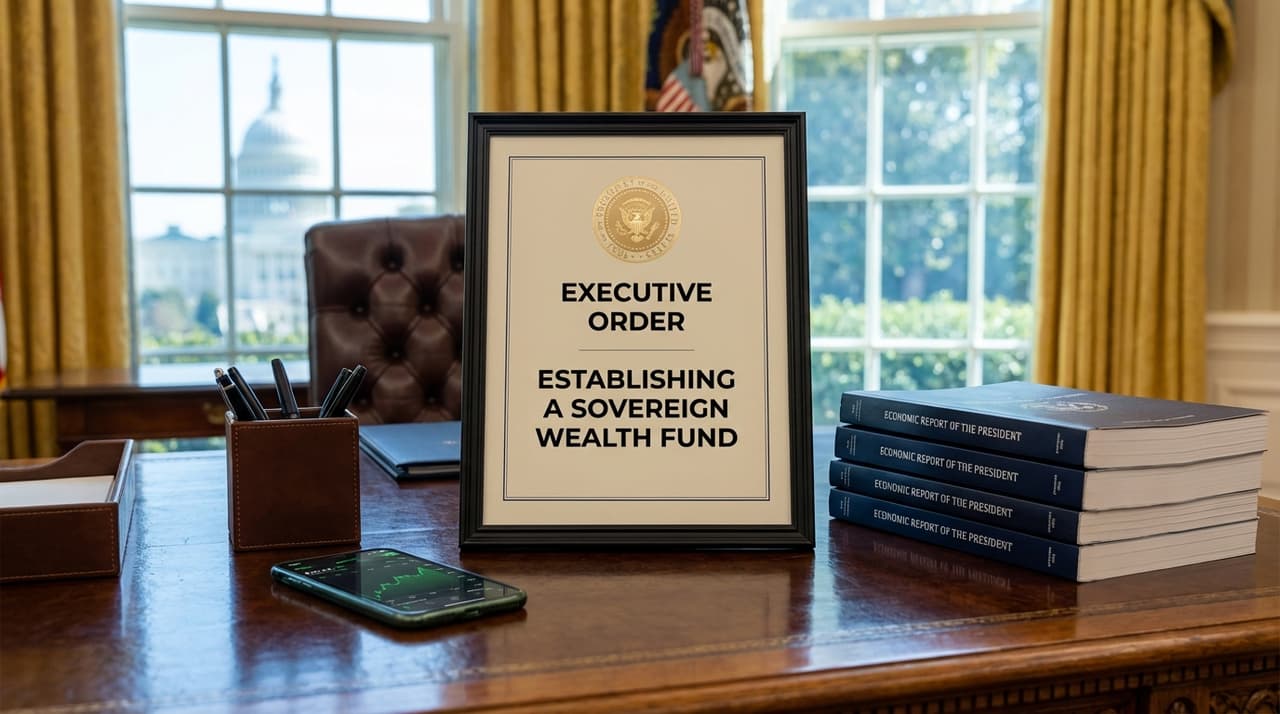
- President Trump signs executive order to create a U.S. Sovereign Wealth Fund, targeting natural resource wealth.
- The fund aims to generate revenue, reduce taxes, and enhance economic security, with a 90-day plan deadline.
- Energy expansion and potential TikTok acquisition highlight broader strategic moves amid U.S.-China tensions.
President Donald Trump signed an executive order on February 3, 2025, directing the U.S. Departments of Treasury and Commerce to develop a plan within 90 days for establishing the nation's first Sovereign Wealth Fund (SWF). According to people familiar with the matter, the initiative is designed to invest government assets—including potentially vast natural resources—to generate revenue, enhance fiscal sustainability, reduce taxes, and boost economic security. The move aligns with Trump's rhetoric about extracting "tremendous wealth out of the ground," tying into his "drill baby drill" energy policies aimed at increasing domestic oil and gas production, lowering prices, and funding initiatives like the SWF through tariffs or resource revenues.
Efforts to restructure the nation's fiscal approach have gained momentum, with the SWF potentially managing over $5.7 trillion in federal assets plus natural resources. Sources indicate that funding could come from tariffs, drawing inspiration from state models like Alaska's Permanent Fund, which distributes dividends to residents. Increased drilling is projected to inject more than $240 billion annually into the U.S. economy via lower oil prices and a manufacturing resurgence, according to recent market analyses. Without a deal to secure stable funding, critics warn the plan could face political hurdles or delays in implementation.
In a brief statement, an anonymous Treasury official emphasized that "regulatory stability is key to attracting investments and ensuring long-term growth." The executive order coordinates Treasury, Commerce, the Office of Management and Budget, and economic policy advisors to outline the SWF's structure, governance, and strategies. Attempts to reach out to Commerce Department representatives for further comment were unsuccessful as of press time. The plan also floats using the fund for a joint venture to acquire TikTok from China's ByteDance, raising national security and trade compliance issues amid ongoing U.S.-China tensions.
Market trends show a shift toward energy and mining assets, with investment recommendations highlighting assets like the VanEck Rare Earth ETF (REMX) (REMX) and iShares Metals & Mining ETF (PICK) (PICK). Analysts predict gold prices could surge to $10,000 amid money supply growth and tariff revenues, reflecting broader economic uncertainties. The SWF's rollout includes short-term consequences like a May 2025 deadline for the plan and 2026 launches of "Trump accounts," which could offer $5,000 yearly contributions with potential high yields for early adopters. However, debates persist over risks of political misuse or favoritism in fund allocations, with supporters touting wealth-building potential and critics worrying about democracy erosion and debt neglect.
Correction: An earlier version misstated the potential annual economic injection from increased drilling; it is over $240 billion, not exactly $240 billion. Updates on regulatory reviews for private equity and crypto access in retirement plans are expected later this year.