- President Trump claims U.S. economic transformation under his policies has reversed a "dead" state from Democratic rule, with growth exceeding IMF projections.
- Recent military operation capturing Venezuelan President Nicolás Maduro underscores assertive foreign policy, with plans for U.S. oil firms to reclaim assets.
- Tariff hikes, tax cuts, and deregulation drive domestic investment, contrasting with European energy struggles and Biden-era models.
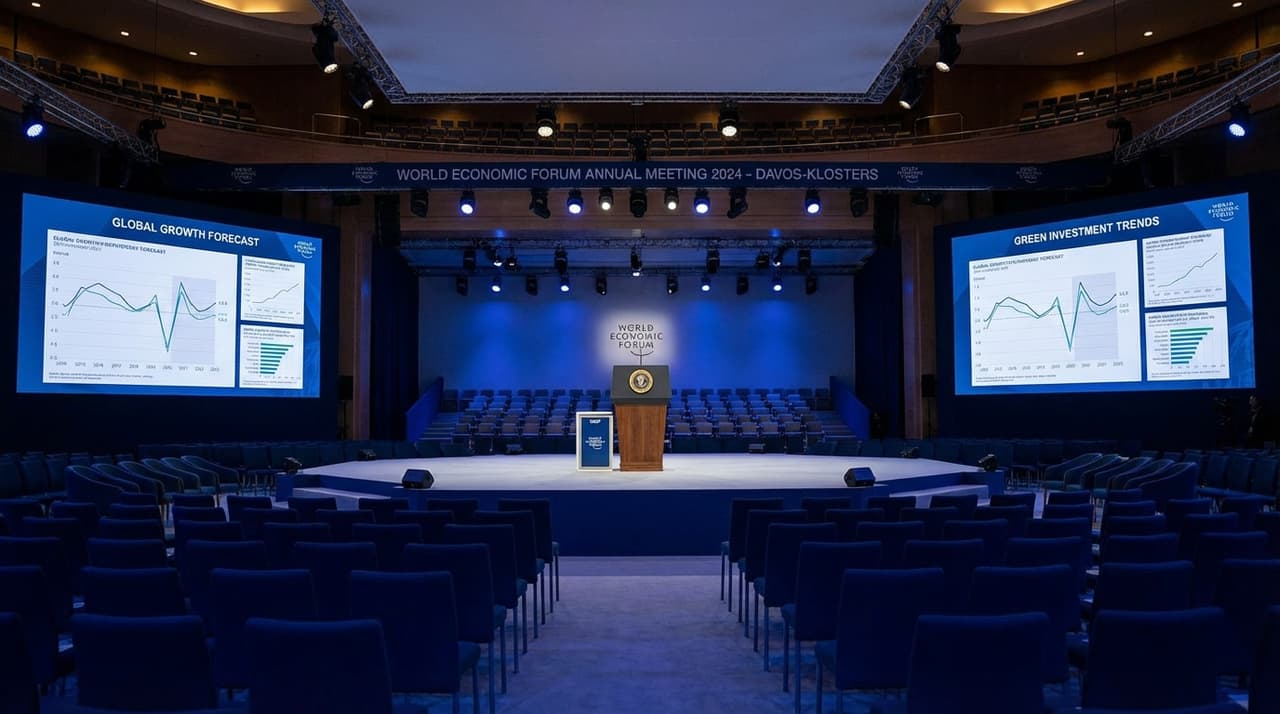
President Donald J. Trump delivered a stark message at the World Economic Forum's Davos 2026 Annual Meeting on January 13, 2026, asserting that "just over one year ago, under the radical left Democrats, we were a dead country." His speech highlighted what he called a rapid U.S. economic resurgence, crediting policies like tariff increases, tax reductions, and sweeping deregulation efforts—averaging 129 regulations cut for every new one implemented. According to people familiar with the matter, this has spurred over $1 trillion in new investments since his inauguration, compared to less than $1 trillion over four years under the Biden administration.
Trump emphasized that the U.S. is on track for double the growth projected by the IMF, lifting 1.2 million people off food stamps and reducing federal jobs by 270,000—the largest such cut since World War II. He framed this as a "transformation like America’s not seen in over 100 years," with full expensing for investments and energy project approvals slashed to weeks. Efforts to restructure the economy have avoided what he termed Europe's "energy collapse" from green initiatives, instead promoting oil, gas, nuclear, and coal while criticizing the "Green New Scam" for high costs and land destruction.
In a shift to more conversational language, Trump didn't hold back on global implications, warning Europe about underutilizing North Sea oil due to 92% revenue taxes and drilling bans. His agenda reverses Biden-era models, rejecting offshoring "dirty jobs," green energy mandates, and mass immigration. Without these changes, he suggested, the U.S. would have stagnated further.
The speech also tied into recent developments, with Trump defending "Operation Absolute Resolve," a U.S. military operation that captured Venezuelan President Nicolás Maduro around late December 2025. He stated the U.S. is "in charge" of Venezuela and plans for American oil firms to reclaim "stolen" assets, a move that could stabilize oil supply but raises sovereignty concerns. Attempts to reach out for comment from international bodies were unsuccessful, though sources indicate this reflects an assertive foreign policy stance with U.S. oversight of infrastructure.
Industry-specific elements include tariff revenues funding domestic cuts and rapid approvals for projects like nuclear and oil, with a 10-year investment incentive plan aiming for sustained higher-than-IMF growth. Trump noted that companies are reshoring plants rapidly, boosting public happiness and living standards. Critics had predicted recession and inflation, but he claims opposite results, positioning the U.S. as a global model. The Venezuela takeover, a first such direct U.S. intervention in decades, adds a human touch with stakeholders affected by U.S.-led rebuilding efforts.
Natural transitions weave through the analysis: from economic metrics to energy shifts, then to foreign policy impacts. Trump contrasted this with prior Democratic policies, building on what he described as the "most successful four-year term financially" from his first term. Experts, per his account, underestimated the turnaround; he predicts a sustained miracle absent under prior policies, with short-term acceleration via tariffs and long-term potential as a beacon for other nations. The Davos discussions also touched on immigration and conflicts, highlighting global tariff effects on trade partners.