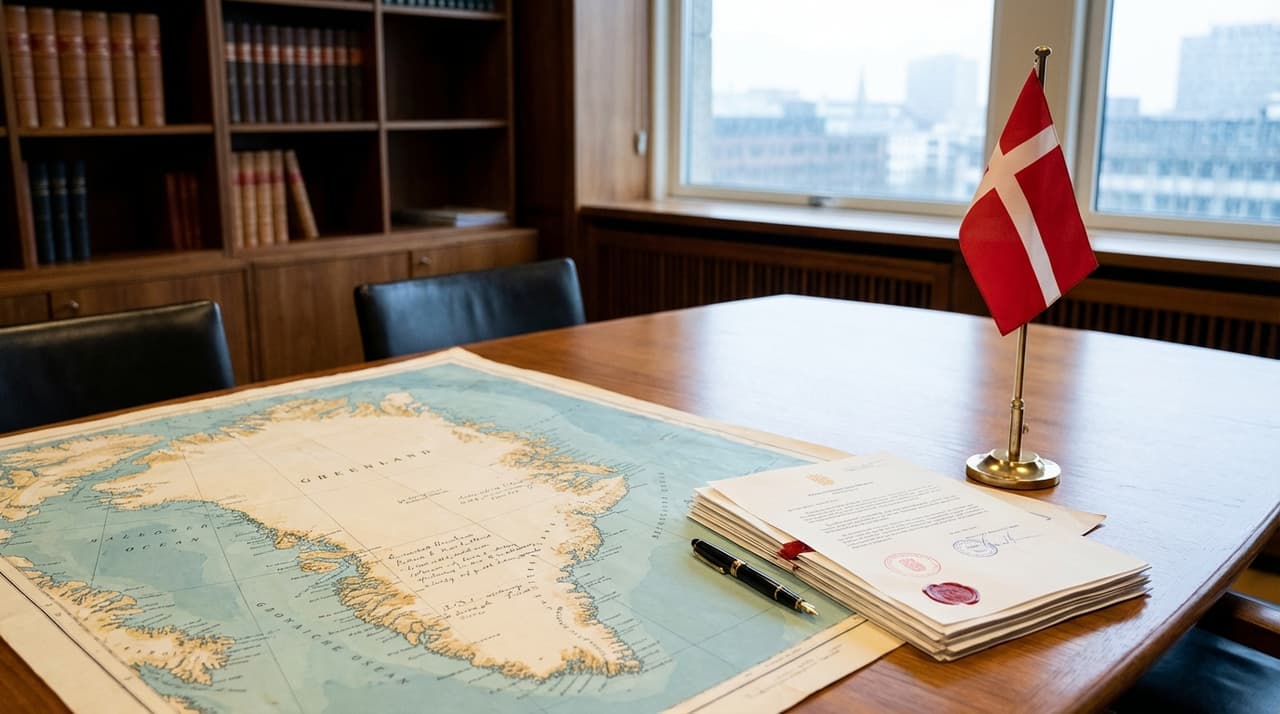
- U.S. President Donald Trump maintains active interest in acquiring Greenland, evidenced by appointment of Louisiana Governor Jeff Landry as Special Envoy to the island.
- Denmark's Foreign Minister Lars Løkke Rasmussen confirms continued American focus while insisting all countries must respect Danish territorial integrity.
- Greenland's Prime Minister Múte B. Egede reiterates sovereignty stance, stating Greenlanders want independence rather than Danish or American affiliation.
Strategic Calculations and Diplomatic Tensions
Denmark's top diplomat confirmed on Monday what many in diplomatic circles have suspected for months: President Trump's fascination with Greenland hasn't diminished. The appointment of Louisiana Governor Jeff Landry as U.S. Special Envoy to the Arctic territory signals that White House efforts regarding Greenland have moved beyond speculative chatter into more structured diplomatic channels.
"We recognize the continued American interest," Rasmussen told reporters, according to people familiar with his remarks. "But we expect all countries, including the United States, to respect the Kingdom of Denmark's territorial integrity." The carefully worded statement reflects Copenhagen's delicate balancing act—acknowledging Washington's strategic focus while drawing clear red lines around sovereignty.
Behind the scenes, administration officials have been calculating what it might actually cost to acquire Greenland, suggesting these discussions have progressed beyond rhetorical flourishes. One person briefed on the matter described the approach as focusing on "soft power and economic incentives" rather than immediate military action, though Trump hasn't ruled out force entirely. The White House appears to be weighing financial packages that could potentially overshadow Denmark's current annual block grant of approximately $650 million to Greenland.
Greenland's Determined Sovereignty
Meanwhile in Nuuk, Greenlandic leaders have been equally firm in their position. Prime Minister Múte B. Egede has repeatedly emphasized that Greenlanders want to chart their own course. "We don't want to be Danish, we don't want to be American, we want to be Greenlandic," he affirmed in mid-January and reiterated following Trump's March address to Congress, according to officials familiar with his statements.
Still, there appears to be some nuance in Greenland's position. While rejecting outright acquisition, officials have indicated openness to enhancing the existing bilateral defense partnership with the United States. The territory's semi-autonomous status complicates any potential deal—Greenlanders themselves would need to approve any territorial transfer through a referendum, followed by Danish parliamentary approval.
Economic Leverage and Strategic Imperatives
Trump has consistently framed Greenland as essential to U.S. national security, arguing the United States "needs Greenland for world peace and international security." His administration views the territory's geographic position between Europe and North America, combined with its proximity to the Arctic and North Atlantic Oceans, as strategically vital for monitoring increasing Chinese and Russian military activity.
The economic dimension adds another layer of complexity. Trump has threatened to impose tariffs on Denmark if it doesn't cede or sell Greenland—a significant threat given that the United States is Denmark's top non-European export market. Denmark sent approximately $12 billion in pharmaceutical products and medical tools to the U.S. in 2023 alone, creating substantial economic leverage.
Greenland's natural resources further complicate the calculus. The territory possesses valuable critical minerals, hydrocarbons, and coal deposits, alongside extensive fishing opportunities. Any arrangement requiring Greenland to cede subsurface mining rights in exchange for financial compensation would contradict the territory's broader independence aspirations, as control over subsoil resources was a crucial element in Greenland's 2009 self-government agreement with Denmark.
Looking Ahead
As diplomatic channels remain open but tense, analysts suggest economic inducements are more likely than military action in the near term. The appointment of Landry as Special Envoy indicates Trump administration efforts will continue, though success remains uncertain given unified opposition from both Danish and Greenlandic leadership.
Denmark and Greenland face the challenge of reinforcing that the United States already possesses de facto military control through existing agreements while firmly refusing territorial transfer negotiations. For now, all parties appear to be playing a delicate game of diplomatic chess, with Greenland's future hanging in the balance.
Correction: An earlier version of this article misstated the timing of Prime Minister Egede's comments. They were made in mid-January and reiterated in March, not exclusively in January.