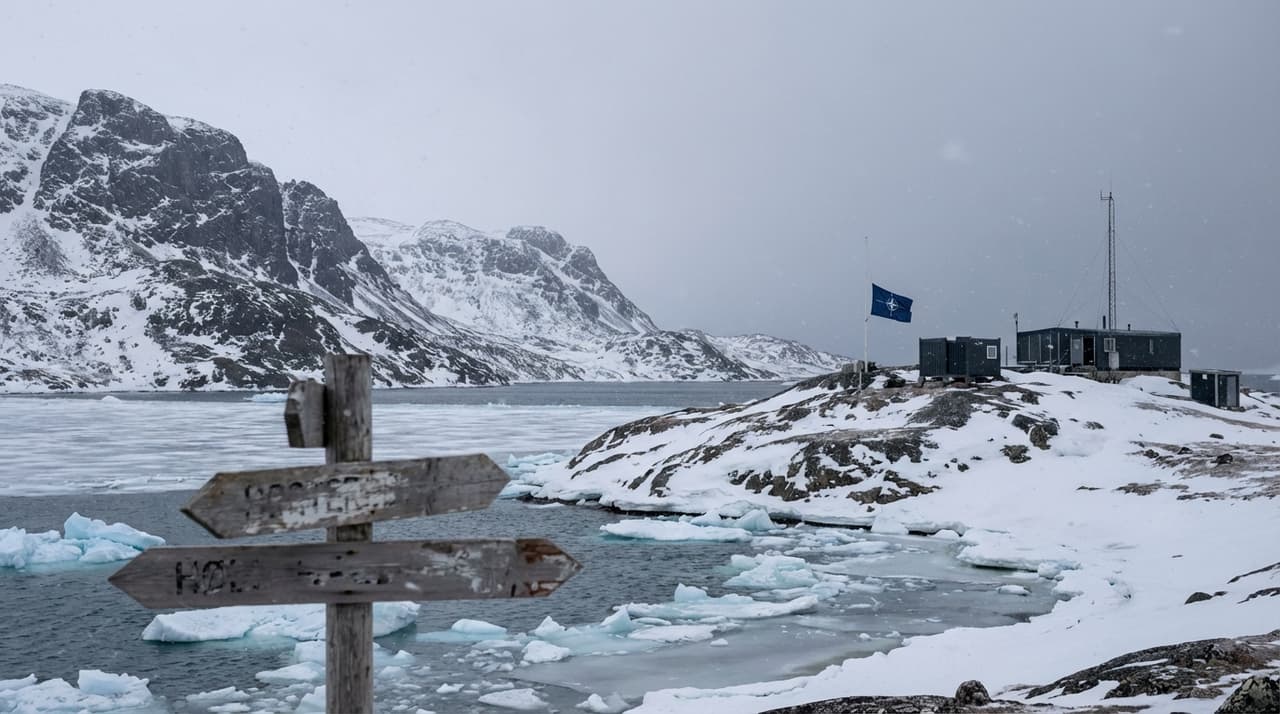
- President Trump intensifies efforts to acquire Greenland, viewing ownership as psychologically essential, amid mixed signals from his administration on diplomatic versus acquisition paths.
- Danish officials expressed openness to enhanced U.S. security measures while upholding sovereignty, but Trump has rebuffed prior offers for more troops or bases, complicating responses via economic incentives.
- Trump's broader tariff strategy, exemplified by 25% tariffs on countries trading with Iran, could disrupt global trade, with experts warning of escalated U.S.-Denmark/EU tensions.
President Trump is doubling down on his push to acquire or control Greenland from Denmark, with sources close to the matter indicating that he sees ownership as a non-negotiable psychological imperative. This comes as Danish officials, during January 2026 Capitol Hill meetings, signaled willingness to bolster U.S. security presence in the Arctic region while firmly maintaining sovereignty over the territory. However, Trump has reportedly dismissed previous Danish proposals to increase American troop levels or establish additional bases, insisting on a more direct form of control.
Efforts to restructure this diplomatic standoff have hit a snag, with the administration sending mixed messages on whether to pursue a purchase or leverage security partnerships. According to people familiar with the discussions, Trump's team has been meeting with Greenland independence leaders to exploit local desires for autonomy from Denmark, a move that could amplify internal divisions among Greenland's population of approximately 57,000. Without a deal, analysts fear the situation could escalate into broader trade conflicts, as Trump has hinted at imposing tariffs on countries that do not align with his Greenland ambitions.
In a related development, Trump's broader tariff strategy is already causing ripples, with 25% tariffs announced early 2026 on nations trading with Iran, and up to 50% on Indian goods tied to Russian oil, signaling aggressive trade leverage. These measures, while not directly linked to Greenland, exemplify the administration's willingness to use economic pressure to achieve geopolitical goals. European officials, speaking on condition of anonymity, express alarm at this "business deal" approach, with some fearing potential linkage to Ukraine aid bargains, though White House sources deny any such connection.
NATO is bolstering its Arctic presence partly in response to Trump's claims of Russian and Chinese activity near Greenland, adding a layer of military urgency to the negotiations. Public polls show low U.S. support for military force, with only 8% in favor per a January 2026 YouGov survey, suggesting domestic constraints on any aggressive moves. Meanwhile, U.S. lawmakers from both parties have engaged positively with Danish envoys, with figures like Senator Marco Rubio signaling possible off-ramps short of an outright purchase.
Looking ahead, short-term prospects point to diplomatic exhaustion and reassessment, potentially leveraging Greenland independence votes or NATO Arctic enhancements. Long-term, experts predict challenges as Greenland cannot sustain independence without external support, raising the risk of escalated tensions or grand bargains. Attempts to reach the White House for comment were unsuccessful, but sources indicate flexibility in the administration's stance, with ongoing negotiations likely to dominate Arctic policy discussions in the coming months.