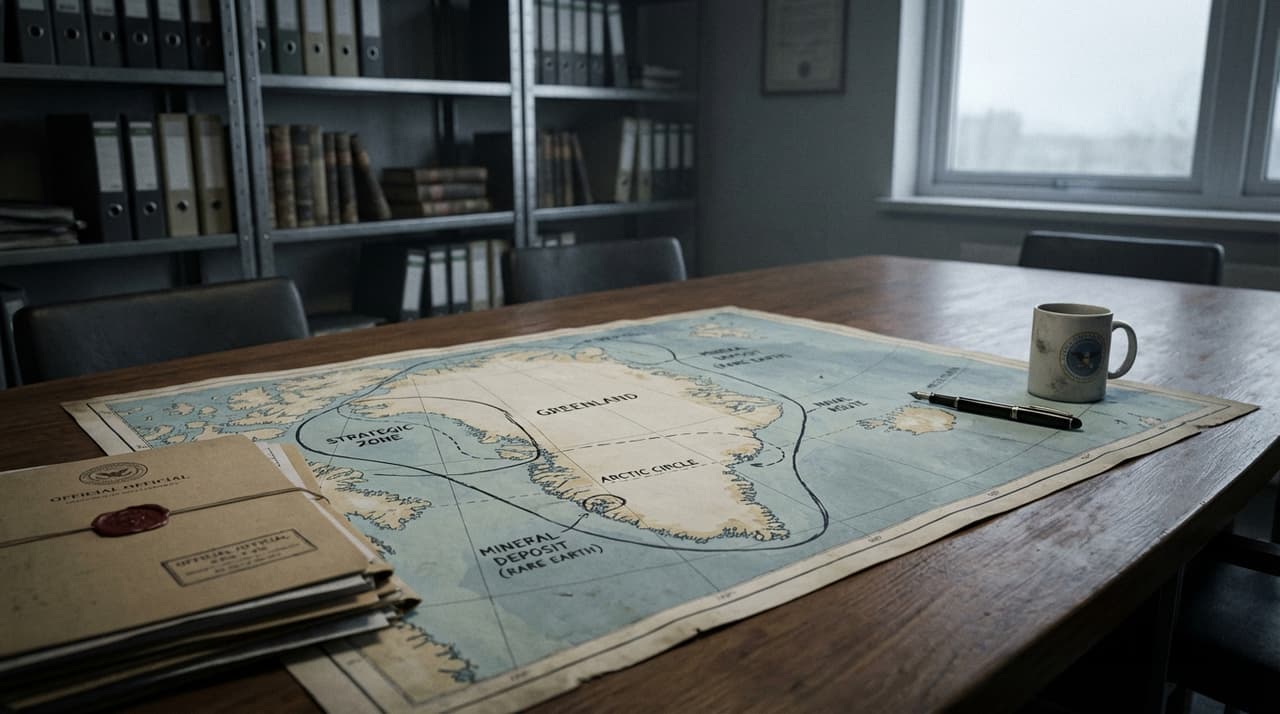
- US Special Envoy Jeff Landry asserts a deal to acquire Greenland "should and will be made," with President Trump serious about the effort.
- Denmark and Greenland leaders firmly reject any sale, citing "fundamental disagreements" after recent White House talks, though a working group has been formed.
- Strategic interests in Greenland's Arctic location and rare earth minerals drive US policy, amid bipartisan congressional involvement and international warnings.
US Special Envoy to Greenland Jeff Landry stated on Friday that a deal for the US to acquire Greenland "should and will be made," adding that President Donald Trump is serious about the effort. According to people familiar with the matter, Landry told Fox News that Trump has outlined his expectations to Denmark, with Secretary of State Marco Rubio and Vice President JD Vance leading negotiations. Landry also plans to visit Greenland in March, a move seen as pivotal in ongoing discussions. White House Press Secretary Karoline Leavitt affirmed that the presence of European troops in Greenland will not affect Trump's goal of acquiring the territory, signaling unwavering intent from the administration.
Efforts to secure Greenland have hit a snag, however, as Denmark and Greenland leaders firmly reject any sale or takeover. Foreign Minister Lars Løkke Rasmussen called the prospect "totally unacceptable" after "frank" Wednesday White House talks with Vance and Rubio that revealed "fundamental disagreements." Despite this, a high-level working group was formed to address US security concerns while respecting Danish "red lines," according to sources briefed on the discussions. Greenland's Prime Minister Jens-Frederik Nielsen rebuked US pressure on Tuesday, choosing Denmark in what he termed a "geopolitical crisis," highlighting the deep-seated resistance to any transfer of sovereignty.
The push is driven by Greenland's strategic Arctic location and rare earth minerals, which attract US interest for national security and resource access, aligning with Trump's "America first" policies amid competition from Russia and China. Denmark invested $6.5 billion in Arctic defense last year, signaling economic commitment to sovereignty, but US officials argue that acquisition could bolster NATO strength and support Trump's $175 billion "Golden Dome" missile shield initiative. Without a deal, the US risks escalating tensions with key allies, as European leaders from France and Germany declared this month that "Greenland belongs to its people," warning of confrontation if allies defend it.
On Capitol Hill, bipartisan dynamics are at play. A US congressional delegation met with Danish and Greenlandic officials on Friday to affirm territorial integrity, while some Republicans, including House Speaker Mike Johnson, highlight minerals and bases as critical assets. H.R. 361 ("Make Greenland Great Again Act"), introduced January 13, 2025, authorizes presidential negotiations with Denmark, requiring congressional review, though Senate Armed Services Chair Roger Wicker stated no negotiation is in Greenland's future. Critics, such as former ambassador Nick Burns, urge diplomatic investment over annexation, pointing to historical precedents like the US Alaska purchase in 1867, but Greenland leaders have consistently rejected sale attempts.
Looking ahead, short-term developments include the working group's imminent meetings and Landry's March visit, which could either escalate or defuse tensions. Long-term, a failed deal risks a US-Denmark/NATO rift and potential EU confrontation, with experts favoring joint mineral and military access as a more viable path. Trump insists "something will work out" for security, but the path forward remains fraught with diplomatic hurdles. As of Friday, market reactions were muted, but geopolitical analysts warn of volatility in Arctic-related sectors if talks break down.
Correction: An earlier version of this article misstated the timing of H.R. 361's introduction; it was January 13, 2025, not earlier in the month.