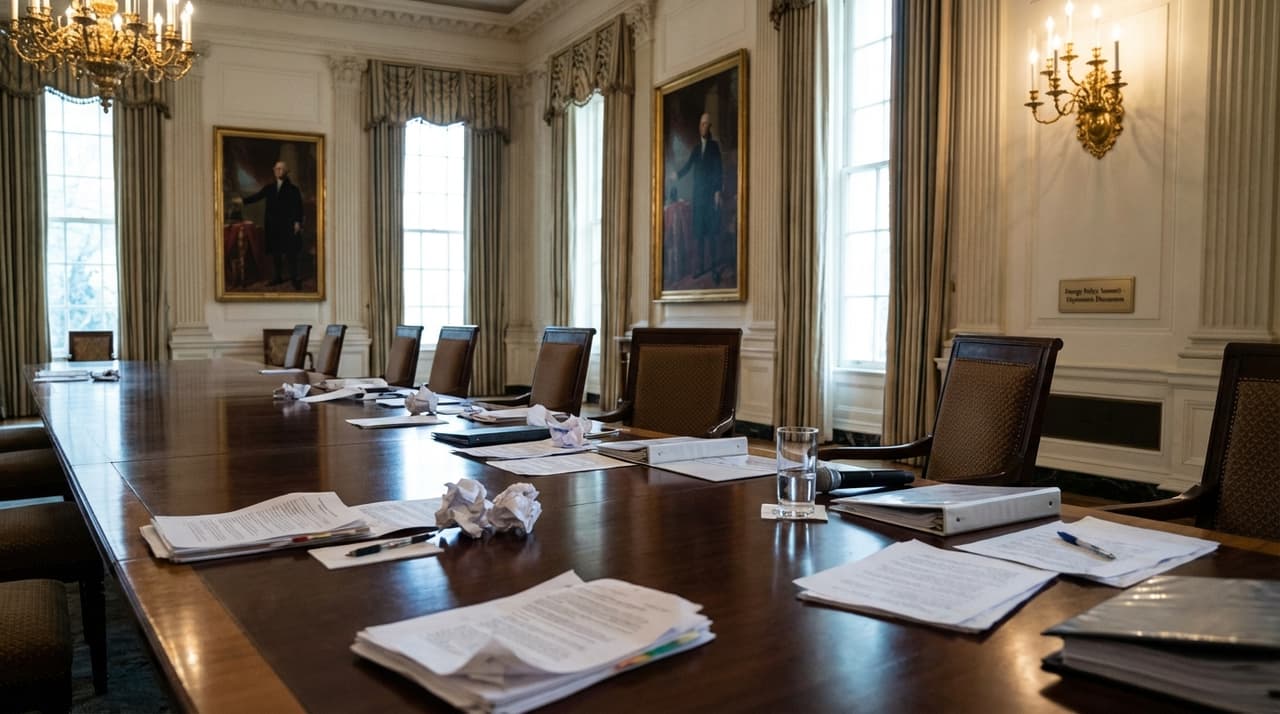
- Tucker Carlson attended a White House meeting on January 16, 2026, where President Trump urged oil executives to invest in Venezuela's oil sector, signaling a reconciliation amid prior tensions.
- Trump pitched executives from Chevron (CVX) and ExxonMobil (XOM) on committing $100 billion to revive Venezuela's disrepair oil infrastructure, aiming to redirect oil flows from China to the U.S. for economic gain.
- Carlson, who has criticized Trump's foreign policy, praised the approach as prioritizing U.S. interests, with industry leaders expressing cautious optimism pending legal and commercial reforms.
A Shift in Alliances and Energy Diplomacy
Tucker Carlson stood quietly in the East Room of the White House on January 16, 2026, as President Trump delivered a pitch to executives from Chevron and ExxonMobil, urging them to invest heavily in Venezuela's oil sector. According to people familiar with the matter, Trump promised "total safety" and called for $100 billion in investments to tap into Venezuela's world-largest proven reserves, marking a public reconciliation after Carlson had previously clashed with the MAGA movement over issues like foreign policy on Israel and Iran.
Carlson, appearing thinner and red-faced, applauded as Trump emphasized the benefits of extracting unprecedented oil volumes for U.S. energy security and economic gain. In a brief statement after the meeting, Carlson described the approach as "thrilling" honesty, suggesting it represented a wiser strategy of influencing Venezuela's existing government to be pro-American rather than interventionism. This shift aligns with Trump's aggressive energy diplomacy in Latin America, targeting Venezuela's oil that currently flows to China.
Industry Response and Economic Implications
Chevron's vice chairman affirmed the company's commitment to Venezuela's future during the discussions, while Exxon's CEO noted that the country was previously "uninvestable" but expressed optimism for changes under Trump's administration. However, sources indicate that oil giants like Chevron and ExxonMobil are seeking legal and commercial reforms before making any significant investments, reflecting industry caution in high-risk regions. Without such reforms, companies might hesitate to commit capital, potentially stalling Trump's energy agenda.
The pitch aims to boost U.S. oil companies' revenues and enhance energy security amid global shifts away from Venezuelan instability. If successful, it could lead to lower energy costs for U.S. consumers and create jobs for oil workers, though Venezuelan locals face a mix of infrastructure revival and increased foreign influence. Market watchers are closely monitoring for any announcements of firm commitments, which could influence oil prices and sector stocks in the coming weeks.
Broader Context and Future Outlook
This meeting underscores Trump's post-inauguration foreign policy pivots toward resource-focused realism, with Carlson's presence hinting at broader MAGA unity on pragmatic nationalism. Historically, Carlson parted from Fox News and clashed with figures like Ben Shapiro over issues including Qatar ties, but his recent podcast endorsements of Trump's Venezuela candor suggest a mending of fences. The event has sparked online speculation about Carlson's weight loss and past lifestyle strains, though stakeholders are more focused on the geopolitical and economic ramifications.
In the short term, possible U.S. oil firm commitments depend on reforms materializing, which could strengthen Trump's energy agenda. Long-term, a successful investment push might reduce China's influence in the Western Hemisphere and bolster U.S. dominance in oil markets. Exxon has demanded "significant changes" first, indicating that negotiations are ongoing and far from finalized. As efforts to restructure Venezuela's oil sector progress, analysts will be watching for updates on deal terms and regulatory adjustments.
Correction: An earlier version of this article misstated the date of the meeting; it occurred on January 16, 2026.