- The US has authorized traders to market Venezuelan oil, with Indian refiners expressing interest in small volumes to diversify from Russian supplies.
- Indian Oil Corp (IOC) and others are exploring Venezuelan heavy crude, contingent on competitive pricing and regulatory compliance, as Russian imports decline to around 1.12 million barrels per day in early 2026.
- This move supports India's energy security strategy, boosting alternatives like US and Brazilian crude while navigating sanctions and global market shifts.
India's state-run refiners are poised to tap Venezuelan crude oil supplies under a US-led initiative, aiming to reduce dependence on Russian imports amid ongoing geopolitical pressures. According to people familiar with the matter, the US has authorized traders Vitol and Trafigura to market Venezuelan state oil under its control, opening a narrow window for Indian purchases. Offers to India remain limited to tiny volumes initially, with most supplies directed to US refiners like Valero (VLO) and Phillips 66 (PSX), but Indian Oil Corp (IOC), Hindustan Petroleum Corp (HPCL), and Bharat Petroleum (BPCL.NS) have signaled readiness to engage if terms align.
Efforts to restructure India's oil import portfolio have gained momentum as Russian flows, which surged post-2022, show signs of tapering. In early January 2026, Russian imports dipped to approximately 1.12 million barrels per day, down from previous peaks, driven by sanctions and a strategic pivot toward diversification. IOC Chairman Arvinder Singh Sahney emphasized balanced sourcing in a recent interview, noting the refiner's openness to Venezuelan heavy crude like Merey-16, provided it is competitively priced and meets regulatory hurdles. "We're evaluating all options to ensure stable and cost-effective supplies," a source close to IOC said, reflecting the commercial caution that tempers political shifts.
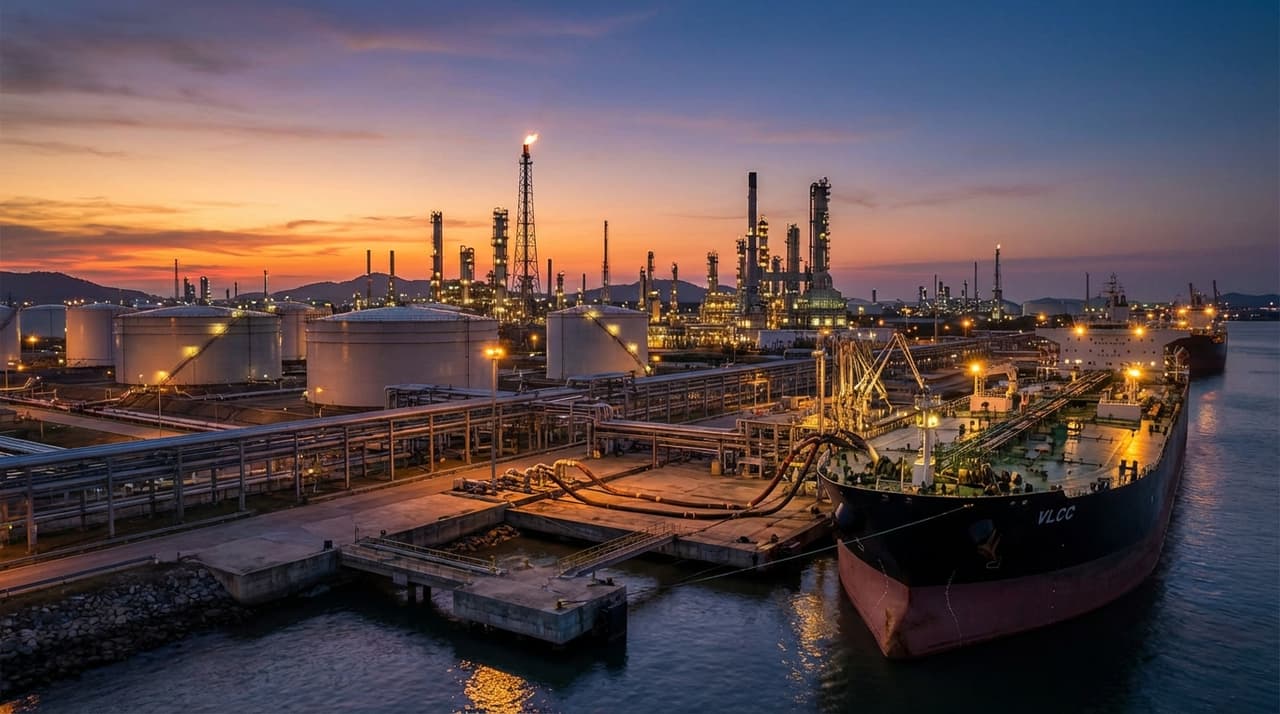
Without a deal, India risks overexposure to volatile Russian markets, but the path forward hinges on discounts and logistics. Venezuelan imports, which peaked at 441,000 barrels per day in 2015 and collapsed to near-zero in FY2022-23 due to US sanctions, have seen a modest revival, with five VLCCs shipped in 2025. HPCL is planning first-time imports for its heavy oil processing units, while Bharat Petroleum eyes small 200,000-barrel partnerships, according to industry insiders. These moves parallel IOC's broader strategy to boost US crude to 7% of its basket in FY2025-26 and increase Brazilian volumes to 24 million barrels in FY2026-27, up from 18 million.
Regulatory stability remains a key concern, as the US controls Venezuelan sales post-sanctions, requiring compliance from all parties. Indian refiners, while prioritizing economics, must navigate this framework to avoid disruptions. Market trends favor non-sanctioned barrels, with global shifts pushing Indian buyers toward Middle Eastern, West African, and American crudes. Russian supplies have proven resilient into 2026 due to steep discounts, but the lure of Venezuelan grades could reshape trade flows if pricing deepens. "It's much more of a convergence between diversification and pragmatism," an anonymous refining executive noted, highlighting the delicate balance in sourcing decisions.
As negotiations unfold, the short-term outlook suggests Russian imports will stabilize around 1.1-1.2 million barrels per day, with Venezuelan uptake likely gradual unless discounts improve. In the long term, IOC's capacity expansion to 98.4 million metric tons per year by 2028 will enhance its ability to pivot among suppliers, supporting energy security. The US-India-Venezuela triangle, once strained by sanctions, now offers a tentative revival, easing Moscow's grip without severing ties entirely. This development underscores India's agile approach to global oil markets, where opportunistic sourcing meets strategic imperatives.
Correction: An earlier version misstated the volume of Venezuelan imports in 2024; it was $1.76 billion, down from a $7.2 billion peak in FY2019.