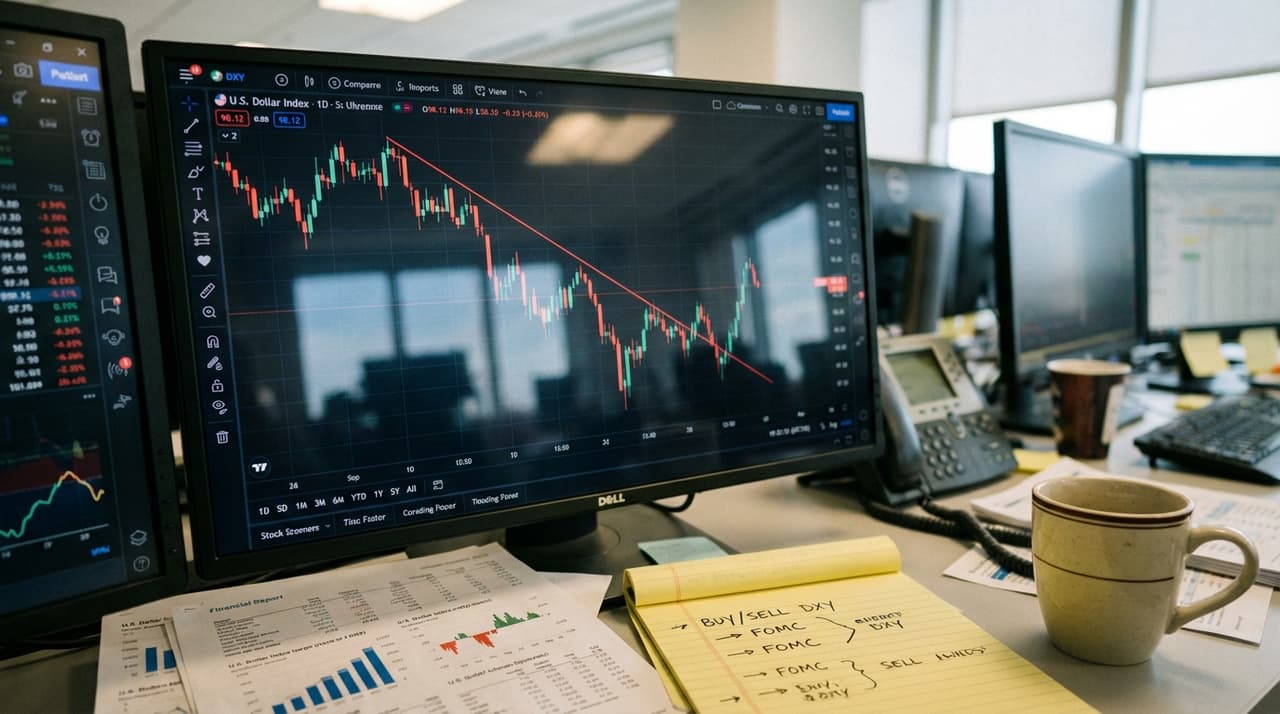
- The U.S. Dollar Index (DXY) declines about 0.27% to around 98, extending a recent slide driven by weaker U.S. economic data and dovish Federal Reserve expectations.
- Strategists note the DXY has dropped roughly 10–11% in the first half of 2025, marking one of the steepest multi-month falls in decades, with further pressure from large U.S. fiscal deficits and structural overvaluation concerns.
- Market focus shifts to upcoming labor and inflation reports, which could determine whether the dollar's downtrend persists or stabilizes, impacting exporters, importers, and global investors.
A Broad-Based Weakening
The U.S. Dollar Index, which tracks the dollar against a basket of major currencies, has been sliding and is now testing levels in the high-97s to around 98, after being higher earlier in the year. This move follows weaker U.S. economic data, including a clear cooling in the labor market and ongoing manufacturing softness, reinforcing expectations that the Fed will keep cutting or stay dovish, reducing the dollar's yield advantage. According to people familiar with the matter, the decline reflects broad-based dollar weakness against the euro, yen, and sterling, indicating a global repositioning rather than an idiosyncratic move versus one currency.
Efforts to stabilize the dollar have hit a snag as recent jobless claims rose above expectations, signaling reduced inflation pressure and giving the Fed more room to ease. Manufacturing PMIs remain in contraction, adding to the picture of slower growth. The Federal Reserve's December 2025 rate cut confirmed a dovish shift and has "put the dollar firmly on the defensive," one analyst noted, with markets now pricing in at least two more 25 basis-point cuts in 2026, further pressuring the currency.
Policy and Market Implications
Analysts highlight concern over large and rising U.S. fiscal deficits and debt, which add to downward pressure on the dollar and risk premia. Several banks argue that, despite recent weakness, the dollar remains structurally overvalued, so cyclical softness plus hedging flows can produce outsized downside moves when sentiment turns. Policy uncertainty around U.S. tariffs, fiscal expansion, and even Fed leadership has repeatedly knocked the dollar when headlines hit, demonstrating its sensitivity to politics. Debate within the Fed between "doves" focused on growth worries and "hawks" concerned about inflation above target makes each major data release and FOMC communication a catalyst for FX volatility.
For U.S. exporters and multinationals, a weaker dollar generally helps by making their goods more competitive and foreign profits more valuable in dollars. However, importers and consumers may face higher costs, contributing modestly to consumer price pressure, though the effect is tempered if domestic demand is already slowing. Investors are adjusting, with U.S. dollar bonds and cash becoming less attractive to foreign investors as yields fall and FX returns shrink, while non-U.S. assets tend to benefit in dollar terms, aiding globally diversified portfolios.
Looking Ahead
In the short term, analysts highlight technical support in the high-97s to mid-97s; a break lower could invite further selling toward around 97.50 driven by momentum and positioning. Near-term direction hinges on incoming labor market and inflation data and how far markets push expectations for additional Fed cuts. Medium to long term, several institutional views expect further gradual dollar weakening as U.S. growth converges toward other advanced economies, deficits remain large, and cyclical forces stay negative. At the same time, most emphasize that the dollar's reserve-currency status is not in imminent danger, due to the size, liquidity, and institutional strength of U.S. markets and the lack of a full-scale alternative.
Forthcoming U.S. payrolls, CPI, and future FOMC meetings are viewed as critical checkpoints for whether the dollar's downtrend continues, stabilizes, or partially reverses. Attempts to reach out to Fed officials for comment were unsuccessful, but market participants remain watchful for any shifts in tone or policy signals that could alter the currency's trajectory.