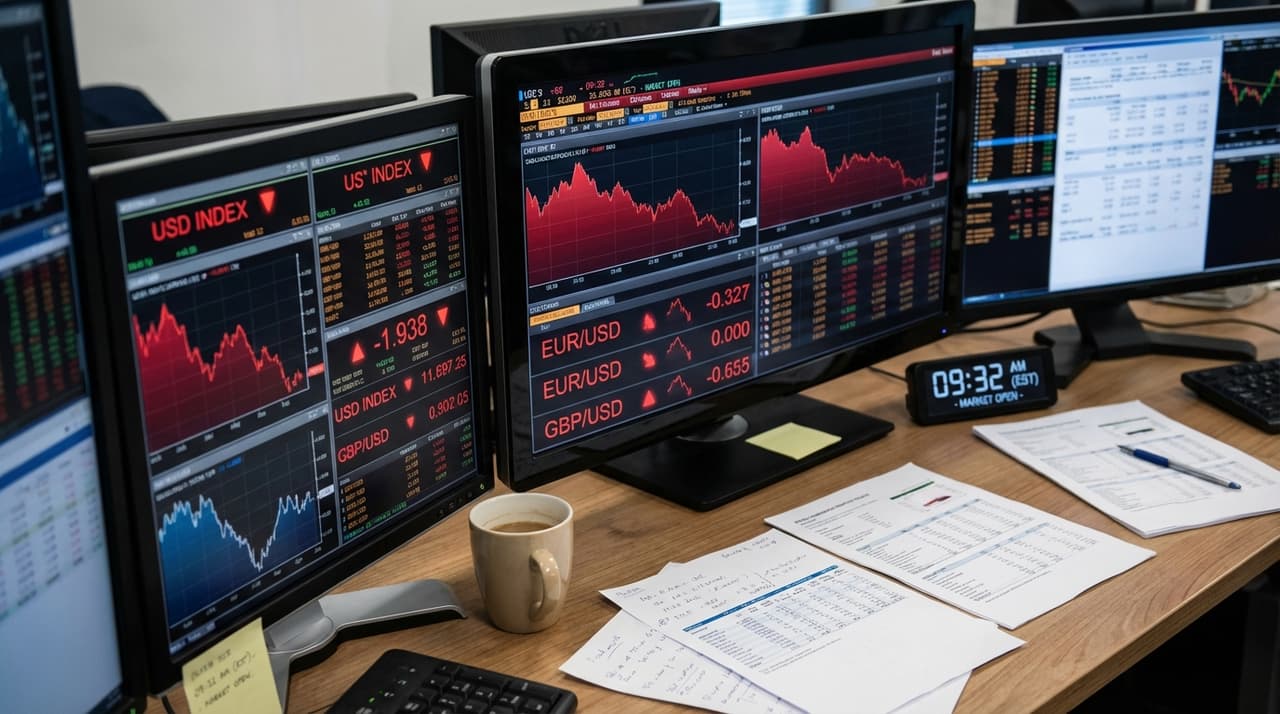
- The U.S. Dollar Index (DXY) dropped 0.4% to 97.875, hitting its lowest point in eleven weeks as traders anticipate Federal Reserve rate cuts and dovish policy shifts.
- Market sentiment is weighed down by expectations of a dovish Fed Chair appointment by President Trump in early 2026, with Kevin Hassett seen as a leading candidate.
- The decline reflects broader dollar weakness, with the index retreating from a one-week high last Friday and facing pressure from Fed liquidity injections and weakening U.S. economic momentum.
Dollar Weakness Deepens
The U.S. Dollar Index has tumbled to its lowest level since late October, trading down 0.4% at 97.875 in recent sessions, according to market data. This slide marks a significant pullback from a one-week high hit last Friday, with intraday lows dipping to around 97.370 and futures volume spiking to over 41,000 contracts, signaling heightened trader activity. Efforts to stabilize the currency have hit a snag amid growing bets that the Federal Reserve will implement rate cuts totaling about 50 basis points in 2026, contrasting with anticipated Bank of Japan hikes and steady European Central Bank rates.
Without a shift in Fed rhetoric, the dollar could face further downside, targeting sub-97 levels in the short term. The Fed's mid-December launch of $40 billion in monthly Treasury bill purchases to boost liquidity has added to the bearish sentiment, with market participants citing concerns over weakening U.S. economic momentum as a key driver. In recent commentary, Fed Governor Stephen Miran highlighted conditional policy easing, reinforcing expectations for accommodative moves ahead.
Political and Economic Pressures
Political factors are amplifying the dollar's decline. President Trump's potential appointment of a dovish Fed Chair—with National Economic Council Director Kevin Hassett viewed as the most accommodative option—is weighing heavily on the currency, according to people familiar with the matter. Trump plans to announce his pick in early 2026, and market analysts note that this uncertainty is contributing to the index's volatility, which has seen daily swings from -0.64% to +1.02% in recent sessions, with the index fluctuating between 96.860 and 98.665.
A weaker dollar benefits U.S. exporters and multinational firms by making their goods cheaper abroad, potentially aiding manufacturing stakeholders, but it hurts importers and consumers facing higher costs for foreign products. No specific public reactions have emerged in recent commentary, but futures data for December 2025 contracts mirrors the spot weakness, with historical volatility patterns echoing past episodes of dollar softening during Fed pivot signals, such as post-2024 easing cycles.
Outlook and Implications
Looking ahead, further downside pressure is likely from ongoing Fed liquidity injections and any firming of rate-cut bets. In the long term, sustained weakness could materialize if a dovish Fed Chair is appointed, though this may be offset by any surprises in U.S. economic growth. Experts are eyeing the 2026 policy divergence with the Bank of Japan and ECB as pivotal for currency trends. Parallel shifts include yen strengthening on BOJ hike expectations and euro stability amid the ECB's pause, adding to the complex landscape.
Attempts to reach out to Fed officials for comment were unsuccessful, but market sources indicate that traders are closely monitoring filing deadlines and financial agreements for clues. The index's decline from recent highs around 98.665 underscores the fragile sentiment, with some analysts warning that without a deal on policy clarity, volatility could persist. This story may be updated with corrections or clarifications as new information emerges.