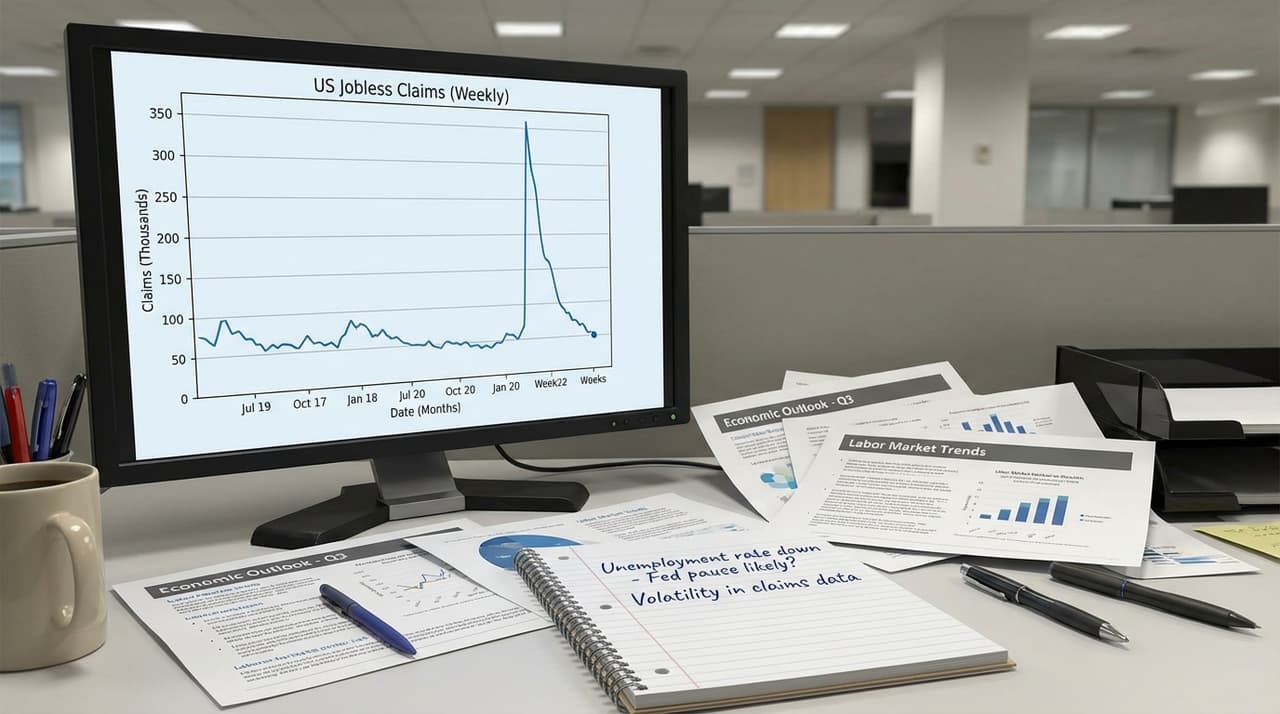
- Initial jobless claims dropped 10,000 to 214,000 for the week ending December 13, 2025, well below the survey median of 225,000.
- Continuing claims rose 38,000 to 1,923,000 for the week ending December 6, reflecting persistent challenges in re-employment.
- The decline comes after a spike to 237,000 the prior week, highlighting ongoing volatility as the Federal Reserve cuts rates to support a cooling job market.
A Surprise Dip in Claims
Initial jobless claims fell sharply to a seasonally adjusted 214,000 in the week ending December 13, down from an unrevised 224,000 the prior week, according to data released Thursday. The drop defied analyst expectations of 225,000, signaling a brief respite in labor market strains amid broader economic headwinds. Unadjusted initial claims plummeted 19% to 255,012, underscoring the impact of seasonal adjustments on weekly fluctuations.
Efforts to gauge the health of the job market have hit a snag with recent volatility, as claims spiked to 237,000 for the week ending December 6 before this week's decline. The four-week moving average edged up slightly to 217,500, suggesting underlying stability despite the noise. Year-over-year, initial claims remain slightly below 2024 levels of 222,000, while continuing claims have held steady around 1.9 million, painting a picture of a "low-hire, low-fire" environment, according to people familiar with the matter.
Continuing Claims and Economic Context
Continuing claims, which lag initial filings by a week, rose 38,000 to 1,923,000 for the week ending December 6, indicating that those out of work are facing longer job searches. This uptick aligns with November's unemployment rate of 4.6%, up from 4.2% a year prior, with 7.8 million unemployed. State-level increases were notable in Georgia, South Carolina, and Iowa, where local economic factors may be amplifying national trends.
Layoffs have remained muted despite high-profile cuts at firms like UPS (UPS), GM (GM), Amazon (AMZN), and Verizon (VZ), which often lag in claims data. Hiring has slowed, linked to tariffs implemented by President Trump in April 2025, contributing to net job losses in June and August. In response, the Federal Reserve cut rates by a quarter-point in December—its third consecutive cut—aiming to bolster a cooling job market where ADP (ADP) reported 32,000 job losses in November. "The Fed's easing is a critical buffer," one analyst noted, speaking on condition of anonymity.
Implications and Outlook
The societal impact is tangible, with over 1.9 million receiving benefits and long-term unemployed (27+ weeks) comprising 24.3% of the total. Higher rates persist for Blacks (8.3%), teenagers (16.3%), and states like Washington, which has a 2.5% insured rate. These figures signal broader challenges in re-employment amid sluggish hiring, even as claims have trended down 14.7% year-over-year through early December, mirroring stable 2024 levels.
Short-term, claims volatility may continue with lagged corporate cuts and seasonal factors. Long-term, persistent unemployment in the 4.4-4.6% range risks entrenching if hiring stays weak—markets are pricing odds of the December U-3 rate exceeding 4.5%. Related developments show DMV-area claims declining in four-week averages amid federal job loss trends, while 33 states saw rising continued claims by late November. November BLS data indicated little change in major worker group rates, suggesting a plateau in labor dynamics.
Attempts to reach officials for comment on the latest figures were unsuccessful, but sources indicate that without sustained job growth, the economy could face heightened pressure. The Fed's actions aim to stabilize growth, but as one industry insider put it, "We're in a holding pattern until hiring picks up."