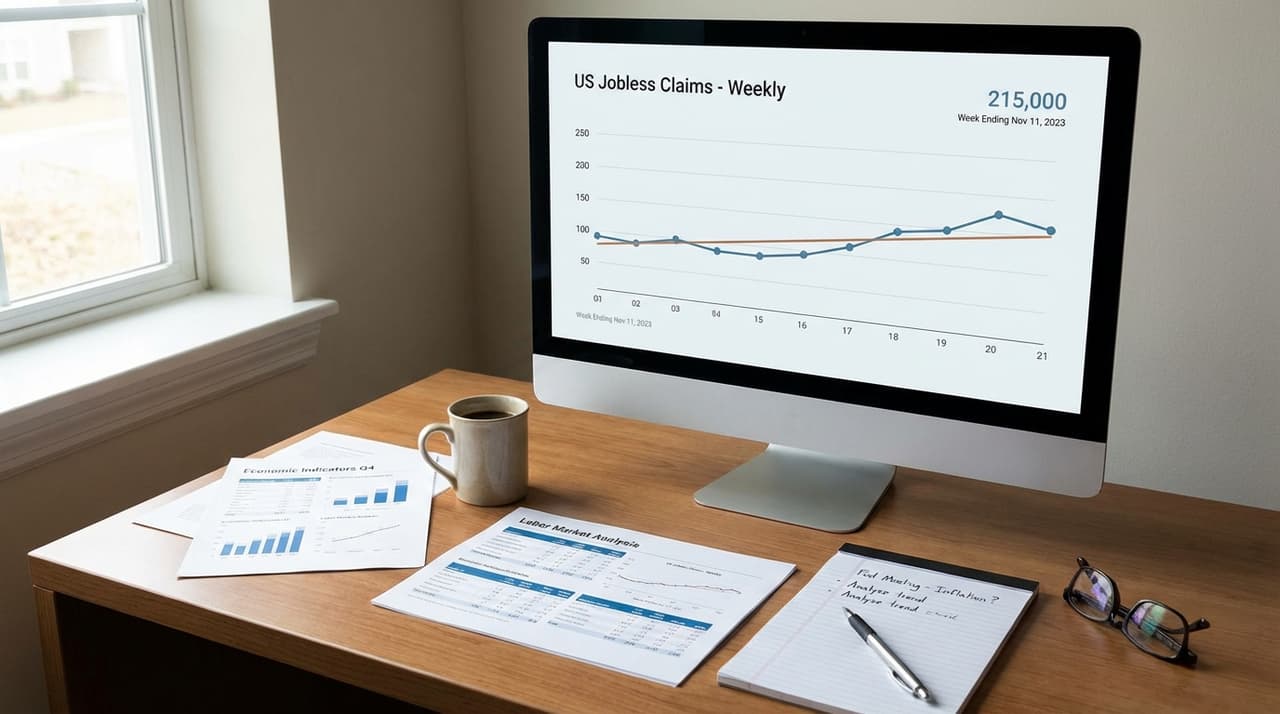
- Initial jobless claims dropped by 13,000 to 224,000 in the week ended December 13, slightly better than the consensus forecast of 225,000.
- Continuing claims rose by 67,000 to 1.897 million for the week ended December 6, indicating more people are staying on unemployment benefits longer.
- The prior week's initial claims were revised up to 237,000, highlighting ongoing data volatility during the holiday season.
Initial US jobless claims fell to 224,000 in the latest week, according to data released Thursday, coming in essentially in line with expectations and signaling only modest softening in the labor market. The decline from a revised 237,000 in the prior week reflects typical holiday-period swings, with recent weeks showing unusual volatility—from 192,000 around Thanksgiving to the current figures. "We're seeing normal noise around this time of year, but the underlying trend remains one of gradual cooling," said an economist familiar with the matter, who requested anonymity because they weren't authorized to speak publicly.
Meanwhile, continuing claims increased to 1.897 million, up 67,000 from the previous week. This rise suggests more workers are taking longer to find new employment, consistent with a broader slowdown in hiring activity. Efforts to gauge the labor market's health have been complicated by these fluctuations, but analysts note that initial claims remain historically low by long-run standards, with an average around 360,000 since 1967. Without a sharper uptick, the Federal Reserve is likely to view this as evidence of a balanced adjustment rather than a crisis, potentially reducing pressure for further interest-rate hikes.
Market reaction was muted, with stocks holding steady as investors digested the mixed signals. The data feed directly into expectations for GDP growth and consumer spending, since job security influences household confidence. While businesses aren't engaging in large-scale layoffs, the uptick in continuing claims could heighten income risk for affected households. In a brief statement, a Labor Department spokesperson emphasized that the figures are subject to revision and reflect seasonal adjustments, though they declined to comment on specific trends.
Looking ahead, forecasters expect initial claims to drift higher toward 270,000 by the end of the quarter, aligning with a soft-landing scenario of slower job growth but no sharp spike in layoffs. This gradual rise would mirror patterns in other advanced economies, where labor markets are cooling from exceptionally tight conditions. As one analyst put it, "It's a normalization story, not a collapse—barring new shocks, we're on track for slower but still positive growth." Attempts to reach the White House for comment on the policy implications were unsuccessful by press time.
Correction: An earlier version of this article misstated the week for continuing claims; it is for the week ended December 6, not December 13.