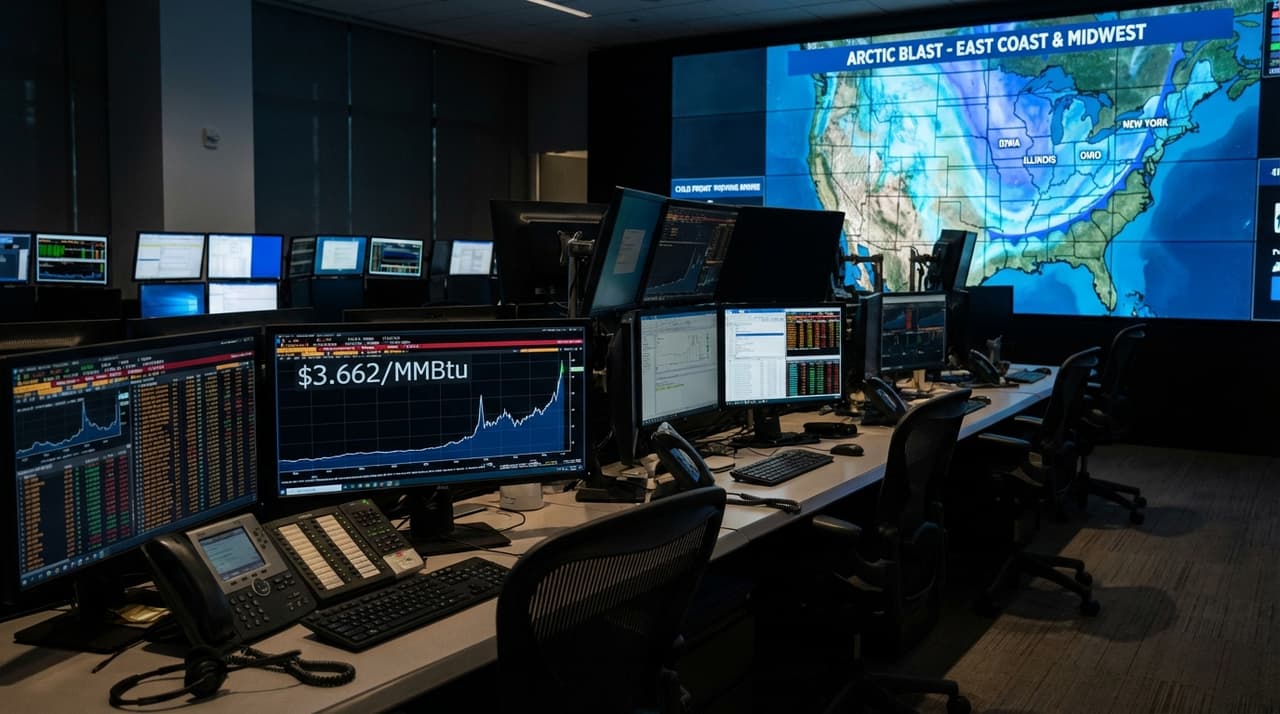
- US natural gas futures jumped sharply to $3.662/MMBtu, rebounding from a recent thirteen-week low.
- The surge is driven by shifting weather forecasts predicting Arctic air across the East Coast and Midwest from late January.
- Grid operators like PJM Interconnection and MISO have alerted utilities to prepare for increased heating and power demand.
US natural gas futures experienced a significant intraday surge, climbing 18% to $3.662 per MMBtu, as weather forecasts shifted toward colder conditions expected to sweep the East Coast and Midwest from January 26 to February 1. This rebound comes after prices hit a thirteen-week low of $3.10 last week, highlighting the market's sensitivity to seasonal demand fluctuations. According to people familiar with the matter, grid operators have issued alerts to utilities, anticipating stronger heating demand and higher power generation needs during this period.
While production remains elevated and LNG export flows are modestly lower, moderating some upside pressure, the immediate focus is on the impending cold snap. Efforts to balance supply and demand have hit a snag, with current market conditions showing overall demand slightly higher, underpinning the price gains. Without sustained colder weather, analysts suggest prices could retreat, but for now, the forecast is driving volatility.
Looking ahead, the Energy Information Administration (EIA) forecasts Henry Hub natural gas to average just under $3.50/MMBtu for all of 2026, a 2% decrease from 2025. However, prices are expected to rise significantly in 2027 by 33% to an annual average of nearly $4.60/MMBtu as demand growth outpaces supply growth. Structural drivers include expanding US LNG export capacity, with three new facilities—Plaquemines LNG, Corpus Christi Stage 3, and Golden Pass LNG—ramping up; Golden Pass LNG is expected to begin operations by mid-2026.
In the near term, the price movement reflects typical seasonal volatility, but broader analysis indicates that natural gas prices in 2026 and beyond are likely to rise above 2025 levels regardless of weather patterns due to fundamental supply-demand imbalances. US dry natural gas production is projected to grow only 1% in 2026 to 109 Bcf/d, while demand, particularly from LNG exports, is growing faster. This mismatch means longer-term price trajectories are driven more by export growth than daily weather swings, offering context for investors eyeing the energy sector.
Attempts to reach major producers for comment were unsuccessful, but industry sources note that partnerships between utilities and non-bank lenders are becoming more common to manage capital deployment amid these fluctuations. The outlook suggests natural gas will remain relatively stable around current levels through 2026 before strengthening in 2027, with the market watching for any updates on export facility timelines or regulatory shifts.