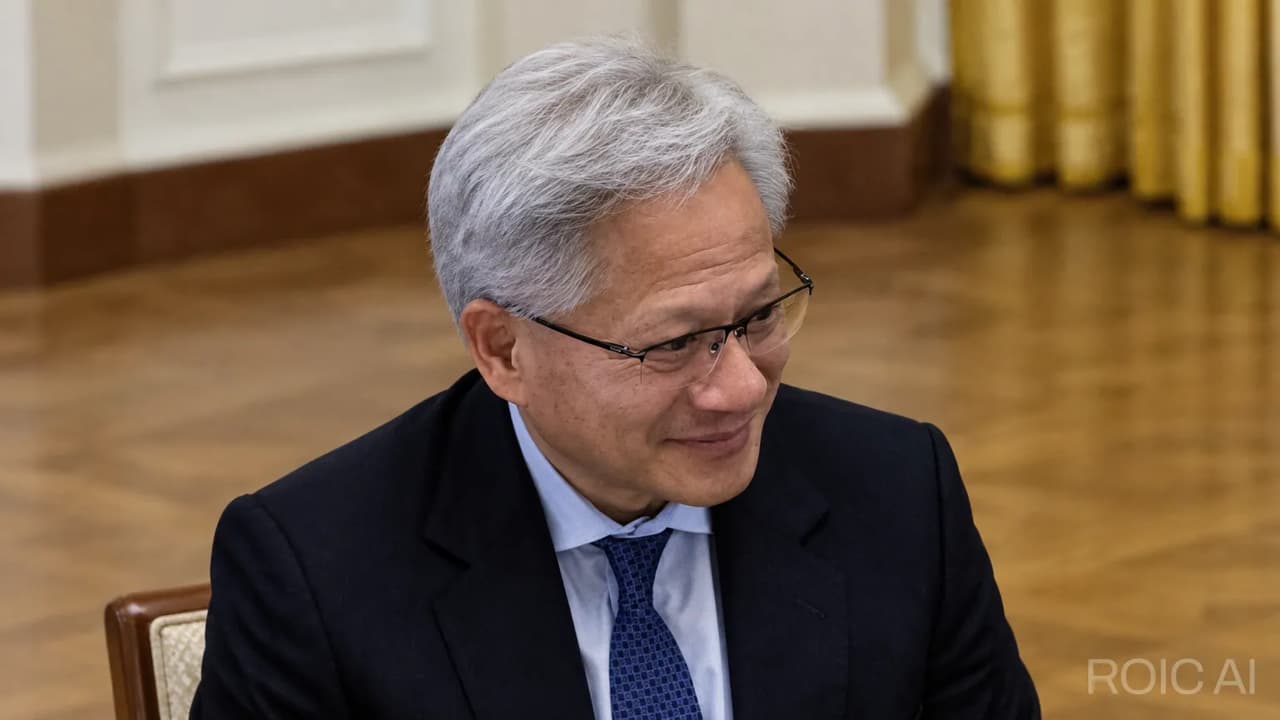
Vice President JD Vance said Nvidia now has a chance to comply with export controls, following the reinstatement of CEO Jensen Huang.
Huang resigned about two weeks ago over ties to a Chinese executive linked to suspected chip smuggling, but the administration helped bring him back.
The move comes as Washington tightens chip export rules and Congress weighs new restrictions.
Vice President JD Vance said Nvidia Corp. has an "opportunity" to comply with U.S. export controls, speaking as the company navigates a leadership shakeup and heightened scrutiny over its China business.
Vance's remark came as he helped bring Jensen Huang back as Nvidia's CEO, according to people familiar with the matter. Huang had resigned about two weeks earlier over his ties to a Chinese executive linked to suspected chip smuggling. The Wall Street Journal reported that former President Donald Trump asked Vance to persuade Nvidia's board to reinstate Huang, viewing it as the best way to control advanced chip exports.
Nvidia agreed to name an official responsible for monitoring compliance. Trump also posted that Nvidia should continue its "thorough internal investigation" of its export-control compliance. The company has not admitted wrongdoing and says it is cooperating with government inquiries.
Compliance Overhaul
On Nov. 17, Nvidia's board created a National Security and Export Control Oversight Committee. The compliance and trade teams now report to it and to interim CEO Colette Kress. The company says its limited H200 shipments to China were legal and licensed, and it has stopped shipping them. On last week's earnings call, executives said Nvidia would no longer ship Hopper-series chips, including the H200, to China.
The administration is divided on how to proceed. Treasury Secretary Scott Bessent says no further restrictions are needed, while Commerce Secretary Howard Lutnick has faced criticism over the pace of action on Megaspeed, a firm under investigation for diverting chips to China. A Commerce rule announced Nov. 16 and effective Nov. 19 requires licenses for advanced chips going to Indonesia, Malaysia, Singapore, Thailand and Brazil, and mandates that overseas data centers serving Chinese firms identify their end users. Data centers serving China-headquartered companies must obtain licenses within 90 days.
Meanwhile, a bipartisan push in Congress aims to add chip restrictions to the year-end defense bill. The measures include a bill letting Congress block chip exports to adversaries, a ban on exporting key chipmaking tools to countries of concern, and a location-verification requirement. Analyst Owen Tedford expects the final language to be weaker than current drafts. Sen. Elizabeth Warren said Huang's return makes passing these bills more urgent.
Market and Industry Impact
The leadership turmoil and policy uncertainty have rippled through markets. CNBC reported an "unusually high" number of Nvidia GPUs offered for resale as sellers look for new buyers. Huang's return reportedly revived risk appetite in markets.
Critics see a conflict between the White House keeping a trusted CEO in place and enforcing export controls. Trump and Vance reportedly saw no evidence that Huang did anything illegal, and they view him as a defender of open-source AI. Amazon (NASDAQ:AMZN) and Microsoft (NASDAQ:MSFT), two of Nvidia's biggest customers, support legislation that would further limit chip exports to China. Matt Pottinger said the smuggling network matches China's Ministry of State Security's stated mission of circumventing export controls.
The Commerce Department began investigating Megaspeed in 2024 and requested Nvidia's records in May 2025. Nvidia put Megaspeed on its "no sell" list a month later. The Trump administration declined to enforce the Biden-era "diffusion rule" in early 2025 and only acted this month. Billions of dollars of restricted chips reached data centers serving Chinese AI firms in the meantime. During 2026, H200 sales to China were allowed case by case, with the U.S. government taking a 25% cut. By May 2026, Commerce had approved about 880,000 Nvidia and AMD (NASDAQ:AMD) chips for Chinese-linked buyers.
What's Next
In the short term, Congress will negotiate the NDAA chip provisions, and the Megaspeed investigation continues. Analysts say Huang is unlikely to remain a frequent visitor to China. Longer term, tighter controls could remove a commercial link between the U.S. and China and give China a window to narrow the computing gap, according to The Diplomat. The Council on Foreign Relations urges the administration to hold firm on the new rules and consider revoking earlier direct-sale approvals.
Nvidia did not respond to a request for comment on Vance's remarks.