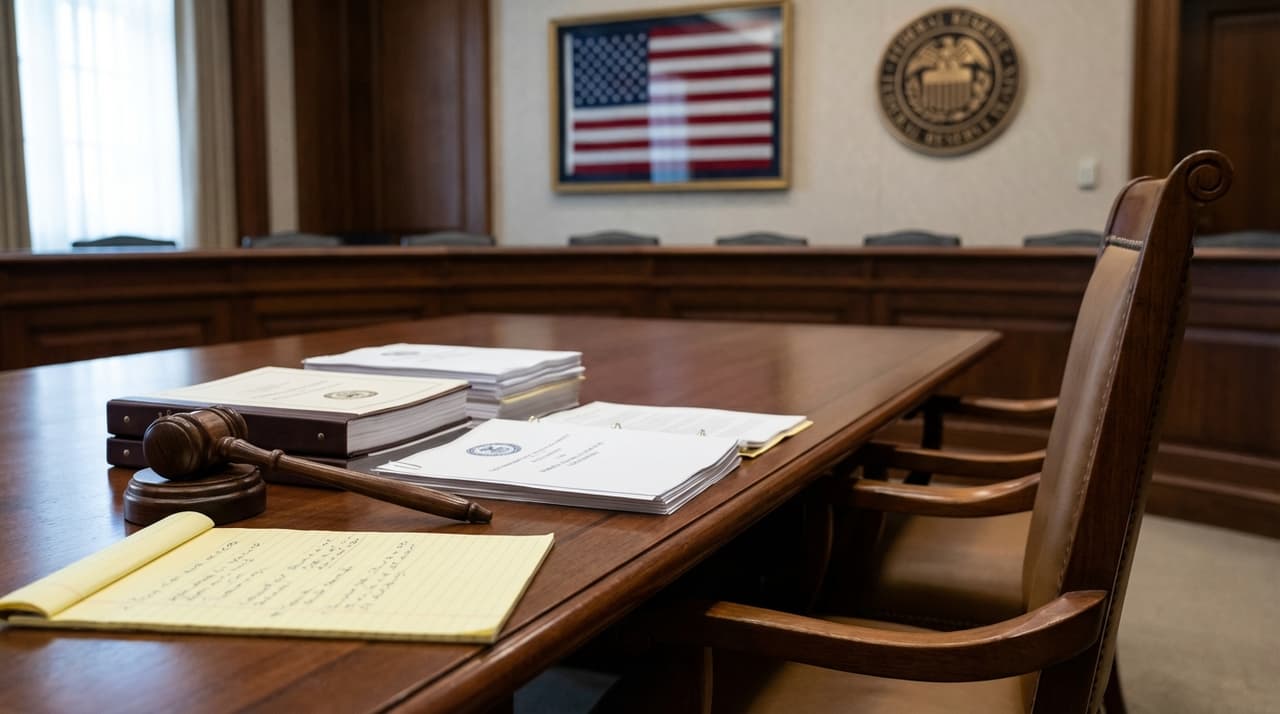
- Kevin Warsh's nomination to the Federal Reserve faces a Senate Banking Committee hurdle due to Sen. Thom Tillis's insistence on resolving the DOJ investigation into Chair Jerome Powell.
- Treasury yields initially reacted to Warsh's hawkish reputation, with the two-year dipping to 3.54% and the 10-year rising to 4.25%, but analysts caution this market move may reverse.
- The political standoff highlights tensions over Fed independence, with Republicans holding a slim committee majority but Tillis's vote proving pivotal.
Kevin Warsh's path to rejoining the Federal Reserve has hit a significant snag in the Senate Banking Committee, where procedural delays threaten to prolong uncertainty for markets already jittery about monetary policy direction. According to people familiar with the matter, Sen. Thom Tillis (R-NC) is refusing to advance any Fed nominees until the Department of Justice concludes its criminal investigation into Chair Jerome Powell—a probe that sources describe as lacking substantive basis but which has become a flashpoint in congressional oversight debates.
Treasury yields shifted immediately following Warsh's nomination announcement, reflecting his reputation as a hawkish voice favoring faster rate cuts and a smaller Fed balance sheet. The two-year note dipped to 3.54% while the 10-year yield rose to 4.25%, steepening the curve in a classic reaction to expectations of more aggressive monetary tightening. But that market move may prove fleeting, analysts warn. "We've seen this pattern before with Warsh—markets react to his rhetoric, then reality sets in about his actual influence," said Karl Schamotta, chief market strategist at Corpay, in emailed comments. "His record of persuading colleagues is weak, so this steepening could easily reverse."
The political calculus is delicate. Republicans hold a 13-11 majority on the committee, making Tillis's vote crucial for moving Warsh forward. In conversations with staffers, Tillis has emphasized that his stance isn't about Warsh personally—whom he views as independent and not aligned with administration bidding—but about protecting Fed independence from what he sees as executive overreach. "This could turn into a real scrap if we don't respect the institution's autonomy," one aide paraphrased, speaking on condition of anonymity. Senate Majority Leader John Thune has indicated that confirmation without Tillis's support is unlikely, raising the prospect of a prolonged stall.
Behind the scenes, efforts to resolve the DOJ probe are ongoing, but progress appears slow. The investigation stems from Powell's congressional testimony last year, with allegations that legal experts consider thin. Without a deal to drop or resolve it quickly, Warsh's nomination risks getting bogged down indefinitely, leaving markets without clarity on Fed leadership at a sensitive time. Banking committee staffers say they're pushing for a timeline but haven't received commitments from the Justice Department.
For investors, the impasse adds another layer of complexity to rate forecasts. Warsh's confirmation could theoretically accelerate balance sheet reduction and rate normalization, but his history suggests he might struggle to build consensus. Meanwhile, the yield curve remains volatile, with traders parsing every snippet of committee gossip. Attempts to reach Tillis's office for additional comment were unsuccessful, and the White House hasn't issued new statements beyond its initial nomination announcement.
In the broader context, this isn't just about one nominee—it's about how much political friction the Fed can withstand while maintaining credibility. The Powell probe, though widely dismissed as meritless, has become a procedural weapon, and Tillis's stance reflects growing Republican unease about executive branch interventions. As one veteran Fed watcher put it, "The real battle here isn't over Warsh's views; it's over who gets to set the terms of engagement between Congress and the central bank." Markets will be watching for any breakthrough, but for now, the waiting game continues.