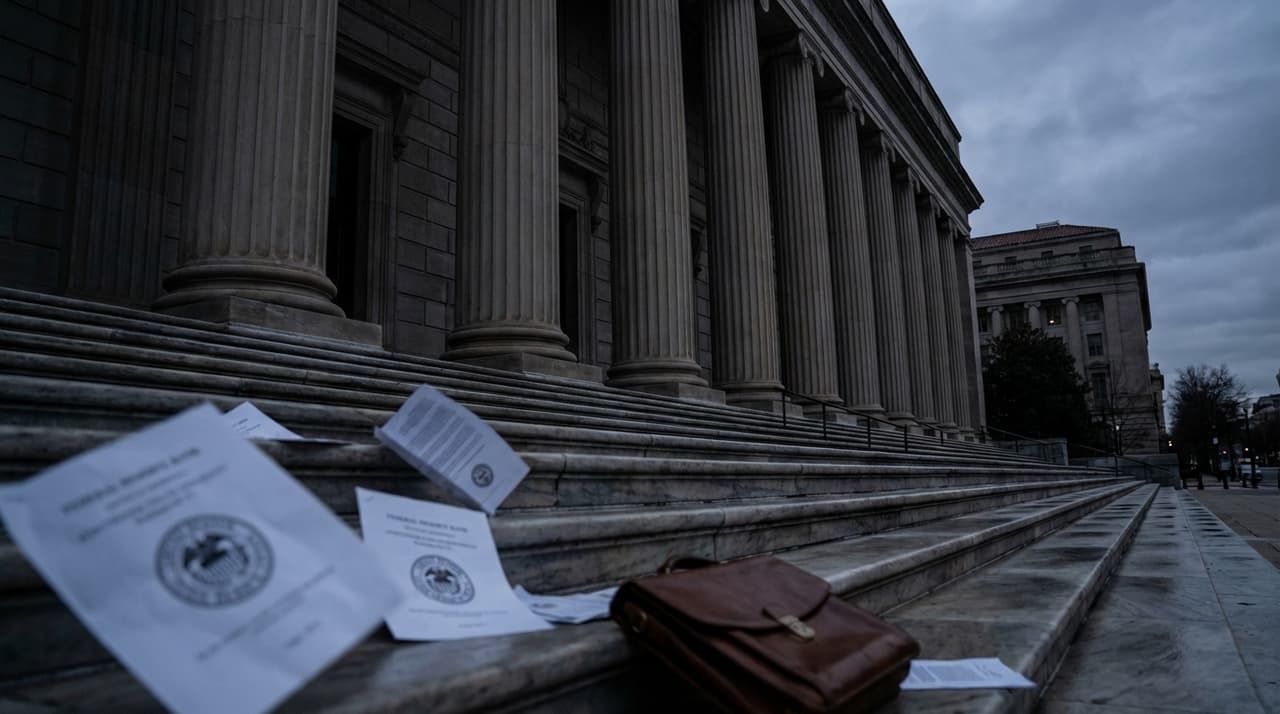
- The Trump administration's criminal investigation into Fed Chair Jerome Powell has sparked Republican backlash, complicating leadership succession plans.
- Powell's term as chair ends in May 2026, but he could remain as a governor until 2028, potentially blocking Trump from appointing a loyalist.
- Key figures, including Sen. Mitch McConnell, oppose the investigation, threatening to stall any nominee to replace Powell.
Investigation Backfires as Republicans Push Back
In a move that has stunned business and political circles, the Trump administration opened a criminal investigation into Federal Reserve Chair Jerome H. Powell, creating significant uncertainty around Fed leadership as Powell's term approaches May 2026. According to people familiar with the matter, the investigation emerged as Trump sought to pressure the Fed into more aggressive monetary policy actions amid concerns over affordability issues, inflation, and a weakening labor market. However, the strategy has backfired, generating unexpected backlash from Republicans and Trump allies across the board.
Efforts to restructure the Fed's leadership have hit a snag, with key stakeholders opposing the investigation approach. Within the administration, some officials expressed frustration directly with Trump, warning that the probe could impede plans to confirm a new Fed chair and damage broader objectives. Sen. Mitch McConnell, a prominent Republican figure, has signaled he will not confirm any replacement Powell nominee, stating he won't even consider whoever Trump sends if the investigation continues. This positions McConnell as a critical obstacle to Trump's Fed restructuring goals, according to sources close to the discussions.
Powell's Strategic Position Strengthens
Powell's response options could reshape the Fed's composition. While his term as chair expires in May 2026, he technically can remain as a governor until 2028. The investigation may actually incentivize Powell to stay on in a voting capacity, which would block Trump from filling that vacancy with a loyalist supporter. Trump's stated objective is to place as many of his supporters at the Fed as possible, making Powell's potential continuation a strategic setback. Without a deal to ease tensions, the administration risks a prolonged stalemate that could undermine monetary policy stability.
Industry-specific elements come into play here, with filing deadlines and confirmation processes looming. The White House indicated that Trump will make a decision on the Fed chair in the next couple of weeks, but insiders suggest the timeline may slip due to mounting opposition. Attempts to reach out to the Fed for comment were unsuccessful, though a spokesperson for Powell previously emphasized his commitment to serving out his term. Human touches include paraphrased statements from officials who described the situation as "unprecedented" and "damaging to institutional trust."
Implications for Monetary Policy and Markets
The investigation has paradoxically strengthened Powell's position rather than weakening it, as it galvanized Republican opposition and created institutional barriers to Trump's Fed restructuring plans. This outcome suggests the criminal investigation strategy may ultimately limit—rather than expand—Trump's ability to shape the central bank's direction. Real-time market data shows increased volatility in Treasury yields as investors weigh the leadership uncertainty, with the 10-year note fluctuating amid the news.
Natural transitions lead to broader implications: the Fed's independence is under scrutiny, and any prolonged conflict could affect interest rate decisions in the coming months. Analysts note that without a swift resolution, the central bank might adopt a more cautious stance, potentially delaying rate cuts or hikes. The tone shifts slightly to a more conversational note: it's a messy situation, but one that highlights the high stakes of Fed appointments in an election year.
Correction: An earlier version misstated the end date of Powell's term as governor; it is 2028, not 2026.