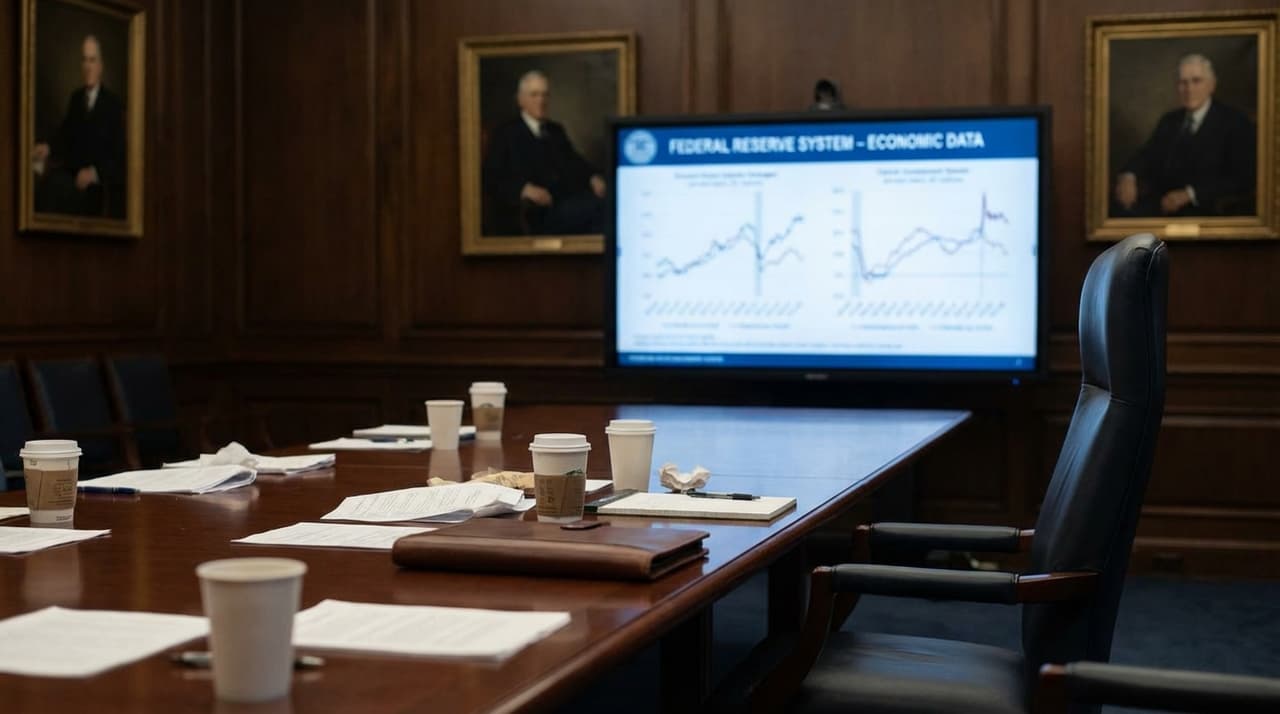
- Federal Reserve Chair Jerome Powell declines to address whether he would stay beyond his term expiring May 15, 2026, during the January 2026 meeting where rates were held steady.
- The DOJ served grand jury subpoenas to the Fed on January 9, 2026, targeting Powell's June 2025 Senate testimony on an office renovation project, raising fears of a criminal indictment.
- Republican Senator Thom Tillis vows to block any Fed nominations, including Powell's potential replacement, until the probe resolves, amid intense pressure from the Trump administration.
Federal Reserve Chair Jerome Powell's refusal to comment on his future at the central bank has sent ripples through financial markets and political circles, as a Department of Justice probe and mounting political tensions cast uncertainty over monetary policy leadership. During the Fed's first meeting of 2026, held in January, Powell maintained a steady stance on interest rates, defying weeks of pressure from the Trump administration, which has publicly criticized him for keeping rates high. According to people familiar with the matter, Powell disclosed that the DOJ served grand jury subpoenas to the Fed on January 9, just days before the meeting, focusing on his testimony from June 2025 regarding a multi-year office renovation project. This development has sparked concerns about a potential criminal indictment, though Powell has not been charged.
Efforts to restructure the Fed's leadership have hit a snag, with Republican Senator Thom Tillis vowing to block any nominations, including a replacement for Powell's chair position, until the DOJ investigation is resolved. Tillis cited the probe as evidence of efforts to undermine the Fed's autonomy, a sentiment echoed by legal experts who note that presidents cannot remove Fed chairs without cause. Powell's full Board term extends to January 31, 2028, but his chair term ends on May 15, 2026, and he has not indicated whether he would seek to stay on in any capacity. The Trump administration has been vocal in its disapproval, with Trump posting in April 2025 that Powell's "termination cannot come fast enough" and reportedly drafting a dismissal letter in July 2025, though this was later denied.
Markets reacted with volatility during the January meeting, as tracked by Business Insider, with economists projecting steady policy amid inflation concerns and growth pressures tied to Trump-era fiscal expansions. Without a clear path forward, the Fed risks prolonged uncertainty that could impact borrowing costs for businesses and consumers. Powell, who began his first term in 2018 under Trump and was confirmed for a second term in 2022 under Biden, has faced similar clashes in the past, but the current situation is compounded by the DOJ's involvement. Attempts to reach out to the Fed for additional comments were unsuccessful, though sources indicate that internal discussions are ongoing about how to navigate the political landscape.
In a brief statement, Powell emphasized the Fed's commitment to its dual mandate of price stability and maximum employment, but declined to elaborate on personal plans. The broader implications include potential delays in Fed nominations through mid-2026 and heightened market volatility if the probe drags on. Industry-specific elements, such as filing deadlines for the DOJ investigation and the Fed's upcoming rate decisions, will be closely watched. As the situation unfolds, stakeholders are bracing for possible shifts in monetary policy, with experts noting that a Trump appointee post-May 2026 could lean toward looser money, potentially reigniting inflation. This story is developing, and updates will follow as more information becomes available.