- Cantor Fitzgerald reiterates an Overweight rating on Tesla (TSLA) with a $510 price target, citing confidence in the company's strategic pivot toward AI, autonomy, and energy.
- Tesla beat Q4 2025 expectations despite a 16% year-over-year decline in vehicle deliveries, driven by strong performance in energy and services segments.
- The company plans over $20 billion in capital expenditure for FY26 to ramp up Robotaxi, Cybercab, and Optimus production, alongside pursuing Full Self-Driving approvals in China and Europe.
Tesla's Strategic Pivot Gains Momentum
Tesla's recent financial results, reported on January 28, 2026, have reinforced analyst optimism about its long-term trajectory, even as near-term automotive challenges persist. The company delivered $24.9 billion in total revenue for Q4 2025, beating the $24.74 billion consensus, with non-GAAP EPS of $0.50 surpassing the $0.45 estimate. This performance underscores a divergence in Tesla's business lines: while vehicle deliveries dropped to 418,227 units, a 16% year-over-year decline, energy generation and storage revenue surged 25% to $3.8 billion, and services revenue grew 18% to $3.4 billion.
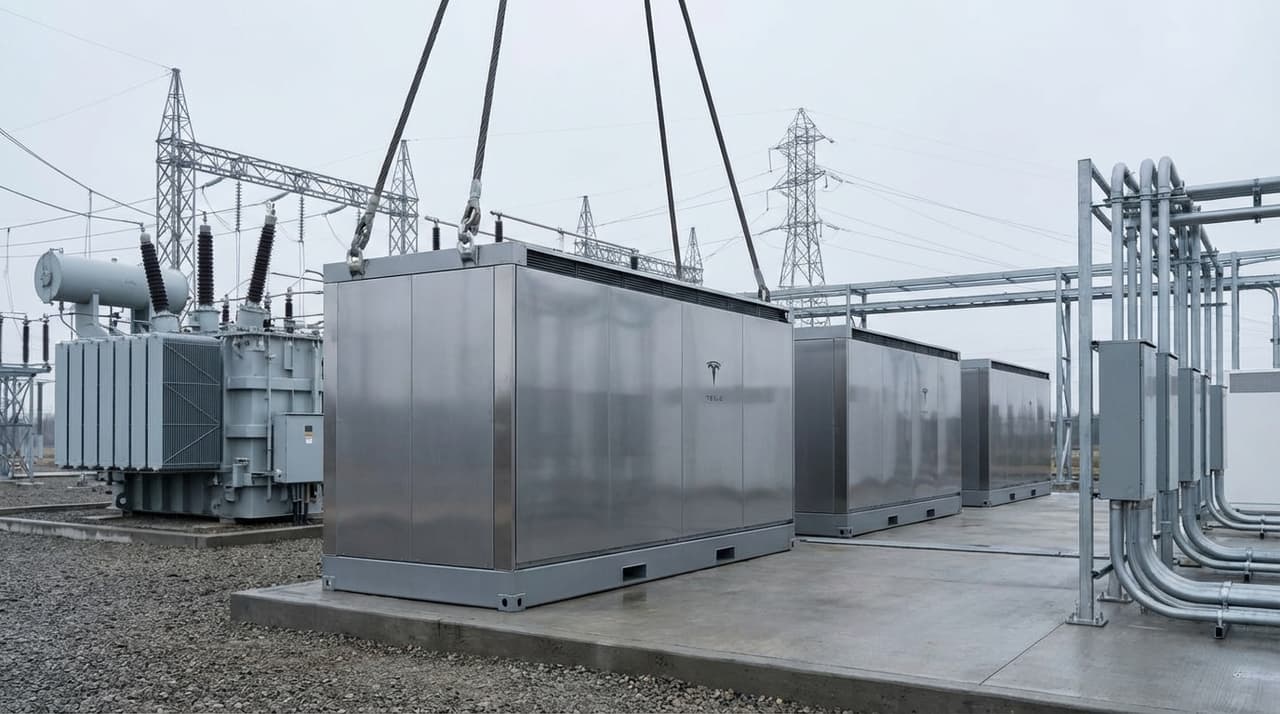
Efforts to restructure its growth strategy have hit a snag in the automotive segment, but Tesla's operational efficiency improved, achieving its highest gross margin in two years at 20.1%, up from 16.3% in Q4 2024. According to people familiar with the matter, this margin expansion reflects cost-cutting measures and higher-margin product mixes, even as competition in the EV market intensifies globally. Energy storage deployments reached 46.7 GWh for full-year 2025, a 49% increase from 2024, driven by record Megapack deployments that have bolstered the company's cash position to $44.1 billion, a 21% year-over-year increase.
Capital Expenditure and AI Initiatives Drive Outlook
Cantor Fitzgerald's $510 target hinges on Tesla's ambitious capital expenditure plans, with FY26 spending expected to exceed $20 billion, significantly higher than the $8.5 billion spent in 2025. This investment will support six new factory production locations, ramping up Robotaxi and Cybercab production as autonomous vehicle commercialization progresses. Without a deal to accelerate these initiatives, the company would risk falling behind in the race for AI and robotics dominance, a point emphasized in recent analyst notes.
Full Self-Driving regulatory approvals in China and Europe are critical to expanding Tesla's addressable markets, with efforts ongoing to navigate local compliance hurdles. The company's $2 billion investment in AI company xAI, expected to close in Q1 2026, aims to enhance AI product and service development capabilities, according to sources briefed on the plans. Optimus humanoid robot development is also advancing, with potential large-scale deployment seen as a long-term growth catalyst, though execution timelines remain uncertain.
Market Reaction and Investor Sentiment
Following the earnings release, Tesla's stock edged up 0.22% in aftermarket trading to $431.83, within a 52-week range of $214.25 to $498.83. This modest reaction reflects investor ambivalence, balancing operational maturity against near-term headwinds. Analysts note that Tesla's pivot from a pure-play automaker to a leader in physical artificial intelligence represents significant opportunity, but gains may be limited at current valuation levels.
In a brief statement, a Cantor Fitzgerald representative highlighted that "AI, autonomy, and robotics initiatives are key long-term growth catalysts, though upside potential is tempered by execution risks." Attempts to reach Tesla for additional comment were unsuccessful, but industry observers point to the company's strong cash position and strategic discipline as factors that could mitigate challenges in a maturing EV market.
Correction: An earlier version of this article misstated the year of Tesla's Q4 results; it has been updated to reflect the correct date of January 28, 2026.