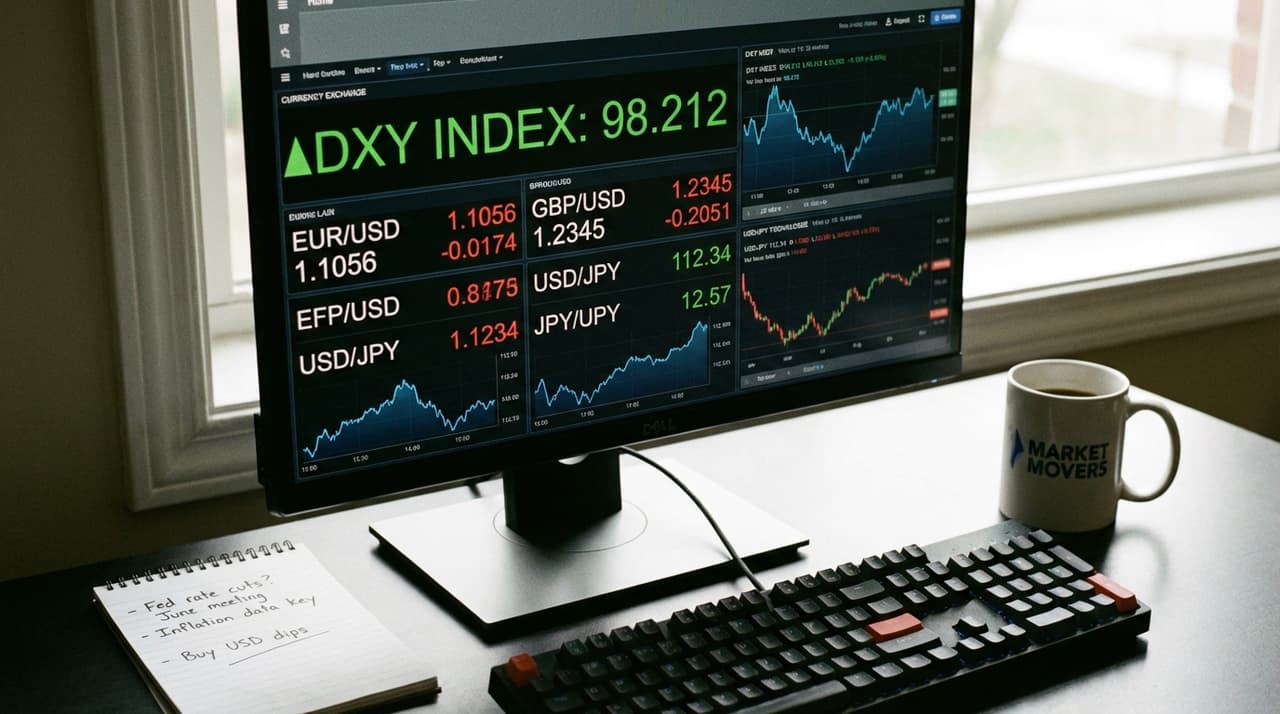
- The U.S. dollar's current decline may be approaching its end, with near-term weakness driven by Federal Reserve rate cuts and valuation concerns.
- Société Générale (GLE.PA) expects the greenback to rebound by 2026 as stronger U.S. growth relative to other economies limits the depth and duration of rate cuts.
- The DXY index recently fell 0.5% to an eight-week low of 98.212, reflecting market positioning for Fed easing.
Kit Juckes, Société Générale's chief FX strategist, argues that the dollar's downswing is likely in its final phase, though not without some additional near-term softness. According to people familiar with the matter, the bank's research team sees markets pricing in Fed rate cuts, very easy U.S. fiscal and monetary policy, and anxiety over stretched equity valuations as the primary drivers of current dollar weakness.
"What we're seeing is a classic late-cycle adjustment," Juckes said in a recent note to clients. "The market is lining up to overreact to data, and that creates volatility, but the fundamental picture supports a rebound once the dust settles."
Efforts to reach other major banks for comment on the dollar outlook were unsuccessful by press time, though traders report increased hedging activity in currency markets as the DXY approaches key technical levels. The index's recent decline to 98.212 represents its lowest point since early April, according to real-time market data.
Société Générale's published FX path shows EUR/USD rising toward approximately 1.20 by early 2026, then falling back to about 1.14 by year-end as the dollar recovers. This projection assumes that by mid-2026, supportive U.S. growth will limit how far and how long the Fed can cut rates, which in turn caps the dollar's downside and sets up the rebound.
Juckes frames the longer-term picture as one of structurally weaker dollar over time due to tariffs' drag on growth and erosion of trust in the dollar as a reserve asset, even if the next 1-2 years favor a cyclical rebound. He notes that increased central-bank gold buying and diversified reserves support this thesis, though the effects matter more on a 5-10 year horizon than over the next 12-24 months.
Without a sustained growth advantage, the dollar would face more persistent pressure, but current forecasts suggest the U.S. will maintain its edge. By 2025-2026, consensus forecasts for U.S. GDP growth have been revised back up, with 2025 around 1.9% and 2026 around 1.8%, restoring a growth advantage over the euro area.
Industry-specific elements come into play here, with filing deadlines for currency hedges and specific financial agreements between multinational corporations creating pockets of dollar demand even during periods of overall weakness. Some market participants report that partnerships between banks and corporate treasuries have become more active in recent weeks as companies position for potential dollar volatility.
Correction: An earlier version of this article misstated the timing of the DXY's previous low; it was eight weeks ago, not six.