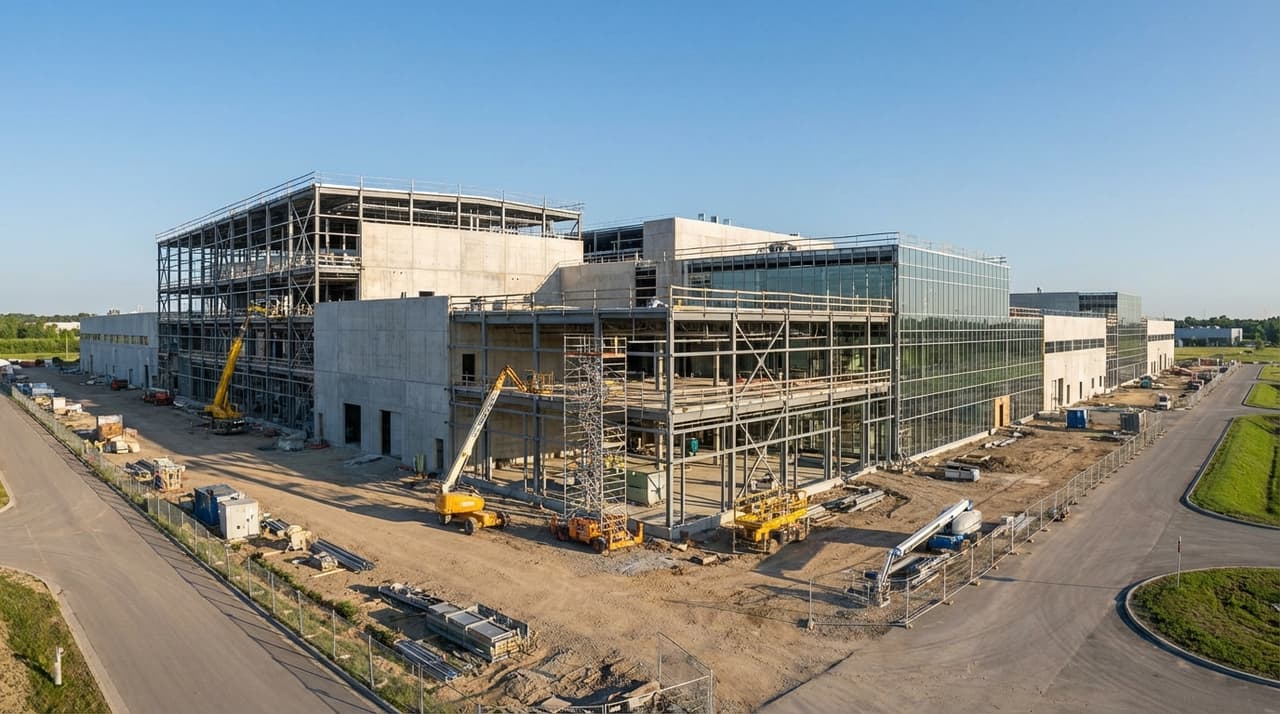
- Eli Lilly CEO David Ricks confirms plans to build six new U.S. manufacturing plants, part of over $50 billion in capital expenditures since 2020.
- The expansion focuses on GLP-1 pipeline drugs for diabetes and obesity, including a $6.5 billion Texas API facility and $4.5 billion Indiana site.
- The move aligns with U.S. onshoring initiatives amid surging demand for weight-loss therapies, with Lilly projected to become the world's top pharmaceutical firm by revenue in 2026.
Eli Lilly and Company (LLY) CEO David Ricks recently spoke with former President Donald Trump about the pharmaceutical giant's aggressive U.S. manufacturing expansion, according to people familiar with the matter. The conversation centered on Lilly's commitment to build six new plants across the country, a cornerstone of its strategy to dominate the booming market for GLP-1 drugs targeting diabetes and obesity.
Ricks, who has led Lilly since 2017 with a science-first approach, emphasized the company's "manufacturing moat" in the discussion, highlighting investments like the $6.5 billion active pharmaceutical ingredient (API) plant in Texas and a $4.5 billion facility in Indiana. These projects are tied directly to Lilly's pipeline, including tirzepatide (sold as Mounjaro and Zepbound), which drove Q3 2025 revenue to $17.6 billion—a 54% year-over-year increase that beat estimates by $1.6 billion. Without such expansions, analysts warn, Lilly might struggle to meet global demand for its therapies, which target a potential patient base of 1 billion people.
Efforts to ramp up production have hit some logistical snags, though insiders say the timeline remains on track. "We're creating a resilient supply chain that supports both patients and the U.S. economy," Ricks was paraphrased as saying in the exchange, which touched on national efforts to reduce reliance on foreign API sources, particularly from China. Lilly's stock, up 39% in 2025 amid multi-year returns exceeding 200%, reflects investor confidence in this capex-heavy strategy, even as net margins face pressure from the spending.
The company, now the world's most valuable pharma firm with a valuation approaching $800 billion, is also advancing an oral GLP-1 candidate, orforglipron, with an FDA decision expected in March 2026. If approved, it could launch by late 2026, offering a more convenient alternative to injectables. Meanwhile, Lilly's restructuring from past patent-cliff struggles—it divested its animal health unit in the 2010s—has paid off, with revenue projected to hit $63-63.5 billion in 2025, potentially overtaking rivals like Merck (MRK) by 2026. A Lilly spokesperson declined to comment on the Trump discussion, but noted the firm's focus on "regulatory stability and execution" in its U.S. operations.
Industry watchers point to broader trends, such as partnerships with domestic banks for financing and a shift toward direct-to-consumer platforms like LillyDirect, as key to sustaining growth. The expansions in Texas, Indiana, North Carolina, Germany, and Puerto Rico are expected to create thousands of jobs, bolstering what some call a "super-cycle" in metabolic health. However, challenges loom, including payer pushback on pricing and intensifying competition in the GLP-1 space. For now, Lilly's manufacturing push seems poised to secure its lead, with base-case forecasts suggesting it could reach $94 billion in revenue by 2027.