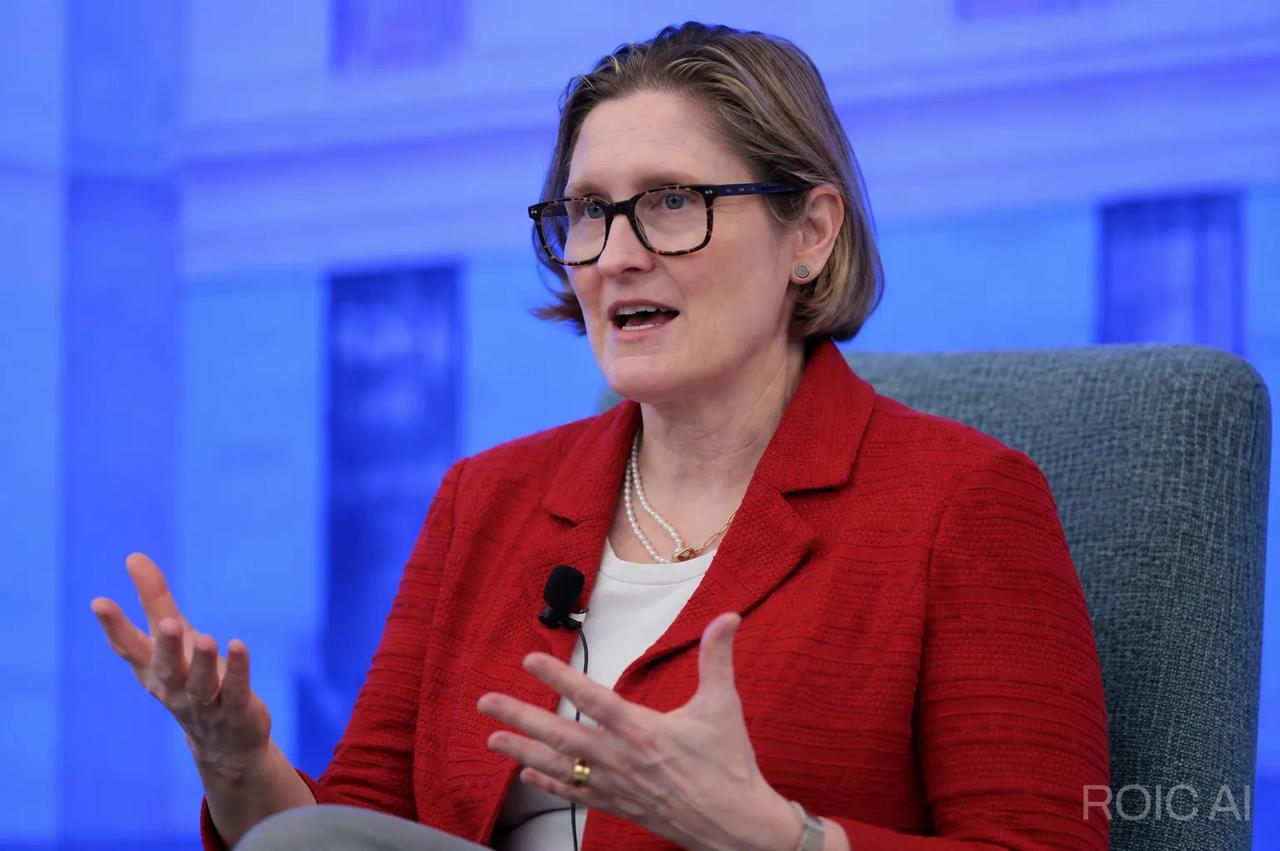
- Philadelphia Fed President Anna Paulson favors raising interest rates in a deliberate manner, emphasizing that investors understand the Fed's communications.
- She is open to consecutive rate increases at upcoming meetings, stating the direction of travel is clear: rates need to be higher.
- Markets widely expect a quarter-point hike at the December 8-9 meeting, which would bring the federal-funds target range to 4%-4.25%.
A Measured Path Higher
Philadelphia Fed President Anna Paulson said she favors raising interest rates in a deliberate way, but clarified that "deliberate" does not necessarily mean skipping every other meeting. In a Bloomberg interview published earlier today, Paulson said she would consider consecutive increases at upcoming meetings, stating: "The direction of travel, in terms of where rates need to go, is really clear. They need to be higher."
Her comments come as the Federal Open Market Committee prepares for its December 8-9 meeting. Markets widely expect a quarter-percentage-point increase, which would lift the federal-funds target range to 4%-4.25%, according to Reuters (NASDAQ:TRI). Paulson is a voting member of the FOMC this year, making her position directly relevant to the next decision, though her views do not constitute a commitment by the full committee.
Economic Backdrop Supports Further Tightening
Paulson's case for additional restraint rests on an economy that has proven stronger than anticipated. In a November 10 speech, she noted that economic growth had averaged 2.7% so far in 2026, versus a 2.3% full-year expectation in the previous December's projections. Unemployment stood at 4.1% in October, with hiring broadening across industries, which she sees as close to maximum employment.
Inflation, however, remains the immediate priority. September headline PCE inflation was 3.6%, with underlying measures around 2.5%-3%, well above the Fed's 2% target. Paulson identified three forces keeping inflation elevated: tariffs, higher energy prices tied to the Middle East war, and demand for chips, electricity infrastructure and materials related to the AI investment boom. Her concern is that underlying inflation remains stubborn even after accounting for shocks that may eventually fade.
"We have more tightening to do," Paulson said on November 19 after a speech at the Money Marketeers of New York University, emphasizing that stronger growth and a labor market at full employment make inflation the immediate priority.
Communication and Market Understanding
Paulson's remarks also touch on the Fed's communication strategy under Chair Kevin Warsh. Reuters reports that the Fed has shortened its policy statement and established a communications task force, while Warsh has largely avoided offering explicit guidance about future rates. Paulson advocates for a clearly understood reaction function—where investors understand how changes in inflation, employment and other data would alter the Fed's decisions—rather than a detailed rate roadmap.
She argued that October's pause worked because markets still anticipated further increases, and that investors appear to understand the Fed's communications. That understanding, in her view, allows policy to remain flexible without causing unnecessary surprises.
Implications for Households, Businesses, and Markets
Paulson explicitly linked gradualism to the different adjustments required across the economy. Households need time to incorporate higher borrowing costs into their budgets, especially as wage growth of about 3% lags inflation. Businesses must reassess borrowing and investment plans, and community banks face changes in funding costs and loan pricing.
Her preference for a measured pace is not without limits. She has identified potential triggers for faster tightening, including rising inflation expectations, building wage pressures, or accelerating underlying inflation. Conversely, the path could change if consumer spending, financial markets, or employment weaken enough to alter the outlook.
The near-term market baseline is a quarter-point December increase, with earlier Reuters reporting indicating expectations for another increase in late January. Neither outcome is guaranteed, and Paulson has not endorsed a fixed endpoint for rates. As she put it, the direction is clear, but the pace will remain data-dependent.