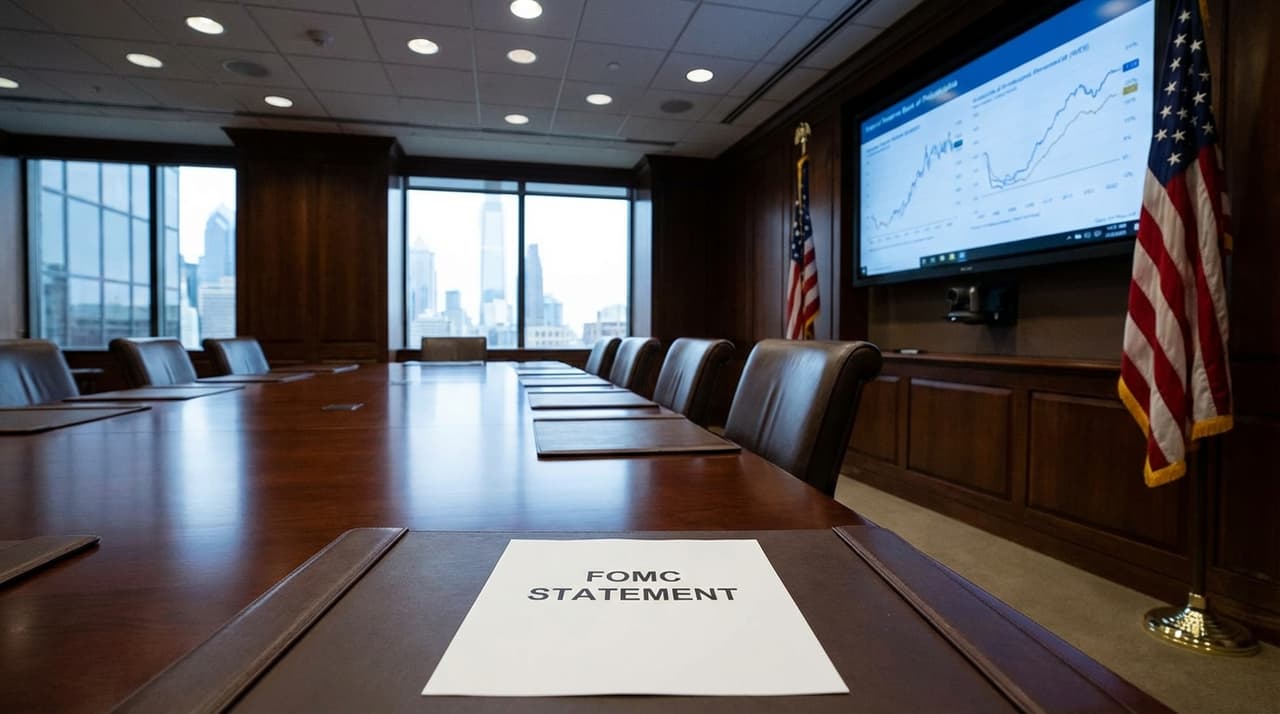
- Philadelphia Fed President Anna Paulson emphasizes the 2% inflation goal as appropriate, with greater concern for labor market risks than price pressures.
- The FOMC's recent 25 basis point cut to a 3.5%-3.75% federal funds rate is described as "somewhat restrictive," aimed at guiding inflation back to target while providing insurance against job deterioration.
- Paulson anticipates inflation easing in 2026 as 2025 tariff effects fade, attributing high prices largely to trade policies, with Chicago Fed's Goolsbee dissenting over caution on stalled disinflation.
Philadelphia Fed President Anna Paulson has doubled down on the Federal Reserve's 2% inflation target, calling it the "right goal" in a climate where balancing labor market fragility against persistent price pressures remains paramount. Speaking amid ongoing monetary adjustments, Paulson expressed that her worries tilt more toward employment than inflation, a stance that underscores the Fed's recent pivot toward easing. "Current policy remains somewhat restrictive, but it's designed to steer us back to our inflation objective without breaking the labor market," she noted, according to people familiar with her remarks. The comments come as the Fed navigates a tricky landscape where inflation has lingered above target for over four years, yet signs of softening in job growth have prompted preemptive moves.
In a key development, the Federal Open Market Committee cut interest rates by 25 basis points on Wednesday, bringing the federal funds rate to a range of 3.5% to 3.75%. This move, described by insiders as prioritizing insurance against labor deterioration, follows a series of earlier cuts totaling 75 basis points this year. Paulson, who is set to become a voting FOMC member in January, characterized the job market as "bending, but not breaking," a phrase that captures the delicate balance the central bank is trying to strike. However, not all officials are on board—Chicago Fed President Austan Goolsbee dissented on the latest cut, favoring a more cautious approach amid concerns that disinflation has stalled, according to sources close to the discussions.
Driving much of the inflationary pressure, Paulson pointed to trade tariffs implemented in 2025, which she views as a transitory factor likely to wane over time. "The main driver of high prices has been these tariff effects, and we expect them to fade, allowing inflation to ease by 2026," she said, echoing sentiments shared in recent Fed communications. This outlook is bolstered by broader supply-demand imbalances from the pandemic recovery, though recent data shows progress: headline PCE inflation stood at 2.7% in August, with core at 2.9%, down significantly from pandemic peaks above 7%. Markets have largely anchored long-term inflation expectations, a sign of sustained Fed credibility even as short-term fluctuations persist.
Looking ahead, the Fed's monetary policy framework review in 2025 is set to reaffirm the 2% goal, drawing lessons from the post-pandemic era without major shifts from the flexible average inflation targeting adopted in 2020. Paulson's stance suggests a focus on robust strategies against cost-push shocks, rather than rigid adherence to historical averages. With limited guidance expected at the January FOMC meeting due to data gaps from a recent government shutdown, further cuts could hinge on labor market trends or inflation moderation. Fed projections hint at another 50 basis points of easing by the end of 2025, with more possible in 2026-2027, aligning with Paulson's view of a "decent chance" for relief next year. As stakeholders from businesses to consumers grapple with mixed impacts—persistent high prices versus job security—the Fed's path remains data-dependent, with internal debates like Goolsbee's dissent highlighting the nuanced challenges ahead.